Venezuelan Embassy Apologizes for Racist Chants at Machado Event
On April 18, 2026, Venezuela’s embassy in Madrid issued a formal apology after singer Carlos Baute led chants of “¡Fuera la mona!” at a rally for opposition leader María Corina Machado, condemning the remarks as racist and misogynistic acts that dehumanize women and violate international human rights principles, while Machado herself rejected the rhetoric, framing it as emblematic of the Maduro regime’s divisive tactics.
The Chant That Crossed a Line
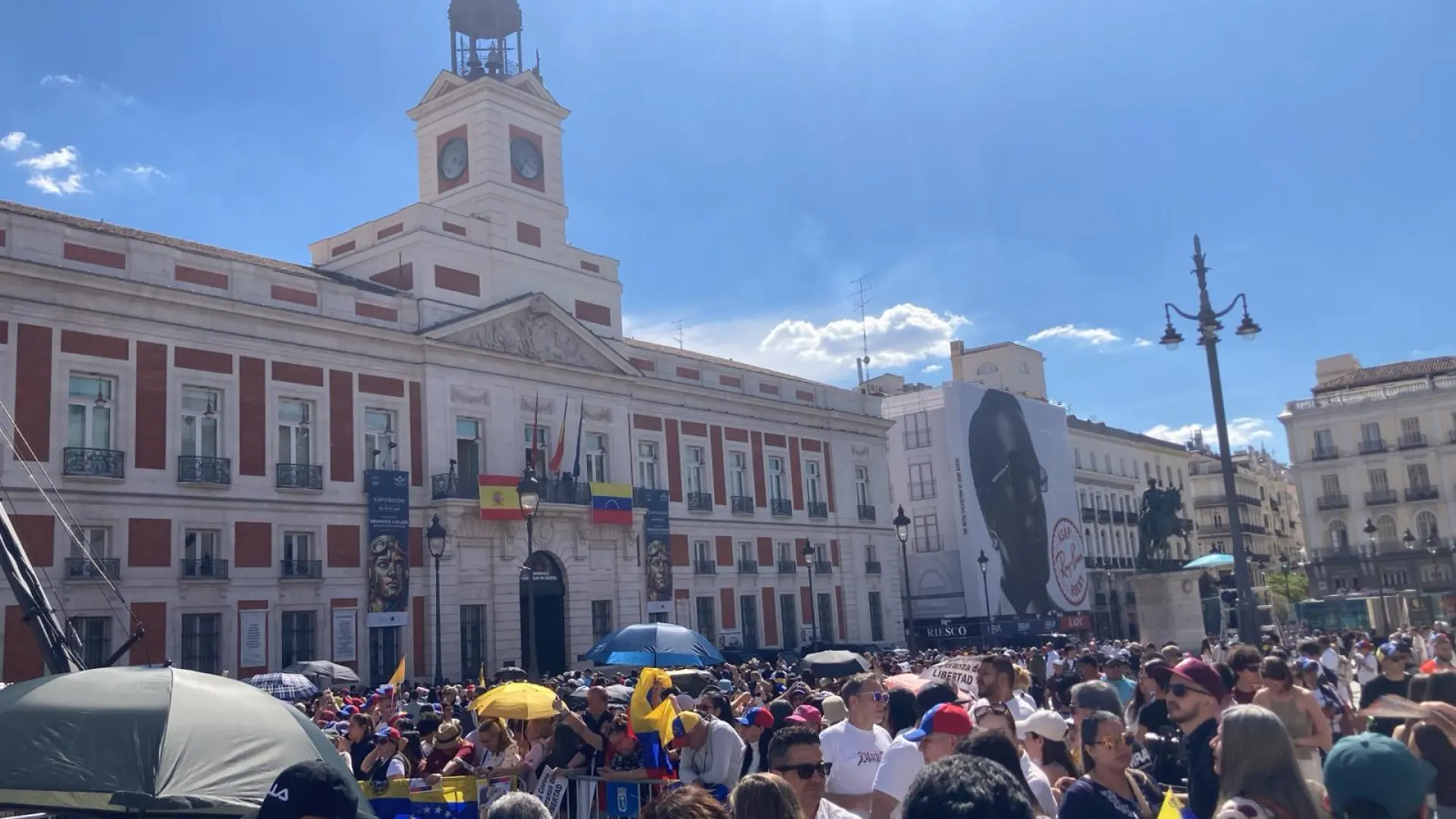
During Machado’s appearance on the balcony of Madrid’s Real Casa de Correos, Baute—known for his pop career and vocal support of Venezuelan opposition—directed the crowd to shout “¡Fuera la mona!” targeting Vice President Delcy Rodríguez. The phrase, a colloquial insult in Spanish, carries deeply racist and sexist connotations when applied to a woman of Afro-Indigenous heritage, evoking colonial-era dehumanization. Venezuela’s embassy, led by Ambassador Gladys Gutiérrez, swiftly condemned the act, stating such rhetoric “constitutes an act of dehumanization incompatible with the principles of international human rights law” and emphasizing that Venezuela’s identity is rooted in its Indigenous, African, and European mestizaje. “Any attempt to degrade, dehumanize, or stigmatize from that diversity represents, in our view, a direct attack on the very essence of what it means to be Venezuelan,” the embassy’s statement read.
Machado’s Rejection and the Politics of Respect
Machado, who has positioned herself as a unifying figure in Venezuela’s opposition movement, immediately distanced herself from the chant. “I will never utter a word that judges or disqualifies a person by their religion, gender, or race,” she said, adding that such division is precisely what the Maduro regime has weaponized for years. “We propose a process of healing and reunion based on respect for dignity and the right of each person to live freely according to their ideas,” she continued, explicitly rejecting “any disqualification of this nature.” Her response underscored a strategic effort to frame the opposition not as a replica of authoritarian tactics but as a movement grounded in pluralism and human dignity—a contrast she argues is central to restoring democratic legitimacy in Venezuela.
Historical Echoes in Madrid’s Plaza
The incident unfolded in Madrid’s Puerta del Sol, a square steeped in Spain’s own reckoning with fascism and historical memory. Just meters from the site stands a memorial to the victims of Francoist repression, underscoring the embassy’s reference to Spain’s “own history [of] the horror of fascism and hate crimes.” This geographical resonance amplified the diplomatic weight of the apology, as Madrid has grow a recurring stage for Venezuelan political theater—hosting opposition rallies, exile gatherings, and diplomatic protests since the deepening of Venezuela’s crisis after 2017. According to Spain’s Ministry of Foreign Affairs, over 400,000 Venezuelans reside in Spain, making it the largest Venezuelan diaspora in Europe, a community that has increasingly become a flashpoint for competing narratives about Venezuela’s present and future.
“When political discourse descends into racialized and gendered slurs, it doesn’t just harm individuals—it erodes the foundational trust needed for any democratic transition. What we saw in Madrid wasn’t just an offensive chant. it was a symptom of how polarization can corrupt even well-intentioned movements.”
— Dr. Elena Ríos, Professor of Political Science at Complutense University of Madrid and author of Populism and Polarization in Latin America
The Legal and Social Fault Lines
While the chant itself does not constitute a criminal offense under Spanish law, legal experts note that such rhetoric could contribute to a hostile environment protected under Spain’s Law on Comprehensive Protection against Gender Violence (Ley Orgánica 1/2004), particularly if repeated or institutionalized. “Although isolated chants may not meet the threshold for criminal prosecution, they can create conditions that violate dignity and equality protections, especially when targeting public figures based on protected characteristics,” explained Álvaro Méndez, a Madrid-based attorney specializing in anti-discrimination law. “In contexts where public officials are subjected to sustained dehumanizing rhetoric, there is growing jurisprudence recognizing the cumulative harm as a form of psychological violence.”
Why This Matters Beyond the Headlines
The incident reveals deeper fractures in how Venezuela’s opposition navigates the line between righteous indignation and the reproduction of the very authoritarian tactics they seek to overthrow. When opposition figures or their allies resort to dehumanizing language—even in moments of fervor—they risk legitimizing the regime’s narrative that the opposition is no better than the government it seeks to replace. This dynamic complicates international support, as democratic governments and multilateral institutions increasingly condition aid and recognition on adherence to human rights norms, including non-discrimination and respect for political pluralism. For Venezuela’s path forward, the ability to maintain a moral high ground is not just symbolic—We see a strategic necessity in building broad-based coalitions both domestically and abroad.
The Directory Bridge: Where Accountability Meets Action
In moments like this, communities and institutions turn to specialized services to navigate the aftermath of divisive rhetoric and uphold inclusive public discourse. Municipalities seeking to review compliance with anti-discrimination ordinances often consult civil rights law firms to assess whether public events have crossed into unlawful harassment or hostility. Meanwhile, organizations aiming to foster reconciliation after political polarization frequently engage mediation and dialogue facilitators trained in restorative justice practices to rebuild trust across fractured groups. For media platforms and event organizers looking to prevent future incidents, consulting crisis communication specialists with expertise in political and cultural sensitivity can facilitate establish guidelines that uphold free expression while preventing the spread of harmful stereotypes.
As Venezuela’s political struggle continues to unfold on stages far beyond its borders, the real test lies not in who shouts the loudest, but in who refuses to let anger become the language of the movement. The embassy’s apology was a necessary step—but the harder work begins when we ask not just what was said, but what kind of future we are willing to build with our words.