Vance Reportedly Pushed Huang’s Return: SMH
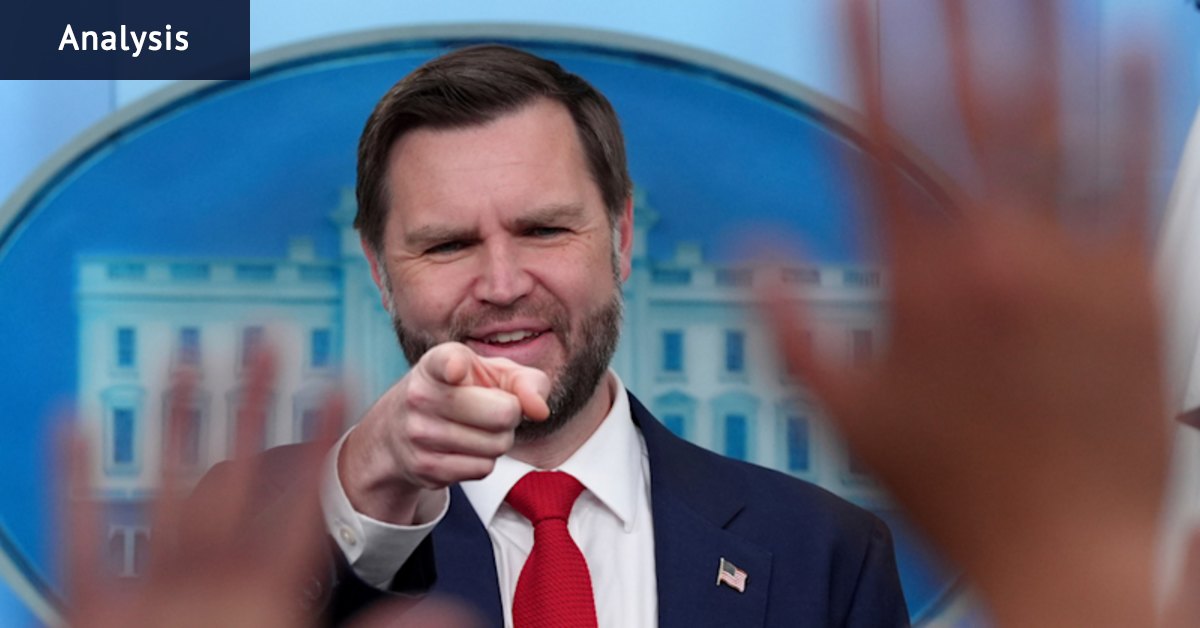
JD Vance has faced criticism after reportedly using his connections to push for the return of Nvidia boss Jensen Huang, a move that some suggest could damage his presidential ambitions.
Huang resigned two weeks ago following reports of an affair with an alleged Chinese spy. Donald Trump, who holds shares in the company and considers Huang a friend, moved to protect the executive, and Vance reportedly used his Silicon Valley ties to pressure Nvidia’s board for the CEO's return, The Sydney Morning Herald reported.
- Peter Thiel, a longtime benefactor of Vance, donated $US15 million to his 2022 Senate campaign.
- More than half of midterm voters identified data center expansion as a major factor in their vote.
- Republican strategist Brendan Steinhauser said that voters have rejected the “big tech oligarchy.”
Political Risks and Tech Ties
The intervention has drawn warnings from political observers who argue the association is a liability. “Vance is toast right now,” Brett Loyd, a former pollster to Trump, told The Sydney Morning Herald. “Absolutely toast.”
Brent Buchanan, president of the Republican firm Cygnal, added that the move fails to account for public frustration with the industry, noting, “I don’t think anybody’s a fan of big tech right now.” He further stated, “[It] doesn’t really benefit Republicans who just got waxed for not paying attention to regular people.”
Vance’s history with the sector dates back to his time at Yale Law School, where he befriended PayPal co-founder Peter Thiel. After graduation, Vance worked for Thiel’s firm, Mithril Capital, and lived in San Francisco.
While he once adopted a populist tone, vowing to break up tech monopolies, he has more recently framed technological advancement as a tool to revitalize American manufacturing through robotics and energy efficiency. Vance also received campaign support from David Sacks, a Silicon Valley investor who later became Trump’s AI tsar.
 1.0342%2Cmultiply_0.7554%2Cratio1.777778%2Cwidth_1059%2Cx0%2Cy_0/t_crop_custom/q_86%2Cf_auto/fc961e578d8cd1d5cbb9e0c91d9a3255b012588f” alt=”” title=”Photo: globeverge.com” width=”800″ height=”450″ style=”max-width:100%;height:auto;border-radius:4px;” loading=”lazy” />
Thiel shaped Vance’s personal philosophy
Before his rapid ascent in national politics, JD Vance cultivated deep ties within the technology sector through his association with PayPal co-founder Peter Thiel. After meeting as a student at Yale Law School, Vance later described the billionaire as “possibly the smartest person I’d ever met,” crediting him with significantly shaping his personal philosophy and faith.
Following his graduation, Vance gained professional experience working for Mithril Capital, Thiel’s venture capital firm. He has a history of affiliation with the tech world that included receiving substantial financial support from Silicon Valley investors, such as Peter Thiel and David Sacks, during his 2022 Senate bid.
Timing complicates Vance’s political future
The vice president’s recent decision to align himself with big tech interests appears to have been exceptionally ill-timed, according to reporting from the Sydney Morning Herald. Political observers suggest that this strategic gamble could pose a significant risk to his 2028 presidential ambitions, as public sentiment remains firmly against the industry.
Brent Buchanan, president of the Republican polling firm Cygnal, said that the move fails to resonate with voters who feel ignored by the political establishment. He argued that the current climate offers little room for such associations, suggesting that the effort to protect corporate interests does not benefit Republicans who recently struggled for failing to focus on the concerns of ordinary citizens.
Rubio warns administration about Huang
The alignment with Nvidia has also created friction with other wings of the Republican Party. Marco Rubio previously warned administration officials in March that Huang was involved with an alleged Chinese spy, according to The Sydney Morning Herald.
JD Vance’s history with the sector includes his time at Mithril Capital, where he observed that tech firms often failed due to non-competitive market conditions. This experience informed his perspective, leading him to advocate for antitrust policy as a tool for market fairness. During a February conference, the senator lauded the Federal Trade Commission’s investigations into major tech companies, signaling a populist stance that favored competition over industry consolidation.
By 2020, Vance also founded Narya, a venture firm with a portfolio that includes the social media platform Rumble.com.
Strategists suggest that Vance’s involvement with the tech industry may be linked to his aspirations for the 2028 presidential election, where he could rely on financial backing from prominent Silicon Valley donors. According to Buchanan, the lobbying effort was specifically intended to prevent economic fallout from Huang’s sudden departure. “We need a healthy Nvidia to have a healthy economy,” Buchanan said. But that doesn’t make good politics.”