Valve’s Steam Deck OLED Remains the Latest Handheld the Company Sells
Valve’s Steam Deck OLED remains the latest handheld the company sells as of November 23, 2026, and Valve’s own news pages confirm no newer hardware has been released, Shattered reported.
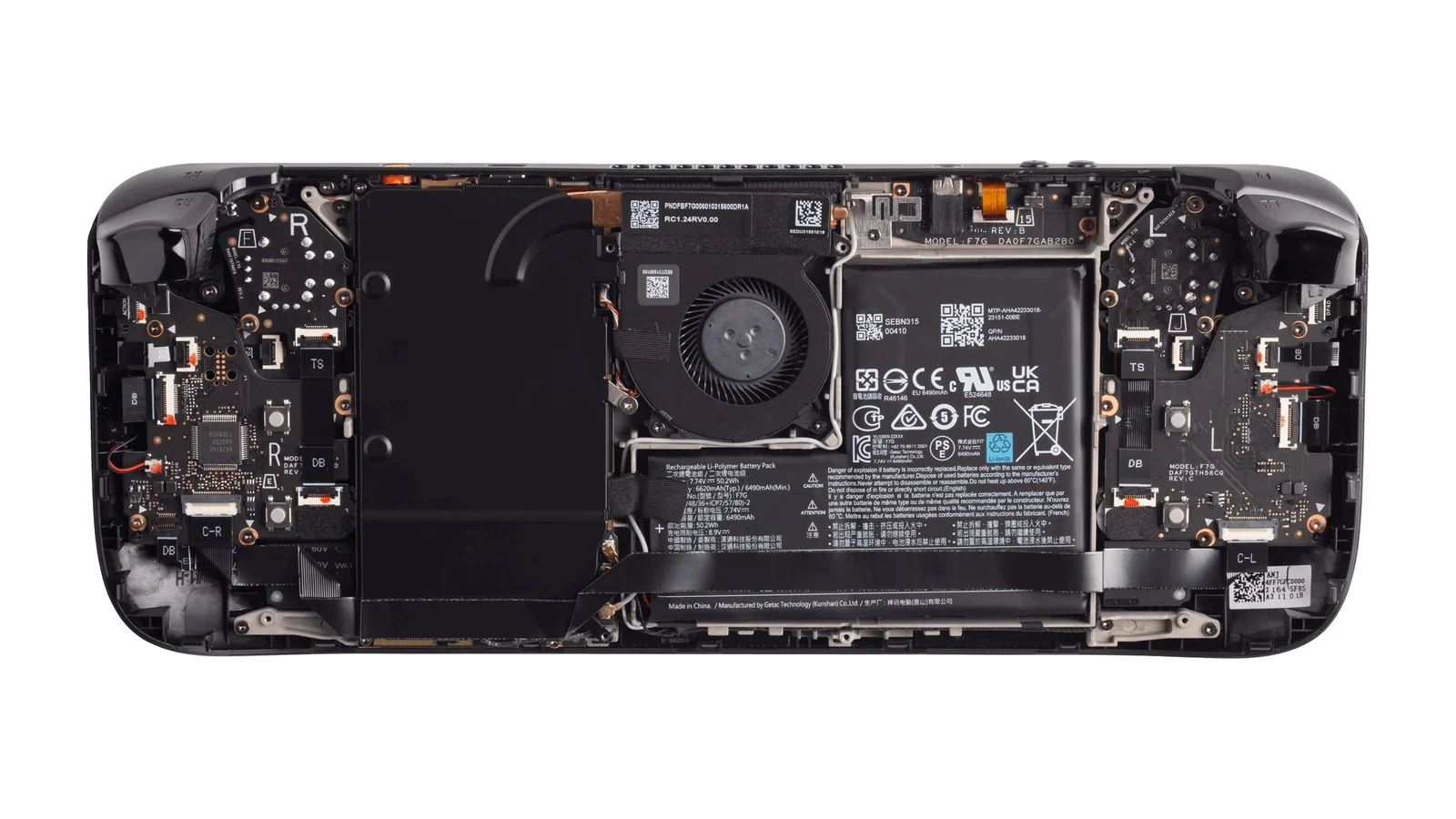
The device uses a replaceable M.2 2230 NVMe drive, allowing owners to move from 512 GB or 1 TB to 2 TB without buying a new unit, according to repair and upgrade guides cited by Shattered. The swap takes about an hour and requires a Phillips screwdriver, a pry tool, a USB stick, and ends with a fresh SteamOS installation.
Valve raised Steam Deck OLED prices on May 27, citing higher component and storage costs while the hardware stayed unchanged. In the euro zone the two models rose to €779 and €919, a €140 gap that is now smaller than the price some retailers listed for a 1 TB M.2 2230 drive on November 22 and 23 — roughly $199 to $238, according to Shattered. Doing the upgrade yourself is therefore not a shortcut to a lower price than buying the 1 TB model; it pays off when you need 2 TB, when the original drive has failed, or when you want to keep a device you already own.
Game libraries are growing faster than handheld storage, Shattered noted. A modern AAA title can consume a large share of a 512 GB drive alone, and users often uninstall and redownload weekly. A microSD card helps with older or less demanding games, but the card is slower than the internal drive; load times and shader compilation show the difference first on the card.
Three reasons drive an internal drive swap: capacity, wear, and failure. Micron documents 2 TB as the largest 2230 variant in its 2400 series, updated October 1. A drive that has absorbed thousands of downloads and deletions has used parts of its write endurance, and SMART data tells when it is nearing the limit. A faulty drive causes random freezes, corrupted games, or a handheld that cannot find SteamOS at all.
The swap does not make games run faster. The Steam Deck OLED’s APU caps the frame rate, and a faster drive only trims load times marginally, Shattered said. Expect capacity and peace of mind, not a performance lift.
Choosing the right drive decides whether the upgrade succeeds. The only format that fits the slot is M.2 2230, single-sided, NVMe over PCIe. SATA M.2 drives do not connect properly, and 2242 or 2280 lengths will not fit under the shield. Micron’s 2400 is the best-documented 2230 drive: it comes in 512 GB, 1 TB, and 2 TB, supports PCIe Gen4 and NVMe 1.4, and is single-sided in the 2230 version. Retail listings on November 22 and 23 showed Kingston NV3 1 TB at $237.99, Addlink S91 1 TB at $199.44, and Micron 2400 2 TB at $439. All three prices come from retailer lists, not manufacturers, and change daily.
QLC drives such as SSSTC’s PQ2 family, announced November 16, offer low cost per gigabyte but write speeds drop as the drive fills and they wear faster under heavy writing. For a gaming handheld that downloads tens of gigabytes at a time, TLC is the safer choice if the price gap is small.
Heat is the other constraint: the Deck has a small fan and little airflow around the drive, so a drive that runs cool under sustained writes preserves battery life and thermals better than one that only posts high peak speeds in short bursts.
Gen4 speed is likely unnecessary. Valve does not state that the handheld uses the top speed of a modern Gen4 drive, and in games the processor is often the bottleneck, not the drive. Do not pay extra for a Gen4 drive with a high peak value; a proven, single-sided 2230 drive from a maker that publishes warranty and write endurance is the safer buy.
Preparation takes about 20 minutes plus the download time for the recovery image, and it must happen before the screwdriver comes out. Step one: note the SteamOS version and set the update channel to Stable in Settings → System. Preview builds such as 3.10 and 3.10.1 fixed regressions that stopped some titles — including Forza Horizon games — from launching, but Stable remains the reference at 3.9, per Valve’s own release notes as cited by Shattered. Do not use Preview as the starting point for a clean install; switch channels only after everything works. Battery level should be below half before opening the device; a less-charged lithium cell is safer to work on.
Step two: back up everything Steam Cloud does not cover.
Reinstalling SteamOS wipes the internal drive. Steam Cloud handles save files for most supported games, but not emulator files, custom configurations, screenshots, non-Steam shortcuts, or files added in Desktop Mode. Copy the home folder to a microSD card or external drive via adapter.
Step three: create the SteamOS recovery media on a USB stick using the tool Valve recommends for your system — Rufus, balenaEtcher, or dd on Windows, macOS, or Linux. The stick must meet Valve’s minimum size; everything on it will be erased. A USB-C adapter is needed if the stick has a standard USB-A plug, because the Deck has only one USB-C port.
The hardware phase follows.
Power off completely, remove the back cover, disconnect the battery, swap the SSD, and replace the shield. Then boot from the USB stick, choose “Re-image Steam Deck,” complete first-time setup on the Stable channel, verify capacity, temperature, and write speed, and finally restore games, save files, and backups.
Common mistakes fall into three categories: wrong drive type, missing recovery media, and damaged flat cables under the cover. The guide’s sequence — make the recovery media first, open the device only after, test the drive before closing up — removes those risks. A final check script logs the drive, SteamOS version, and write speed so you can document that the swap succeeded.