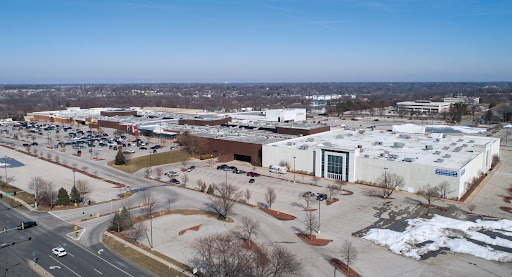
Valley West Mall Back on Market After Stalled Acquisition
Valley West Mall Returns to Market After Stalled Redevelopment Deal
Valley West Mall, a 60-acre retail site in West Des Moines, has been re-listed for sale after ATI Group’s $120 million bid for the 865,000-square-foot property collapsed in April 2026. The stalled lease buyout with JCPenney, which holds a 2032 expiration, has left the mall’s future in limbo, with 138 tenant spaces but only 18 occupied. The city remains committed to transforming the site into a mixed-use development, but developers face heightened uncertainty as the market recalibrates.
The Stalled Redevelopment and Its Fiscal Implications
The collapse of ATI Group’s $120 million offer—initially under contract in August 2025—exposes the fragility of large-scale retail redevelopment in a post-pandemic economy. With JCPenney’s lease still unsecured, the mall’s viability as a mixed-use hub hinges on resolving the department store’s exit. “This is still a work in progress,” West Des Moines Mayor Russ Trimble stated, emphasizing the city’s determination to avoid further depreciation of the asset. However, developers now face a critical question: How will the lease impasse affect capital allocation for alternative uses?
The mall’s current occupancy rate of 13% underscores the broader challenges facing legacy retail assets. A 2025 study by the Urban Land Institute found that malls with less than 20% occupancy face a 70% chance of redevelopment failure within two years. For Valley West, the stakes are heightened by its location in a region experiencing a 4% annual decline in foot traffic, according to CBRE’s Q1 2026 retail analytics report.
Market Reactions and Strategic Reorientation
Investors are now pivoting toward alternative strategies. “The lease buyout is a non-negotiable prerequisite for any redevelopment,” said
Sarah Lin, managing director at Blackstone Real Estate, in a recent interview. “Without securing JCPenney’s exit, the site remains a high-risk asset. Developers will likely seek partnerships with public-private entities to de-risk the project.”
This sentiment aligns with a broader shift in commercial real estate, where 68% of institutional investors are prioritizing “lease flexibility” in new acquisitions, per the 2026 NAREIT report.
West Des Moines officials have not yet disclosed new bidders, but the mall’s re-listing has drawn attention from firms specializing in adaptive reuse. One such entity, Urban Rebuild Solutions, has expressed interest in converting the site into a tech-focused innovation district. “The key is repurposing the existing infrastructure while addressing the lease bottleneck,” said CEO Michael Torres. “This isn’t just about retail—it’s about creating a catalyst for economic diversification.”
Strategic Leverage and B2B Opportunities
The stalled redevelopment has created a unique opportunity for B2B service providers. Cushman & Wakefield, for instance, is advising municipalities on lease buyout strategies, while Harris & Associates is monitoring litigation risks tied to the mall’s foreclosure history. These firms are positioned to capitalize on the growing demand for “retail-to-residential” transition expertise, a sector projected to grow 12% annually through 2028.

For developers, the Valley West case highlights the need for agile capital structures. “Traditional debt financing is becoming less viable for stalled projects,” noted
James Carter, a partner at Evergreen Capital Partners. “We’re seeing more private equity firms step in with mezzanine loans that align with phased redevelopment timelines.”
This approach mirrors the success of similar projects in Phoenix and Charlotte, where phased investments reduced exposure to single-tenant risks.
The Path Forward for Valley West
As the mall enters its second year under foreclosure, the city’s commitment to redevelopment remains a double-edged sword. While the $120 million bid from ATI Group represented a significant influx of capital, its failure underscores the challenges of balancing public interest with private-sector pragmatism. For investors, the lesson is clear: In a market where 62% of mall redevelopments fail due to tenant-related bottlenecks, the ability to navigate lease complexities will define success.
For now, Valley West Mall remains a cautionary tale—and a potential blueprint—for other struggling retail assets. As Mayor Trimble reiterated, “We’re not giving up, but we need the right partners to make this work.” For the B2B ecosystem, the message is equally urgent: The future of retail redevelopment depends on firms that can turn fiscal obstacles into strategic advantages.