
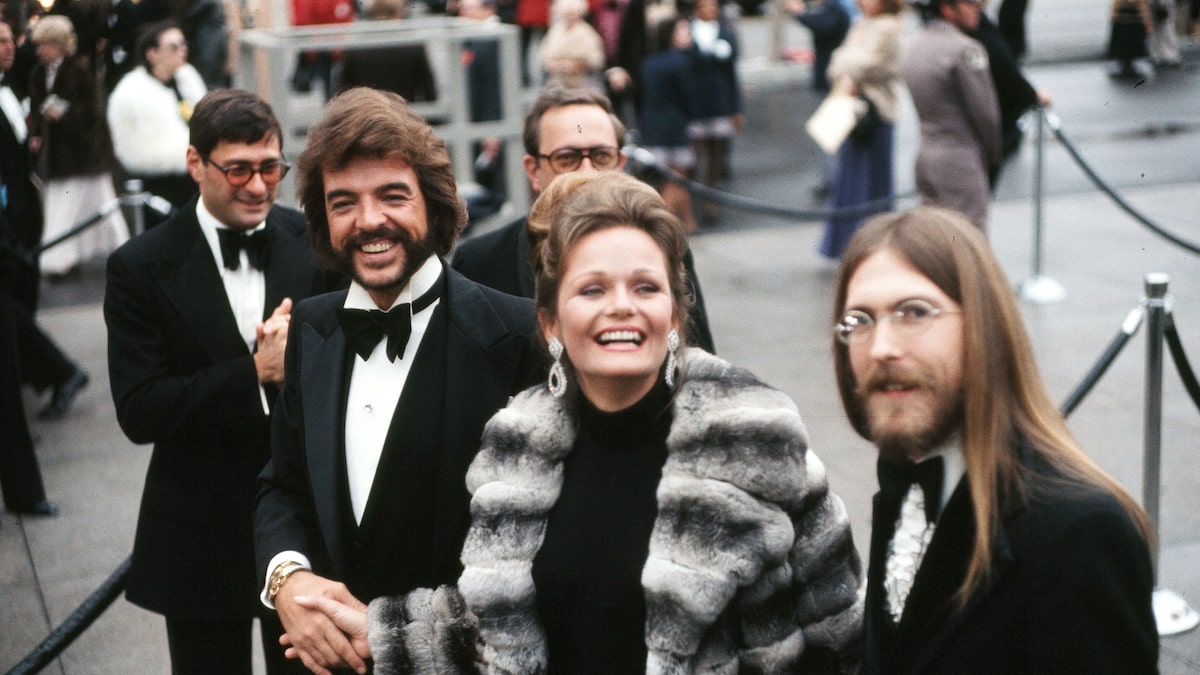
Valerie Perrine: ‘Superman’ & ‘Lenny’ Actress Dies at 82 After Parkinson’s Battle
Valerie Perrine, the actress celebrated for her Academy Award-nominated role in “Lenny” and her portrayal of Eve Teschmacher in the first two “Superman” films, died Monday at her Beverly Hills home, according to a statement posted on her official Facebook page. She was 82 years old.
Perrine had been battling Parkinson’s disease for more than 15 years. “It is with deep sadness that I share the heartbreaking news that Valerie has passed away,” read the statement from friends and caretakers. “She faced Parkinson’s disease with incredible courage and compassion, never once complaining. She was a true inspiration who lived life to the fullest—and what a magnificent life it was. The world feels less beautiful without her in it.”
The statement likewise included a plea for support, noting that Perrine’s finances had been depleted by the cost of her long illness. A GoFundMe campaign was launched to assist cover the expenses of her final wish: to be interred at Forest Lawn Cemetery. “Please consider donating, sharing, and helping spread the word for her funeral GoFundMe. Her final wish is to be laid to rest at Forest Lawn Cemetery, but after more than 15 years of fighting Parkinson’s, her finances are exhausted. Let’s reach together to make her last wish a reality — she truly deserves it,” the post stated.
Born Valerie Ritchie Perrine on September 3, 1943, in Galveston, Texas, Perrine’s path to acting was unconventional. She began her career as a showgirl in Las Vegas, performing at the Stardust Resort and Casino’s “Lido de Paris” in 1968. A near-fatal encounter with the Manson Family loomed large in her early life. She was invited to a party by celebrity hairstylist Jay Sebring, but ultimately declined due to a scheduling conflict with her showgirl duties; Sebring and actress Sharon Tate were among those murdered at the party in 1969.
Perrine transitioned to film with a role in George Roy Hill’s 1972 adaptation of Kurt Vonnegut’s “Slaughterhouse-Five.” Her breakthrough came in 1974 with “Lenny,” where she played Honey Bruce, the wife of comedian Lenny Bruce. Her performance garnered critical acclaim, earning her the Best Actress award at the Cannes Film Festival, an Academy Award nomination for Best Actress, and a BAFTA Award for Most Promising Newcomer to Leading Film Roles.
She followed “Lenny” with a string of notable roles, including Eve Teschmacher in Richard Donner’s “Superman” (1978) and its sequel, “Superman II” (1980), alongside Christopher Reeve and Gene Hackman. Her portrayal of the playfully villainous Teschmacher became one of her most recognizable performances.
Perrine also appeared in “W.C. Fields and Me” (1976), “The Electric Horseman” (1979), and “The Border” (1982). She embraced a willingness to push boundaries, becoming the first woman to appear topless on American television in a PBS production of “Steambath” in 1973 and posing for Playboy magazine in 1972.
Although “Can’t Stop the Music” (1980), featuring the Village People and Caitlyn Jenner, failed to resonate with audiences, Perrine continued to work steadily in television and film. She had a memorable cameo in “Cannonball Run” (1981), delivering a playful line while interacting with Adrienne Barbeau’s character. Her television credits included appearances on “Faerie Tale Theatre,” “Northern Exposure,” “ER,” and “As the World Turns.”
In 2015, Perrine was diagnosed with Parkinson’s disease, which ultimately curtailed her acting career. She publicly documented her struggles with the disease, including the impact on her dental health, undergoing dental implant procedures and sharing her experience with fans. As her mobility declined, she connected with fans through social media, selling autographed photos and sharing updates on her life.
Stacey Souther, director of a biographical documentary short about Perrine, shared the news of her death on Instagram and highlighted the financial challenges facing the actress’s estate. Souther had previously described Perrine as a courageous and inspiring figure, anticipating a sense of liberation with her passing. “It’s going to really be painful,” Souther said, “But I know on the other side of that, she’s not going to be sick. Valerie is not a complainer. But she’s been going through something for over 10 years. She’s bedridden and all that. So, I think of the flip side of that, and like, what I’m saying is that she’ll finally be free.”