
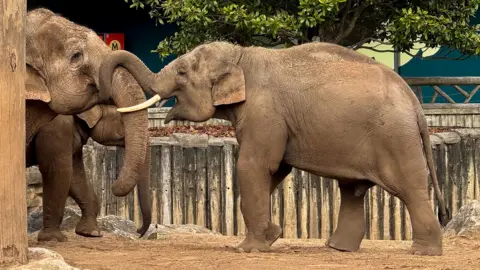
Vaccine Offers Hope in Fight Against Deadly Elephant Virus
SURREY, UK – Scientists at the University of Surrey have announced a significant breakthrough in the growth of a vaccine too protect elephants from Elephant Endotheliotropic Herpesvirus (EEHV), a virus responsible for up to 50% of elephant deaths in Asia.The newly developed vaccine, detailed in recent research, represents a crucial step toward safeguarding these endangered animals.
EEHV poses a particularly acute threat to young Asian elephants, often causing rapid and fatal illness. While the virus has been known for decades, effective prevention has remained elusive. This vaccine differs from previous attempts by focusing on delivering antigens - substances that trigger an immune response – directly to the elephants, offering a possibly scalable solution for widespread protection. Researchers are now focused on ensuring the vaccine can be effectively deployed in the field, reaching vulnerable elephant populations in critical habitats.
“Ultimately we want to use this vaccine in the elephants that are at risk,so we want to make sure that we can get it to were it’s needed,” explained Dr. Edwards, a lead researcher on the project. The vaccine’s design also holds broader implications for conservation efforts, demonstrating the potential to create targeted immunizations for other endangered species facing similar threats.
Professor Falko Steinbach added,”We think this is a significant step forward,and not necessarily only for the elephants,but as it also shows that you can design and apply vaccines to help endangered species.” The research team is currently working to optimize vaccine delivery and storage, aiming for a solution that can withstand the logistical challenges of reaching remote elephant habitats. The vaccine contains EEHV antigens, key ingredients designed to stimulate the elephants’ immune systems.
