
New Cancer Vaccines Target Recurrence Using Cell Remnants
Innovative Approach Shows Promise in Preventing Tumor Regrowth
Researchers at the University of Wisconsin–Madison are developing personalized cancer vaccines using a novel byproduct of dying cancer cells, potentially preventing aggressive tumors from returning. This innovative method has already shown promising results in preclinical trials and could significantly improve outcomes for patients.
Exploiting Pyroptotic Vesicles
The research, spearheaded by Quanyin Hu, a professor at the UW–Madison School of Pharmacy, focuses on pyroptotic vesicles. These tiny sacs contain remnants of cancer cells, including tumor-specific antigens. These antigens can help the immune system locate and eradicate any remaining cancer cells after tumor removal.
In a study published in the journal *Nature Nanotechnology*, Hu and his colleagues engineered these vesicles to carry an immune-stimulating drug. They then incorporated these engineered vesicles into a hydrogel implanted after tumor removal. This localized approach could potentially reduce side effects compared to traditional systemic vaccine injections.
“Compared to the other approaches, ours shows a much stronger immune response,”
—Quanyin Hu, Professor
Cancer recurrence is a significant challenge, with recurrence rates varying widely depending on cancer type and stage; for example, the recurrence rate for triple-negative breast cancer is around 30% within five years (American Cancer Society, 2024).
Vaccine Advantages
The team’s approach was evaluated using mouse models of melanoma and triple-negative breast cancer. The mice that received the hydrogel-based vaccine demonstrated significantly longer survival compared to other treatments.
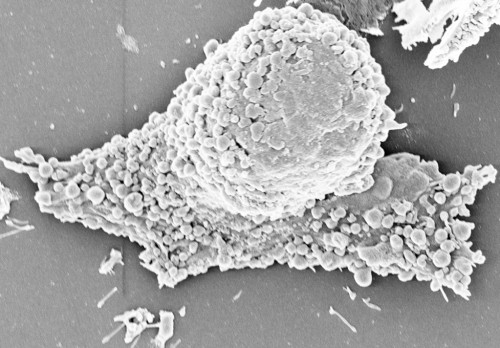
This method may be applicable to cancers with high recurrence rates, like pancreatic cancer and glioblastoma. Because the engineered vesicles possess molecular information specific to each patient’s cancer cells, the immune response they generate can be precisely targeted.
Hu is optimistic about the potential of this method. Some mice receiving the highest doses of the experimental treatment remained cancer-free throughout the study.
“That’s really exciting because we demonstrated that we could essentially cure these mice with no tumor recurrence,”
—Quanyin Hu
Further testing is required before human trials can begin, but the early results suggest a promising new avenue for cancer treatment. This approach offers a potentially more effective way to prevent cancer recurrence and improve patient outcomes.
