
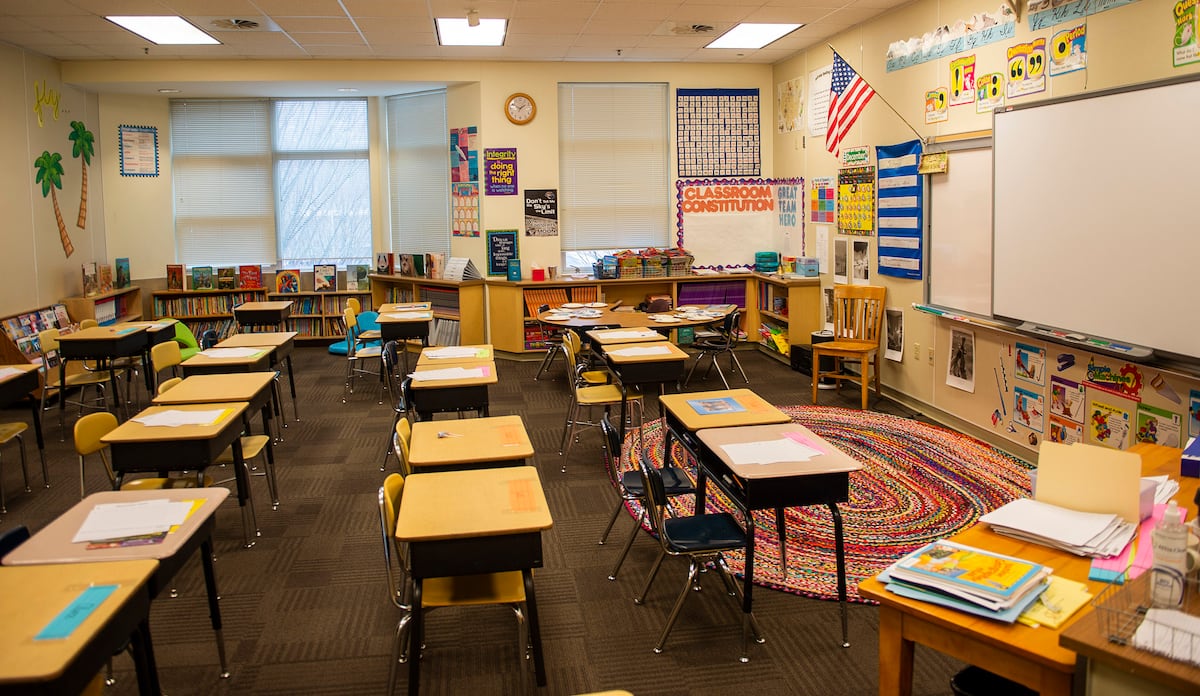
Empty classrooms and dwindling student numbers are signaling a crisis for German language programs across Utah, a situation one educator warns is a threat to the state’s future global competitiveness.
BreAnn Busboom, a public high school German teacher and Utah Teacher Fellow pursuing a doctorate in education policy and leadership, detailed the decline in a recent opinion piece published by The Salt Lake Tribune. She reports that German programs are being cut from K-12 schools and higher education institutions statewide, despite German remaining the most widely spoken native language in the European Union.
The closures are occurring as Utah increasingly prioritizes educational “value” based on enrollment figures, according to Busboom. This shift in focus, she argues, overlooks the broader benefits of language learning – cultural understanding, critical thinking, and problem-solving skills – and undervalues the importance of linguistic diversity.
“It is frustrating teaching German when others insist they don’t understand why someone would take German as it ‘isn’t as useful’ as Spanish,” Busboom wrote. She highlighted Utah’s economic ties with German-speaking countries and the relevance of German language skills for students pursuing careers in science, technology, engineering, and mathematics.
The situation is compounded by challenges in recruiting German teachers, leading some schools to eliminate programs due to low enrollment. Although, Busboom contends that low enrollment isn’t the sole driver of these cuts, but rather a lack of perceived value among administrators and parents.
Funding constraints also play a significant role. Schools facing budget cuts often target elective courses like languages, and the problem is exacerbated by legislation like House Bill 265, which recently forced Utah’s public universities to cut programs with lower enrollment. According to Busboom, this legislation disproportionately impacted language and humanities departments, eliminating German programs and teacher preparation programs at multiple universities.
The consequences of these cuts extend beyond individual classrooms. Busboom recounts witnessing the dismantling of a strong German program after leaving a previous school district, and now fears for the future of her current program, where she is one of only two remaining German teachers. The loss of university-level teacher preparation programs further threatens the pipeline of qualified German educators.
Busboom advocates for a reevaluation of how Utah defines “value” in education, arguing that learning a language that doesn’t directly lead to a career can still foster a global mindset. She urges support for remaining German programs and a broader commitment to language learning opportunities across the state.
