US Uninsured Population Increases in 2024: KFF Analysis of ACS Data
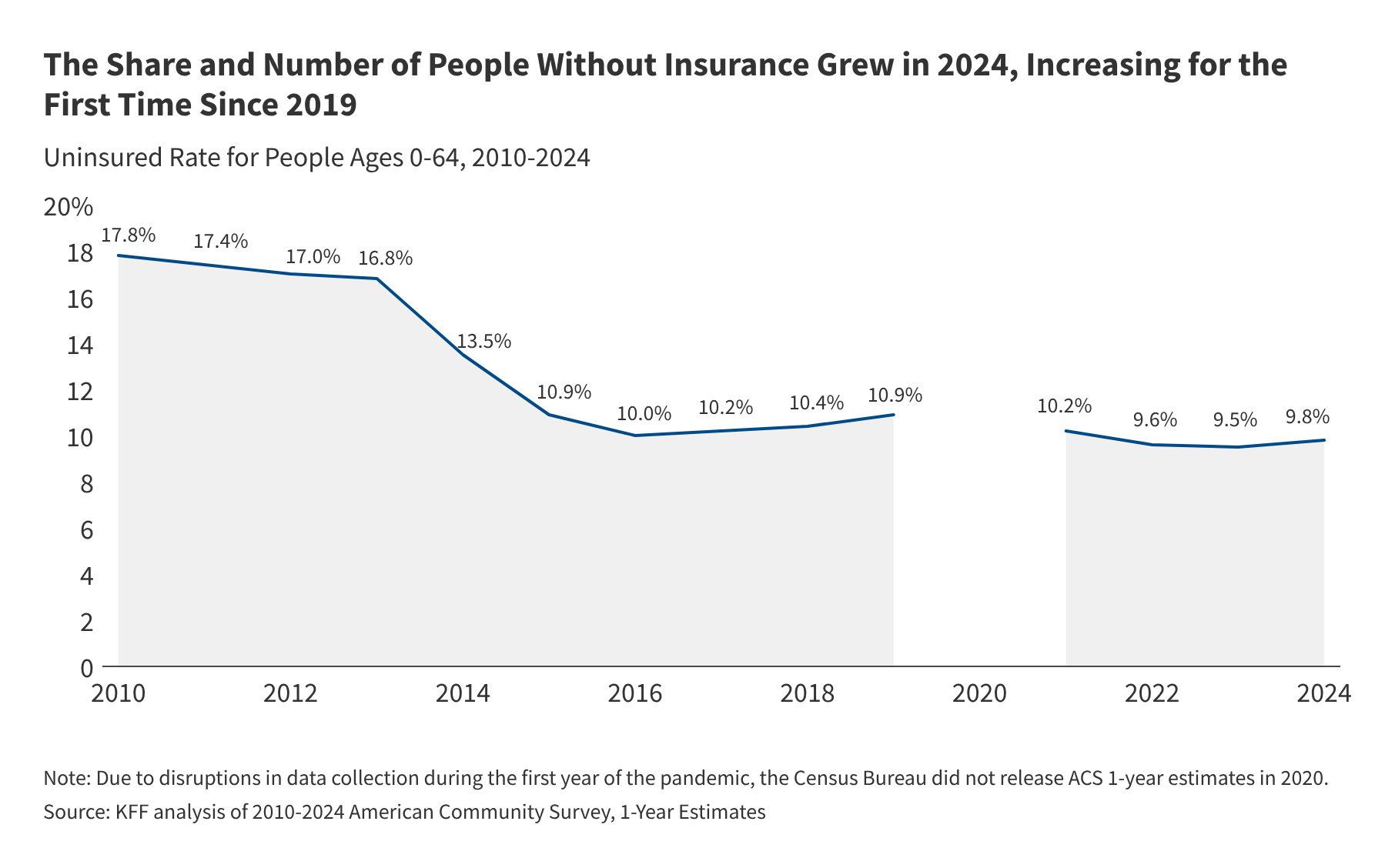
The stability of the American healthcare safety net has encountered a significant fracture. After years of steady progress, the number and share of individuals lacking health insurance grew in 2024, marking the first increase in this demographic since 2019.
Key Clinical Takeaways:
- Health insurance coverage declined in 2024, reversing a positive trend observed between 2019, and 2023.
- The American Community Survey (ACS) serves as the primary epidemiological tool for tracking these coverage gaps across diverse geographies.
- Increased uninsured rates directly correlate with reduced access to the standard of care, elevating the risk of untreated morbidity.
This resurgence of the uninsured population represents more than a statistical fluctuation. it is a public health crisis that threatens to undermine years of progress in preventative medicine. When a population loses coverage, the immediate result is a shift from proactive primary care to reactive emergency interventions. This transition often occurs too late in the disease progression, where manageable conditions evolve into acute crises, placing an unsustainable burden on the existing healthcare infrastructure.
The Epidemiological Engine: Decoding the American Community Survey
Understanding the scale of this coverage gap requires a deep dive into the American Community Survey (ACS), the foundational instrument used by the U.S. Census Bureau to track social and economic characteristics. The 2024 data, analyzed by KFF, reveals a troubling upward trajectory in the uninsured rate. The ACS is not a static snapshot but an ongoing survey that provides critical data on the demographic and economic determinants of health.
The precision of this data is derived from its granular architecture. The ACS 1-year estimates are available for the entire nation, every state, the District of Columbia, and Puerto Rico. To ensure that local health disparities are not overlooked, the survey extends its reach to all congressional districts, metropolitan statistical areas, and any county or place with a population of 65,000 or more. This allows public health officials to identify specific “coverage deserts” where the lack of insurance is most acute.
The data is categorized into specific modules to provide different levels of clinical and social insight. Detailed Tables offer the most granular estimates, even as Subject Tables provide a blend of estimates and percentages for specific health topics. For those analyzing broad socio-economic trends, Data Profiles and Comparison Profiles offer a longitudinal view, comparing current data against the previous four years. This historical context is what allowed analysts to identify that the 2024 increase is a reversal of a trend that had held since 2019.
For individuals who have lost coverage and are facing immediate medical needs, the risk of delayed diagnosis is high. It is critical for these populations to connect with vetted community health centers that provide sliding-scale services to maintain a baseline standard of care and prevent avoidable morbidity.
Longitudinal Analysis and the Role of Microdata
To understand the systemic nature of insurance instability, researchers rely on harmonized microdata. IPUMS USA plays a vital role here by collecting and preserving U.S. Census microdata, including the ACS from 2000 to the present and decennial censuses dating back to 1790. By harmonizing this data, epidemiologists can study how health coverage shifts across generations and economic cycles.
The ability to analyze individuals within their family and community context allows for a more sophisticated understanding of the “churn” in health insurance—where individuals move rapidly between insured and uninsured statuses. This instability often leads to fragmented care, where the continuity of treatment for chronic conditions is broken, leading to poor clinical outcomes and increased hospitalization rates.
The American Community Survey is the premier source for information about America’s changing population, households, and workforce—and a crucial component of the American democracy.
The urgency of maintaining this data is highlighted by The Census Project, which has raised alarms regarding the risks to essential economic and social data. If the integrity of the ACS is compromised, the ability of the healthcare system to track and respond to the needs of the uninsured is severely diminished. Without accurate data, the allocation of federal health grants and the placement of new clinics become guesswork rather than evidence-based strategy.
Clinical Implications of the Coverage Gap
The financial implications of being uninsured extend far beyond the inability to pay a premium. From a clinical perspective, the lack of insurance creates a barrier to the “Standard of Care.” Patients without coverage are significantly less likely to receive routine screenings, vaccinations, and early interventions for hypertension or diabetes. This neglect leads to a higher prevalence of advanced-stage diseases that are more costly and difficult to treat.

Navigating the legal and regulatory complexities of health coverage, especially for those eligible for subsidies or Medicaid, often requires professional guidance. Many uninsured individuals remain so simply due to administrative hurdles. In these instances, seeking the expertise of certified healthcare advocates can be the difference between continued medical neglect and the restoration of essential health services.
The KFF analysis of the 2008-2024 ACS estimates underscores that the uninsured population is not a monolith; it is shaped by a complex interplay of age, race, ethnicity, and employment status. The “Selected Population Profiles” within the ACS provide the necessary data to understand how these subgroups are disproportionately affected, allowing for targeted public health interventions.
The trajectory of the 2024 data suggests that the U.S. Healthcare system is at a crossroads. The reversal of the post-2019 trend indicates that the mechanisms used to expand coverage may be fraying. Addressing this requires a dual approach: stabilizing the data collection infrastructure provided by the Census Bureau and expanding the actual points of access for care. For those currently navigating the system without a safety net, the priority must remain the immediate connection to primary care to mitigate long-term health risks. Finding a provider through a verified directory of specialists and clinics is the first step in reclaiming a path toward health stability.
Disclaimer: The information provided in this article is for educational and scientific communication purposes only and does not constitute medical advice. Always consult with a qualified healthcare provider regarding any medical condition, diagnosis, or treatment plan.