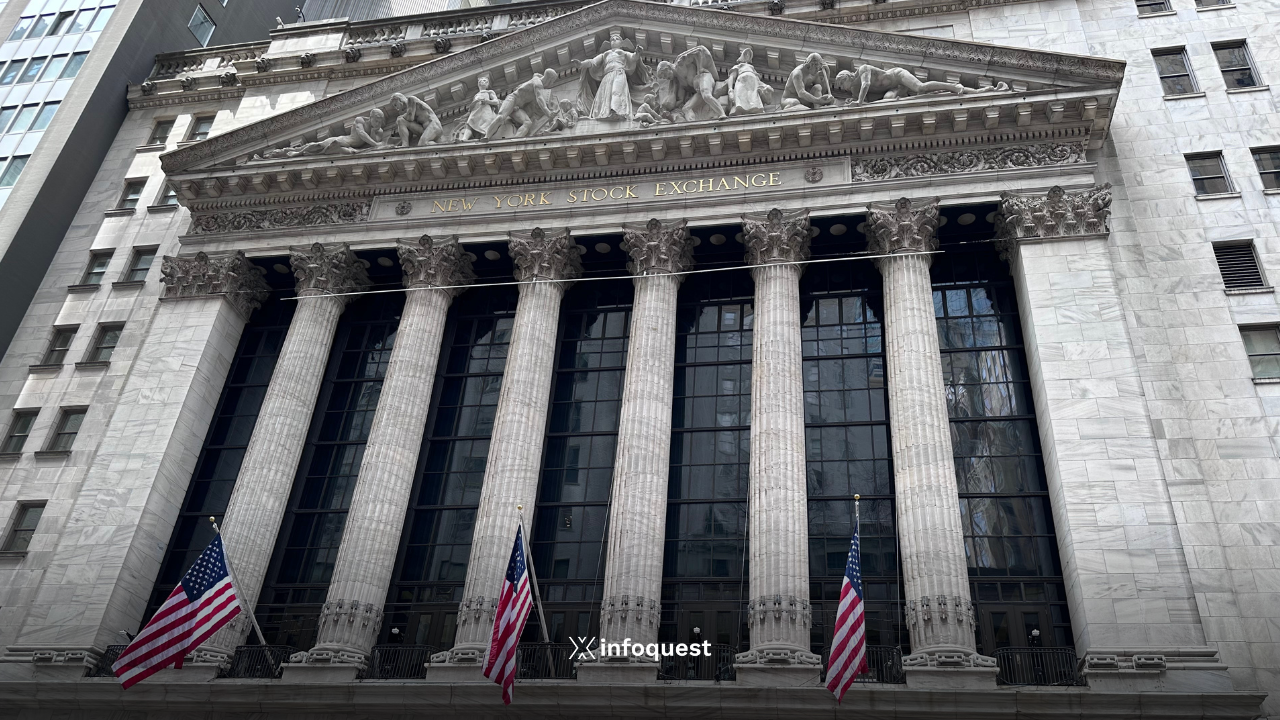
US Stocks Fall, Oil Surges as US-Iran Tensions Rise – Global Markets React to Geopolitical Uncertainty
On April 24, 2026, the Dow Jones Industrial Average closed down 179 points as investors digested mixed signals from U.S.-Iran nuclear talks, while the S&P 500 and Nasdaq Composite reached new intraday highs, reflecting divergent market reactions to geopolitical optimism and persistent inflation concerns in the energy sector.
How Geopolitical Hopes and Inflation Fears Are Splitting U.S. Equity Markets
The split performance underscores a growing divergence between traditional industrial exposure and tech-heavy indices, with the Dow’s 0.4% decline contrasting sharply against the S&P 500’s 0.6% gain and Nasdaq’s 0.9% rise. This bifurcation is being driven by sector-specific reactions to crude oil volatility, which spiked over 3% on Brent futures amid fears of prolonged Iranian supply disruptions, even as diplomatic channels remain open. Energy stocks within the Dow, such as Chevron and ExxonMobil, weighed on the index despite broader market strength, highlighting how commodity-linked firms remain vulnerable to Middle Eastern risk premiums. Meanwhile, technology and communication services sectors continued to benefit from lower-than-expected core PCE data released earlier in the week, reinforcing expectations of a potential Fed pause in June.


“Markets are pricing in a soft landing for inflation but a hard landing for geopolitical risk premiums—especially in energy-intensive industries. The real test comes when Q1 earnings reveal whether companies can pass through higher input costs without damaging demand.”
This dynamic is further complicated by uneven corporate guidance. While semiconductor firms like NVIDIA and AMD raised Q2 revenue forecasts citing AI-driven demand, industrial conglomerates such as Caterpillar and 3M issued cautious outlooks, citing supply chain bottlenecks in rare earth materials and elevated freight costs. According to the Federal Reserve Bank of New York’s Global Supply Chain Pressure Index, readings remain above pre-pandemic averages, particularly in logistics routes transiting the Strait of Hormuz—a chokepoint now under renewed scrutiny due to Iranian naval activity.
Why B2B Firms Are Reassessing Risk Hedging and Supply Chain Resilience
The market’s reaction reveals a critical gap: companies with heavy exposure to volatile commodities or geopolitically sensitive supply chains lack adequate tools to model and mitigate tail risks. This represents driving increased demand for specialized B2B services that combine macroeconomic forecasting with operational risk management. Firms are turning to providers of commodity risk advisory platforms to simulate scenarios involving oil price shocks, currency fluctuations, and trade restrictions—tools that integrate real-time satellite data, port congestion metrics, and sanctions screening. Simultaneously, corporate treasurers are seeking enterprise FX and interest rate hedging solutions to lock in costs amid unpredictable central bank responses to inflation prints that continue to surprise to the upside.
Legal and compliance teams are also under pressure. With the U.S. Treasury’s Office of Foreign Assets Control (OFAC) maintaining heightened vigilance over secondary sanctions evasion, multinational corporations are consulting international trade law firms to audit counterparty exposure and ensure adherence to evolving export control regulations—especially those involving dual-use technologies destined for regions of strategic concern.
The Macro Explainer: Three Ways This Trend Reshapes Corporate Strategy
- First, capital allocation is shifting toward asset-light models. Companies are reducing fixed investments in geographically concentrated facilities and instead investing in modular production and nearshoring strategies, a trend supported by rising capital expenditures in automation and AI-driven logistics.
- Second, ESG reporting is evolving to include geopolitical risk disclosure. Investors are now demanding Scenario Analysis aligned with the TCFD framework that incorporates conflict likelihood indices—not just climate variables—into long-term financial planning.
- Third, the demand for real-time alternative data is surging. Hedge funds and corporate strategy teams alike are licensing proprietary feeds on vessel tracking, social sentiment in key regions, and customs shipment volumes to gain an informational edge over traditional economic indicators.
As the second quarter unfolds, the market’s ability to distinguish between transitory noise and structural shifts will determine which sectors outperform. For businesses navigating this environment, the imperative is clear: build resilience not through speculation, but through verified data, expert counsel, and adaptive infrastructure—resources accessible through the World Today News Directory’s vetted network of B2B providers specializing in risk intelligence, financial hedging, and global compliance.