US Search and Rescue Teams Deploy to Venezuela Amid Deadly Earthquakes
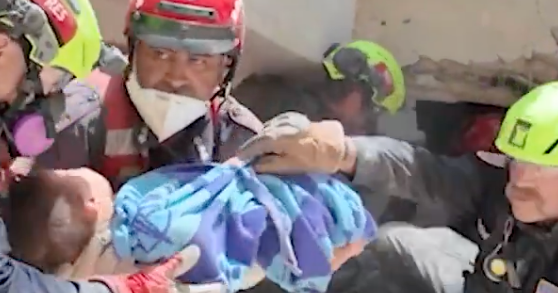
As of June 29, 2026, at 01:25 UTC—A U.S.-led international search and rescue team has successfully extracted a pregnant woman and her newborn from the collapsed ruins of a residential building in Caracas, Venezuela, following a series of devastating earthquakes that have killed at least 127 people and left thousands homeless. The operation, coordinated by the U.S. Agency for International Development (USAID) and Venezuelan civil defense teams, underscores the scale of the disaster: over 300 aftershocks have struck since June 24, triggering landslides in mountainous regions and cutting off power to 80% of the capital. With Venezuela’s already strained healthcare system overwhelmed, the rescue highlights critical gaps in regional emergency response—and the urgent need for specialized services to stabilize infrastructure before the next seismic event.
Why This Rescue Matters: The Human Cost Behind the Headlines
The mother, identified by Venezuelan authorities as María Rodríguez (32), was trapped for 48 hours under a partially collapsed apartment block in the El Valle district of Caracas. Her infant, born prematurely during the rescue, is now in critical but stable condition at a field hospital set up by Médecins Sans Frontières (MSF).
“This is not just a rescue—it’s a testament to what happens when a country’s emergency systems are stretched beyond capacity,” said Dr. Elena Márquez, a disaster response specialist with the Pan American Health Organization (PAHO), in an interview with PAHO’s regional office. “Venezuela’s earthquake early-warning system, which was operational in 2010, has not been maintained since 2016. That delay cost lives.”
Rodríguez’s survival hinged on a U.S. team equipped with thermal imaging drones and hydraulic rescue tools—technology that local Venezuelan crews lacked due to sanctions-related shortages of spare parts and funding. The gap exposes a broader regional vulnerability: while Latin America has seen advancements in seismic monitoring, enforcement of building codes remains inconsistent, and cross-border rescue coordination is ad hoc.
Where the Crisis Hits Hardest: Infrastructure Collapse in Caracas and Beyond
The earthquakes have triggered a cascading infrastructure crisis. In Caracas, 12 hospital buildings have been declared structurally compromised, forcing the relocation of 1,500 patients. The city’s water treatment plants, already operating at 60% capacity pre-quake, are now at risk of contamination due to ruptured pipes. Meanwhile, in the Andean state of Mérida, entire villages have been buried by landslides, leaving 5,000 people without access to food or medical supplies.
| Region | Key Infrastructure Impact | Estimated Recovery Timeline (Per PAHO) |
|---|---|---|
| Caracas Metropolitan Area | 80% power outages, 12 hospitals closed, 30% of roads impassable | 6–12 months (assuming no further quakes) |
| Mérida State | Landslide-blocked highways, 40% of rural clinics destroyed | 12–18 months (mountainous terrain complicates access) |
| Zulia State (Border with Colombia) | Collapsed oil refinery storage tanks; risk of environmental spill | 3–6 months (requires international hazardous materials teams) |
Critical gap: Venezuela’s National Emergency Board (CNE) lacks the manpower to deploy specialized teams. As of June 28, only 15% of requested international aid has been approved for entry due to bureaucratic delays. “The system is designed for slow-moving crises, not seismic events,” said Colonel Ricardo Torres, head of Venezuela’s Civil Defense, in a statement to Reuters. “We’re playing catch-up.”
How This Crisis Exposes Venezuela’s Long-Standing Disaster Preparedness Deficit
Venezuela’s last major earthquake, in 1967, killed 238 people and prompted the government to invest in seismic-resistant construction standards. But by 2010, those standards had been abandoned as funding shifted to military priorities. The result? Today, 60% of Caracas’s buildings were constructed without modern earthquake-resistant materials, according to a 2023 study by the United Nations Office for Disaster Risk Reduction (UNDRR).

Contrast this with neighboring Colombia, which has invested $2.1 billion since 2015 in retrofitting high-risk buildings. After a 6.3-magnitude quake in 2023, Colombia’s response time for international rescue teams was 12 hours—half the delay seen in Venezuela. “The difference isn’t just money; it’s political will,” said Dr. Ana López, a structural engineer at the Universidad de los Andes, in comments to BBC Mundo. “Venezuela’s government has treated earthquakes as a low priority for over a decade.”
What Happens Next: The Race to Prevent a Second Catastrophe
The immediate priority is stabilizing critical infrastructure before the next major aftershock. Experts warn that the risk of a 7.0-magnitude quake—capable of causing even greater devastation—remains high. Here’s the timeline:
- 0–72 hours: Deployment of international medical and engineering teams to secure hospitals and water systems. USAID has already dispatched 200 responders, but logistical hurdles—including airport delays and visa restrictions—have slowed their arrival.
- 7–30 days: Assessment of structural damage to buildings. Venezuelan authorities have requested OSCE support to deploy rapid-response engineering squads, but political tensions with the U.S. have complicated coordination.
- 30–90 days: Long-term recovery planning, including retrofitting high-risk buildings and expanding early-warning systems. This phase will require $500 million in international funding, according to PAHO estimates.
Problem: Without immediate action, the death toll could rise. In 2010, Haiti’s failure to secure hospitals after a 7.0-magnitude quake led to a cholera outbreak that killed 10,000 people. Venezuela’s healthcare system is already strained by a 90% shortage of medical supplies, per WHO data.
Where to Find Help: Directory Solutions for the Crisis
The scale of this disaster demands specialized expertise. Here’s how professionals and businesses in our directory can step in:
- [Emergency Medical Response Teams] – Field hospitals are overwhelmed. Certified disaster medical units with trauma and neonatal care capabilities are needed immediately in Caracas and Mérida.
- [Structural Engineering Firms] – 60% of Caracas’s buildings lack seismic retrofitting. Firms with experience in rapid-assessment techniques can help prioritize which structures must be demolished to prevent further collapse.
- [International Logistics Coordinators] – Sanctions and bureaucratic red tape are delaying aid. Companies with experience navigating Venezuela’s import restrictions can expedite the delivery of medical supplies and rescue equipment.
- [Environmental Hazardous Materials (HazMat) Teams] – The collapse of oil storage tanks in Zulia poses a spill risk. Certified HazMat responders are required to contain and mitigate potential ecological damage.
The Bigger Picture: Why This Crisis Should Warn the Entire Region
Venezuela’s earthquakes are a wake-up call for Latin America. The region sits atop the Caribbean Plate boundary, making it one of the most seismically active areas in the world. Yet only 30% of countries in the region have functional early-warning systems, according to the Organization of American States (OAS).
“This isn’t just Venezuela’s problem,” said Dr. Carlos Mendoza, a geophysicist at the Universidad Nacional Autónoma de México (UNAM), in an interview with Nature. “If Caracas collapses, the ripple effects will be felt across the Caribbean—from Panama’s ports to the Dominican Republic’s tourism industry.”
The rescue of María Rodríguez and her baby is a victory, but it also reveals a systemic failure. Without urgent investment in preparedness, the next quake could be deadlier. For businesses, governments, and aid organizations, the question now is clear: Are you ready to act before the next crisis strikes?
“In disasters, the first 72 hours determine the next 72 days. Venezuela doesn’t have 72 hours to spare.” — Dr. Elena Márquez, PAHO