US President Donald Trump Approves Renewed Military Operation Against Yemen’s Houthi Movement
US President Donald Trump has authorized Saudi Arabia to launch a renewed military operation against Yemen’s Houthi movement, according to reports confirmed by US officials.
The Diplomatic Path to Escalation
The decision followed a series of high-level consultations between Washington and Riyadh. This dialogue paved the way for a direct phone call between President Trump and Crown Prince Mohammed bin Salman, during which the Saudi leadership secured American backing for the military push.

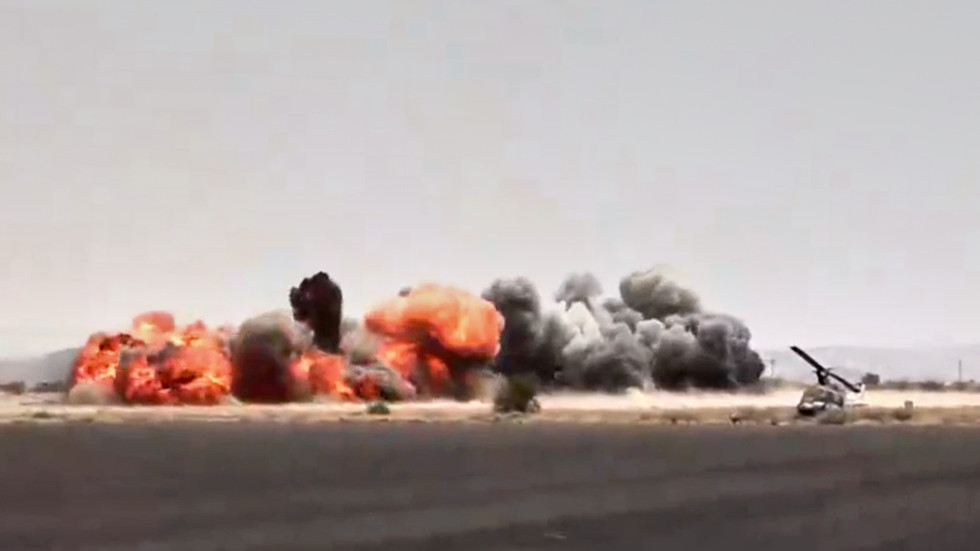
The tactical catalyst for this shift was a strike on Sanaa International Airport. The incident occurred as an Iranian aircraft carrying a Houthi delegation—returning from the funeral of former Supreme Leader Ali Khamenei—attempted to land. The aircraft was diverted to Al Hudaydah. While the Saudi-backed Yemeni government later claimed responsibility for the operation, international observers have consistently linked the precision and scale of the strike to Saudi military assets.
Historical Precedents and the Collapse of De-escalation
The conflict in Yemen, which began in 2014 when the Houthis seized control of Sanaa, has long been a proxy theater for regional powers. The United Nations-brokered truce of April 2022 had provided a fragile reprieve from the worst of the cross-border hostilities. However, that stability was always contingent on the diplomatic thaw between Tehran and Riyadh, a process facilitated by China in 2023.
The Houthis have already responded to the Sanaa airport strike by launching ballistic missiles and drones at Abha International Airport in Saudi Arabia. They have also issued a formal warning to international airlines, advising against the use of Saudi airspace.
The US-Iran Nexus and Regional Stability
The broader implications of this conflict extend well beyond the borders of Yemen. The Houthis, emboldened by their alignment with Tehran, have increasingly integrated themselves into the wider US-Iran confrontation. Their missile attacks on Israel earlier in March marked a strategic pivot, moving from a local insurgency to a regional actor capable of projecting power across the Middle East.
Riyadh has historically attempted to balance its security requirements with its diplomatic outreach to Iran. Saudi officials had previously rejected requests to allow US military operations against Iran to be staged from their territory, seeking to maintain a position of neutrality. The renewed military operation against the Houthis, however, places that neutrality under intense strain.
The Cost of Renewed Hostilities
The threat to Saudi airports and the potential for a blockade of the Strait of Hormuz—which Iran has previously vowed to defend—creates a high-stakes environment for international investors.
The alignment of Washington with Riyadh’s military objectives suggests that the strategic calculus of the White House has moved toward a more confrontational posture regarding Houthi capabilities.