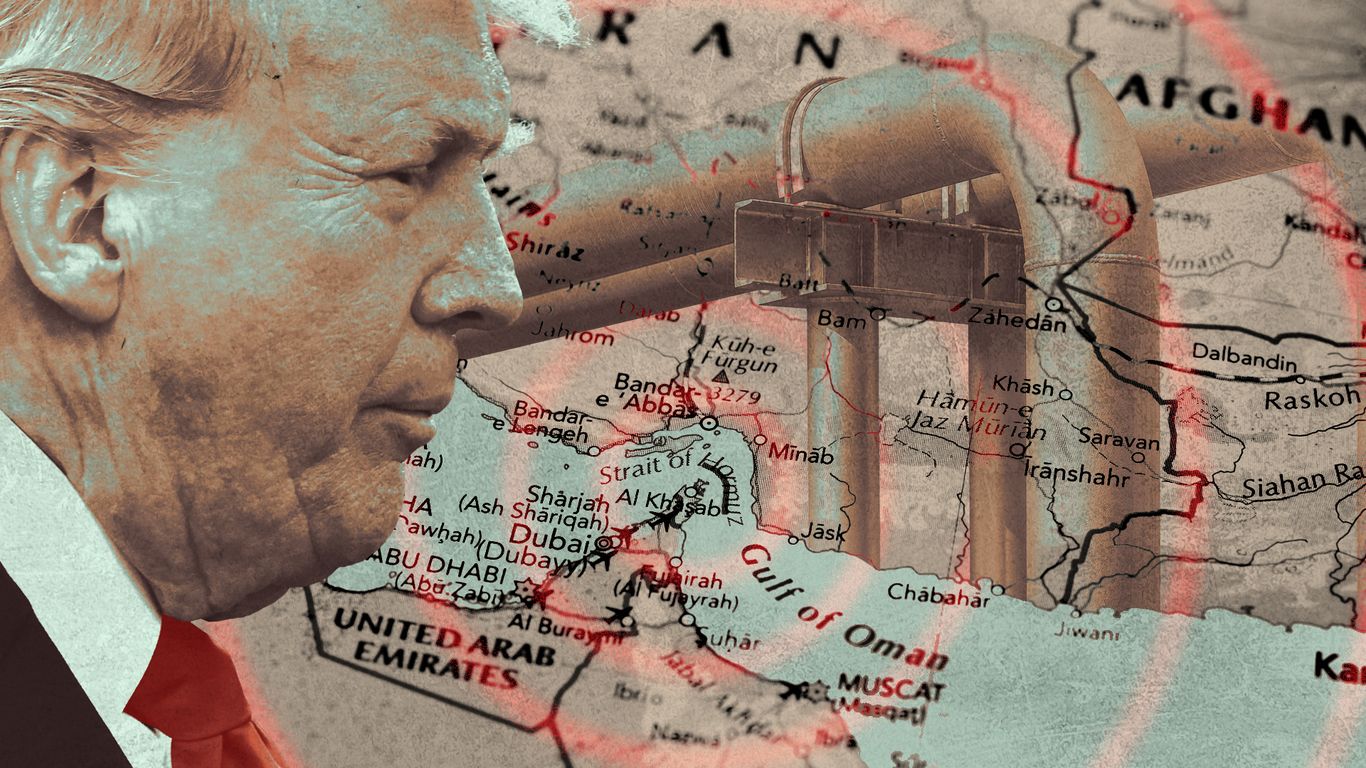
US Prepares for Prolonged Military Clash With Iran Over Strait of Hormuz
The conflict, which began with the goal of degrading Iran's missile capabilities and destroying what remained of its nuclear program, has now centered on control of the world's most important energy chokepoint.
Strait of Hormuz: A Geopolitical Flashpoint
The Strait of Hormuz is a linchpin for global energy trade. The escalation follows a series of Iranian attacks on commercial ships. The U.S. launched a second round of strikes near the Strait of Hormuz, including attacks on infrastructure targets inside Iran for the first time in months.
Trump’s Escalation Strategy: Risks and Calculations
President Trump’s administration has shifted to a strategy where a senior U.S. official stated, “We’re going to slap them a bit so they understand we’re not f*cking around.”

However, the administration’s calculations are not without risk. U.S. officials say the White House believes it has more room to escalate because hundreds of oil tankers have managed to leave the Gulf through the strait in recent weeks. That has eased concerns inside the administration that a renewed clash would immediately trigger a major oil price spike.
Iran’s Countermeasures: Diplomacy or Defiance?
Iran has responded with attacks on U.S. bases in Kuwait and Bahrain. Mohammad Bagher Ghalibaf accused the U.S. of “bullying and breaking promises,” asserting that the strait would only reopen on “Iranian arrangements.” This stance reflects internal divisions within Iran’s leadership, where hardliners have grown frustrated with the MOU’s perceived concessions.
A U.S. official said the current escalation stems from frustration among more radical elements inside Iran’s fractured leadership who believe the MOU has not delivered real benefits for Tehran. Iran saw its leverage in Hormuz slipping as hundreds of ships transited through the southern route close to the Omani coast. Despite U.S. sanctions waivers, Iran struggled to sell oil because financial institutions would not approve transactions and countries were reluctant to rely on temporary waivers.
The Role of the Strait in Global Energy Markets
The strait’s significance extends beyond military strategy. Reopening the Strait of Hormuz and restoring freedom of navigation for commercial ships has become a central goal for the Trump administration, mainly to stabilize global energy markets.
Legal and Diplomatic Implications
The MOU’s unraveling has raised questions about the legal framework governing the strait. The issue was a central provision in the U.S.-Iran MOU, and conflicting interpretations of the strait clauses are now causing the deal to unravel. The MOU requires Iran to allow safe passage for ships through the Strait of Hormuz. But soon after it was signed, Iranian officials accused the U.S. of violating the deal by routing ships through a southern lane near the Omani coast without Tehran’s approval.

Diplomacy has stalled for now, and military pressure is back at the center of President Trump’s strategy. Trump signaled the U.S. was ready to de-escalate, telling reporters on Air Force One that Iranian officials had “called a little while ago” and “want to make a deal.” It was unclear what call Trump was referring to, and Iranian officials did not immediately confirm any direct outreach.
Local Impact: Infrastructure and Economy
The conflict’s immediate effects are felt in the Gulf region.