
US-Philippines Balikatan Exercises: Enhancing Pacific Defense and Maritime Strike Capabilities
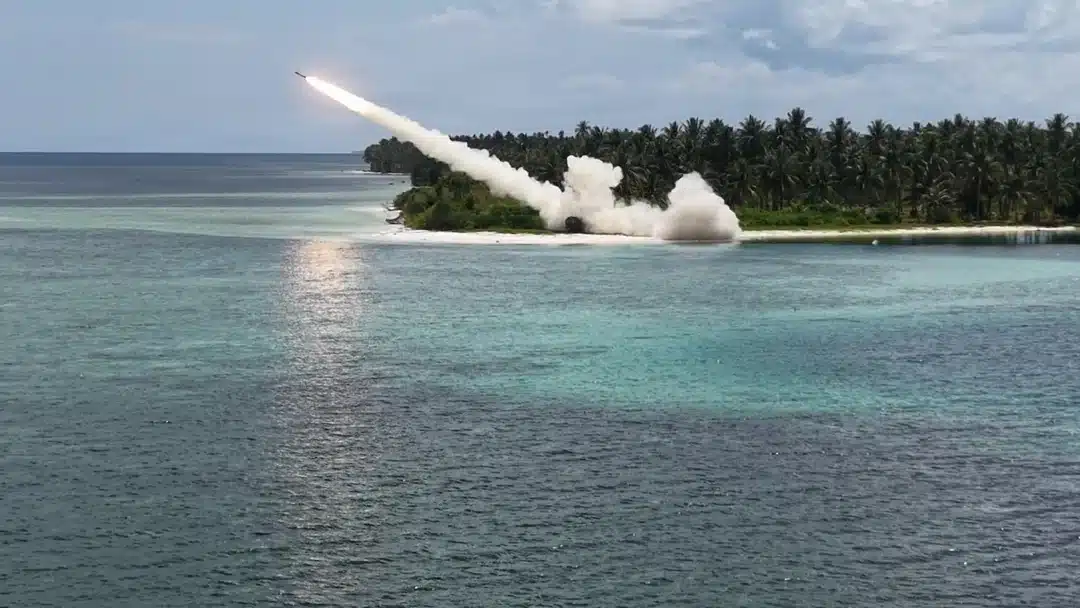
The U.S. Army deployed missile launchers across multiple islands in a series of “island hopping” maneuvers near the South China Sea during the Balikatan exercises.
Philippine President Ferdinand Marcos Jr. Observed a joint maritime strike as part of the drills, which integrated coordinated attacks against maritime targets. The exercises are designed to test the interoperability of U.S. And Philippine forces in contested environments.
The deployment of mobile missile assets is a central component of the U.S. Army’s “Littoral Deep Battle” strategy. This operational framework is specifically developed to defeat amphibious invasions by leveraging long-range precision fires and the ability to rapidly relocate launchers to avoid detection and counter-battery fire.
As part of the tactical preparation for these maneuvers, soldiers from the 25th Infantry Division conducted specialized drone training. These operations were a precursor to counter-landing live-fire exercises, where forces practiced disrupting enemy troops attempting to secure a beachhead.
These joint activities occur as the United States and its Pacific allies increase the scale and frequency of collective training. The effort is focused on establishing a unified defense posture among allies in the region to deter potential aggression.
The current phase of the exercises continues to integrate air, land and sea assets to refine the logistics and command structures necessary for the Littoral Deep Battle concept.