
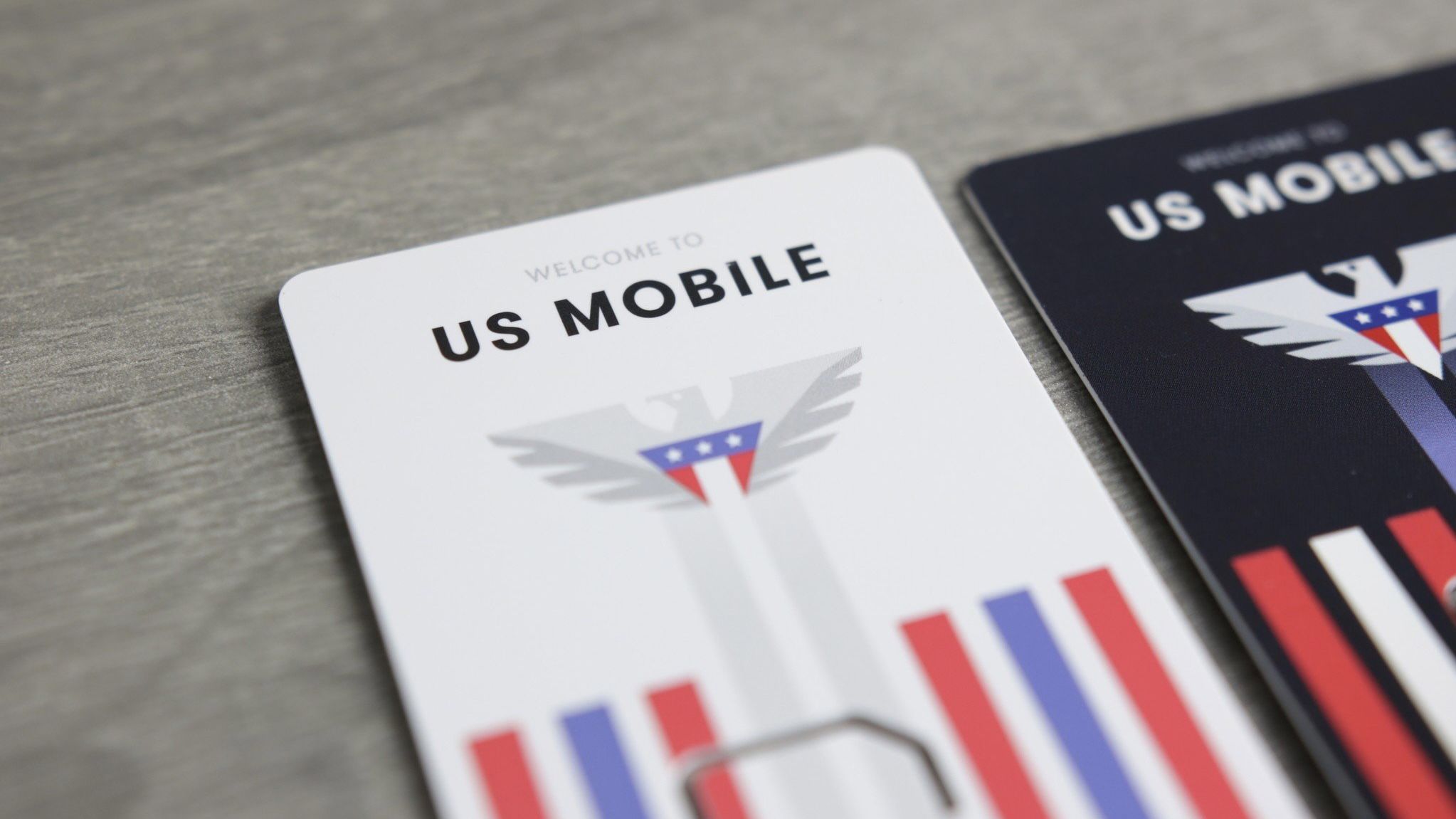
US Mobile Teases Starlink Satellite Internet Bundle Plan
US Mobile is attempting to solve the “last mile” connectivity gap by bundling cellular service with Starlink’s LEO (Low Earth Orbit) satellite constellation. This proves a strategic play for rural ubiquity, but for the technical crowd, the real story isn’t the pricing—it’s the handoff latency and the security implications of a hybrid satellite-cellular stack.
The Tech TL. DR:
- Hybrid Connectivity: Merges terrestrial LTE/5G with Starlink’s satellite backhaul to eliminate dead zones.
- Latency Trade-off: Sub-100ms pings for LEO, but potential jitter during cellular-to-satellite handoffs.
- Enterprise Risk: Expanded attack surfaces for remote endpoints requiring robust cybersecurity auditors and penetration testers to validate edge security.
The industry has been chasing the “unified pipe” dream for a decade. Most MVNOs simply lease spectrum and hope for the best. By integrating Starlink, US Mobile isn’t just adding a perk; they are attempting to abstract the physical layer of the internet. From an architectural standpoint, this moves the needle toward a truly decentralized WAN, but it introduces a nightmare for network engineers: managing the transition between a terrestrial tower and a satellite beam without dropping a TCP session.
The Physics of the Handoff: LEO vs. Terrestrial LTE
To understand why this isn’t just “internet in the woods,” we have to look at the orbital mechanics. Unlike legacy geostationary (GEO) satellites that sit 35,000km away—creating a lag that kills any real-time application—Starlink operates in LEO at roughly 550km. This reduces the round-trip time (RTT) significantly. However, when a device switches from a 5G NR (New Radio) cell to a satellite link, the routing table must update instantaneously to prevent packet loss.

According to the IEEE Xplore digital library, the challenge in hybrid networks is “vertical handover” (VHO). If the signal-to-noise ratio (SNR) on the cellular side dips, the device must trigger a switch to the satellite gateway. If the handoff isn’t seamless, you’ll see a spike in jitter that will crash any SSH session or VoIP call. For those managing remote fleets, this is where Managed Service Providers (MSPs) become critical to ensure that SD-WAN configurations can handle these fluctuating paths without triggering a full network reset.
“The convergence of LEO satellite arrays and 5G is the final piece of the puzzle for edge computing. The bottleneck is no longer the bandwidth, but the orchestration of the handover. If you can’t maintain a stateful connection during the transition, you’re just switching between two different types of instability.” — Marcus Thorne, Lead Systems Architect at OrbitalNet
The Tech Stack & Alternatives Matrix
US Mobile is positioning this as a consumer-friendly bundle, but the competitive landscape is crowded. We aren’t just looking at other MVNOs; we are looking at the hardware-level integration happening at the SoC (System on Chip) level.
| Feature | US Mobile + Starlink | T-Mobile Direct-to-Cell | Apple Emergency SOS (Globalstar) |
|---|---|---|---|
| Primary Use Case | Broadband Home/Mobile Hybrid | Text/Voice Gap Filling | Emergency Only |
| Latency | Low (LEO) | Moderate | High (Burst) |
| Hardware Requirement | Starlink Terminal + Phone | Standard 5G Phone | iPhone 14+ |
| Throughput | High (Mbps) | Low (kbps) | Highly Low (bps) |
The Security Blast Radius: Satellite Gateways as New Vectors
From a security perspective, adding a satellite leg to your connectivity stack expands the attack surface. Every satellite gateway is essentially a remote endpoint. If the encryption between the user terminal and the satellite is compromised, or if the ground station (gateway) is breached, the entire data stream is exposed. We are talking about a potential for Man-in-the-Middle (MitM) attacks at a planetary scale.
Enterprise users cannot rely on the default encryption provided by the ISP. To maintain SOC 2 compliance and protect sensitive data, companies must implement complete-to-end encryption (E2EE) and zero-trust architectures. This is why we are seeing an uptick in firms deploying network security auditors to map out the traffic flow of hybrid LEO/5G environments. If your traffic is routing through a satellite beam, you need to ensure that your VPN tunnel is encapsulated and that the MTU (Maximum Transmission Unit) is optimized to avoid fragmentation over the satellite link.
For developers testing their own connectivity scripts to monitor for these transitions, a simple curl loop can reveal the latency spikes during a handover event:
# Monitor latency and packet loss during network transition while true; do ping -c 1 8.8.8.8 | grep "time="; sleep 1; doneIf you see the RTT jump from 30ms to 120ms and back, you’re witnessing the LEO handoff in real-time. For those building high-frequency trading apps or real-time telemetry, this variance is unacceptable without a robust failover mechanism.
Deployment Realities and the “Vaporware” Check
While the marketing suggests a “seamless” experience, the deployment reality is that you still need hardware. You can’t just “download” satellite internet. You need the Starlink dish. The “bundle” is essentially a billing convenience, not a technological miracle. The real innovation here is the API integration between US Mobile’s provisioning system and Starlink’s activation servers, allowing a single point of management for two very different physical layers.
Looking at the GitHub repositories for various open-source routing projects, there is a growing interest in “Multi-Path TCP” (MPTCP). This allows a device to use multiple interfaces (Cellular + Satellite) simultaneously, rather than switching between them. If US Mobile implements a software-defined layer that leverages MPTCP, they could actually solve the jitter problem. Until then, it’s just a convenient package for people who live in the middle of nowhere.
The trajectory of this tech is clear: we are moving toward a world where the “network” is an invisible utility, regardless of whether it’s delivered via a fiber optic cable, a 5G tower, or a satellite in orbit. But as we abstract the hardware, we increase the complexity of the security layer. As these hybrid plans scale, the demand for specialized IT infrastructure consultants will skyrocket to ensure that “connected everywhere” doesn’t mean “vulnerable everywhere.”
Disclaimer: The technical analyses and security protocols detailed in this article are for informational purposes only. Always consult with certified IT and cybersecurity professionals before altering enterprise networks or handling sensitive data.