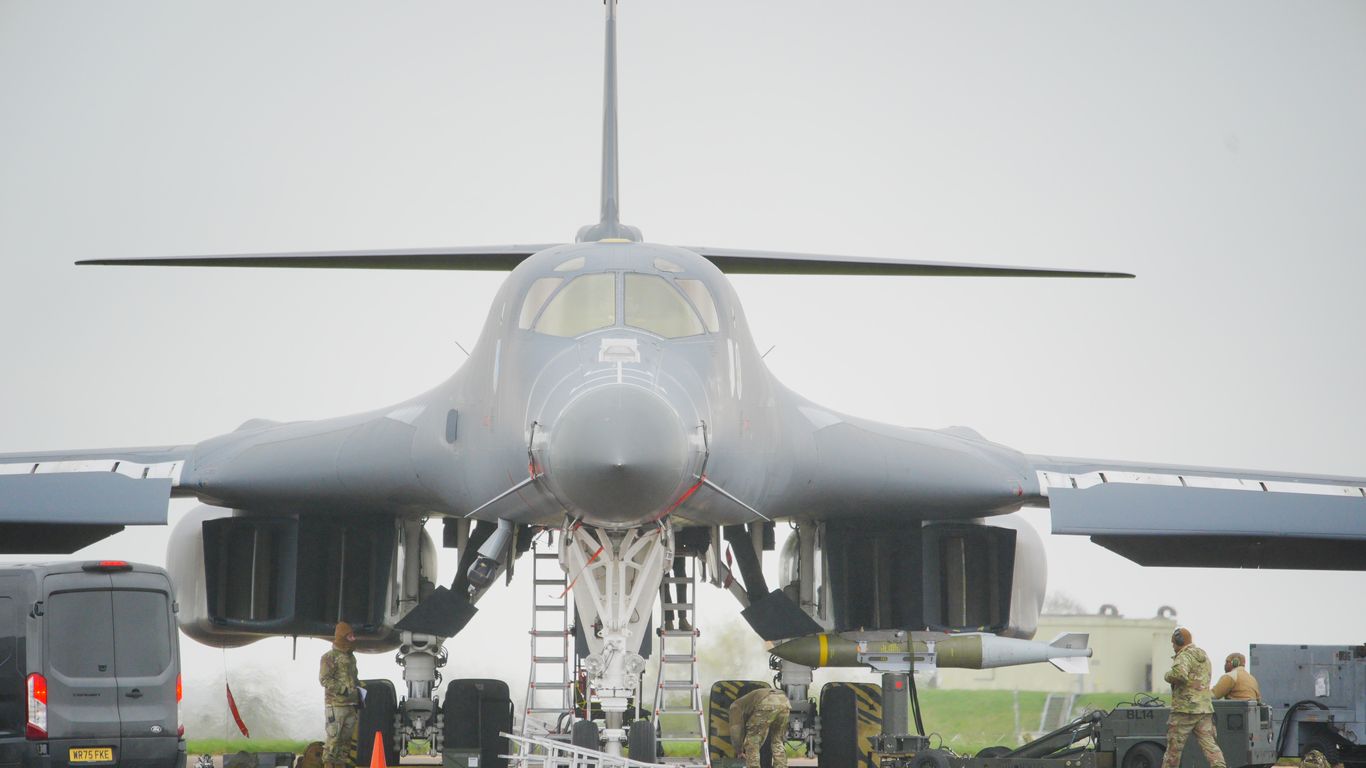
US Military Uses B-1 Bomber in Iran Strike
<>
The U.S. military deployed a B-1 long-range bomber on Tuesday to strike Islamic Revolutionary Guard Corps targets in Iran, marking a significant escalation in regional conflict. Launched from a British airbase, the mission targeted military logistics, drone storage, and maritime capabilities to protect shipping lanes in the Strait of Hormuz, according to U.S. officials.
Strategic Shift and the Deployment of the B-1 Bomber
Tuesday’s mission represented the first time the U.S. has utilized a B-1 bomber since active fighting with Iran resumed 12 days prior, according to defense disclosures. The aircraft, capable of flying faster than the speed of sound at low altitudes while carrying the largest bomb load of any type of bomber, launched from an airbase in the UK. Online flight-tracking services spotted the aircraft in transit, though U.S. Central Command (CENTCOM) omitted the specific B-1 deployment from its daily operational summary.
CENTCOM officials stated that the day’s strikes directly targeted Iranian military operations centers, aircraft hangars, and maritime logistics infrastructure. The objective, according to military statements, is to further degrade Iran’s ability to threaten commercial shipping transiting the vital Strait of Hormuz.
Expanding Theater: Red Sea Front and Houthi Attacks
The military pressure expanded beyond the Persian Gulf on Wednesday when Houthi rebels attacked Saudi ships for the first time since declaring a blockade on Saudi ports. A U.S. defense official indicated that the Houthi offensive—following months of relative inactivity—appears coordinated by Tehran to open a secondary front in the Red Sea. This maneuver aims to exert maximum pressure on another critical international oil shipping route near the Bab el-Mandeb Strait, where multiple commercial vessels altered their courses on Wednesday to avoid hostile waters.
Presidential Warnings and Ongoing Diplomatic Mediation
Against the backdrop of expanding military actions, diplomatic channels remain active yet stalled. Qatari mediators continue holding discussions with U.S., Iranian, and Omani representatives to broker a deal that would reopen the Strait of Hormuz and halt hostilities. A regional source with direct knowledge of the talks stated that Iranian leadership has yet to accept the latest diplomatic proposal.
President Trump addressed the ongoing standoff during a speech in Georgia on Wednesday night, noting that while Iranian forces are facing severe strikes, they are not yet prepared to finalize a sustainable agreement. On the same day, the administration issued explicit warnings regarding critical civilian infrastructure. According to official statements, the U.S. threatens to strike bridges and power plants, including facilities in Tehran, if Iranian forces resume attacks on commercial shipping. In response, the Iranian regime threatened infrastructure belonging to U.S.-allied Gulf states, deepening regional anxieties.
As diplomatic windows narrow and the threat of major combat operations looms within days, municipal authorities and private enterprises across the Middle East are re-evaluating their emergency preparedness postures.
The unfolding military campaign highlights a dangerous inflection point for global energy security and international trade routes.