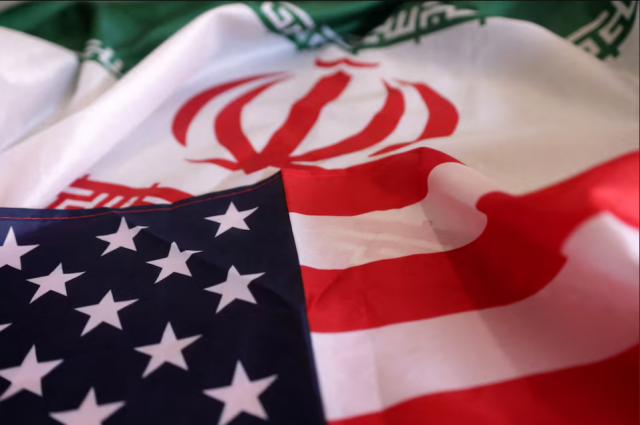
US-Iran Diplomacy: Ceasefire Stalls as Mediation Shifts to Doha
Pakistan’s attempt to mediate a ceasefire between the United States and Iran in Islamabad has collapsed after Tehran rejected Washington’s demands. Despite efforts by Pakistani Foreign Minister Ishaq Dar and regional allies from Saudi Arabia, Egypt, and Turkiye, the bid failed to halt the escalating US-Israeli war on Iran.
The collapse of these talks isn’t just a diplomatic stumble; it is a signal of deep-seated volatility. For six weeks, a high-stakes war has raged, and the failure to secure a breakthrough in Islamabad leaves the region teetering on the edge of an even broader conflagration.
The problem is simple: total misalignment. While Islamabad positioned itself as the bridge, the gap between Washington’s requirements and Tehran’s red lines proved too wide to cross. For businesses and governments operating in the Gulf, this stalemate creates a vacuum of predictability. When diplomacy fails, the risk shifts to logistics, insurance, and physical security. Organizations are now scrambling to engage global risk management consultants to protect assets in a region where the rules of engagement are changing by the hour.
The “Meaningful” Mirage in Islamabad
Foreign Minister Ishaq Dar initially projected a sense of optimism. Following a multilateral gathering with his counterparts from Turkiye, Egypt, and Saudi Arabia on March 29, Dar claimed that both Washington and Tehran had expressed confidence in Pakistan’s ability to facilitate “meaningful talks.”
The ambition was clear. Pakistan sought to leverage its unique position—maintaining a longstanding friendship with Iran while improving ties with the U.S. Under President Donald Trump—to broker a comprehensive settlement.
It was a high-stakes gamble.
However, the reality on the ground quickly diverged from the official rhetoric. While Dar spoke of “meaningful talks,” neither the U.S. Nor Iran formally confirmed Islamabad’s role as the mediator. The friction became palpable when a scheduled visit by the U.S. Vice President to Islamabad was delayed twice, signaling a lack of commitment or a lack of confidence in the proposed framework.
“I think there are a lot of internal contradictions, and the challenge is ensuring Pakistan’s ambition to play the role of a mediator doesn’t collapse under the weight of these contradictions, internal and in the broader regional context as well.”
This analysis from Chietigj Bajpaee, a senior research fellow for South Asia at Chatham House, underscores the fragility of Pakistan’s position. The country’s perceived instability on the international stage made it an unlikely choice for the world’s most consequential conflict.
Why the Breakthrough Failed
The failure of the Islamabad talks can be traced to three primary friction points:

- Unacceptable Demands: Iran explicitly refused to meet U.S. Officials in Islamabad, citing demands from Washington that Tehran deemed “unacceptable.”
- Ceasefire Rejection: Iranian media reported that Tehran rejected a specific 48-hour ceasefire proposal from the U.S., viewing it as insufficient or strategically flawed.
- Framework Friction: Iran viewed the mediation initiative as too “Pakistan-driven,” highlighting Islamabad’s limited actual influence over the core grievances of the war.
The result is a diplomatic dead end. Foreign Minister Araghchi of Iran has acknowledged receiving messages from the U.S. But has pointedly denied that actual “negotiations” are taking place. This semantic distinction is critical; messages are signals, but negotiations are commitments.
As these diplomatic channels freeze, the legal ramifications for international shipping and trade escalate. The instability in the Strait of Hormuz—where Pakistan recently sealed a deal to send ships through despite the tension—remains a flashpoint. Companies facing the seizure of assets or breach of contract due to war conditions are increasingly turning to international law firms specializing in maritime and sovereign disputes to navigate the chaos.
Regional Fallout and the Shift to Doha
The war is not contained. The ripple effects are already hitting neighboring states. Reports indicate that at least 15 U.S. Troops were wounded in an Iranian strike on a Saudi airbase, while Iran has warned its neighbors against allowing “enemies” to run the war from their soil. Even Yemen’s Houthis have entered the fray, adding another layer of complexity to an already saturated conflict zone.
With the Islamabad route closed, the center of gravity for mediation is shifting. Intelligence suggests that the focus is moving toward Doha, Qatar. Qatar has a long history of acting as the primary conduit between Washington and Tehran, and the failure in Pakistan reinforces the belief that only a neutral, high-liquidity state can sustain the patience required for these talks.
For those caught in the middle—diplomats, NGOs, and corporate entities—the shift to Doha is a relief, but it doesn’t solve the immediate crisis of regional stability. The lack of a ceasefire means that infrastructure in the Middle East remains under threat. Establishing contact with verified diplomatic mediation services is now the only way for non-state actors to ensure the safety of their personnel in the region.
The timeline of this conflict is accelerating. From the initial U.S.-Israeli strikes a month ago to the failed talks on April 3, the window for a “meaningful” settlement is closing.
You can look to established reporting from Al Jazeera and Reuters to see the pattern: the U.S. Seeks concessions, Iran seeks guarantees, and the mediators in between are often just spectators to the escalation. The current situation is being tracked closely by global monitors including AP News.
The tragedy of the Islamabad failure is that it proves diplomacy cannot be willed into existence by ambition alone. Pakistan wanted to be a global player; the U.S. Wanted a quick exit; Iran wanted a total shift in U.S. Policy. When those three desires collided, the result was a narrow miss that has left the world more dangerous than it was six weeks ago.
As the conflict evolves, the difference between survival and collapse for regional businesses will be the quality of their professional network. Whether it is securing legal shields or risk assessments, the volatility of 2026 demands verified expertise. You can find the specialists equipped to handle these geopolitical crises within the World Today News Directory.