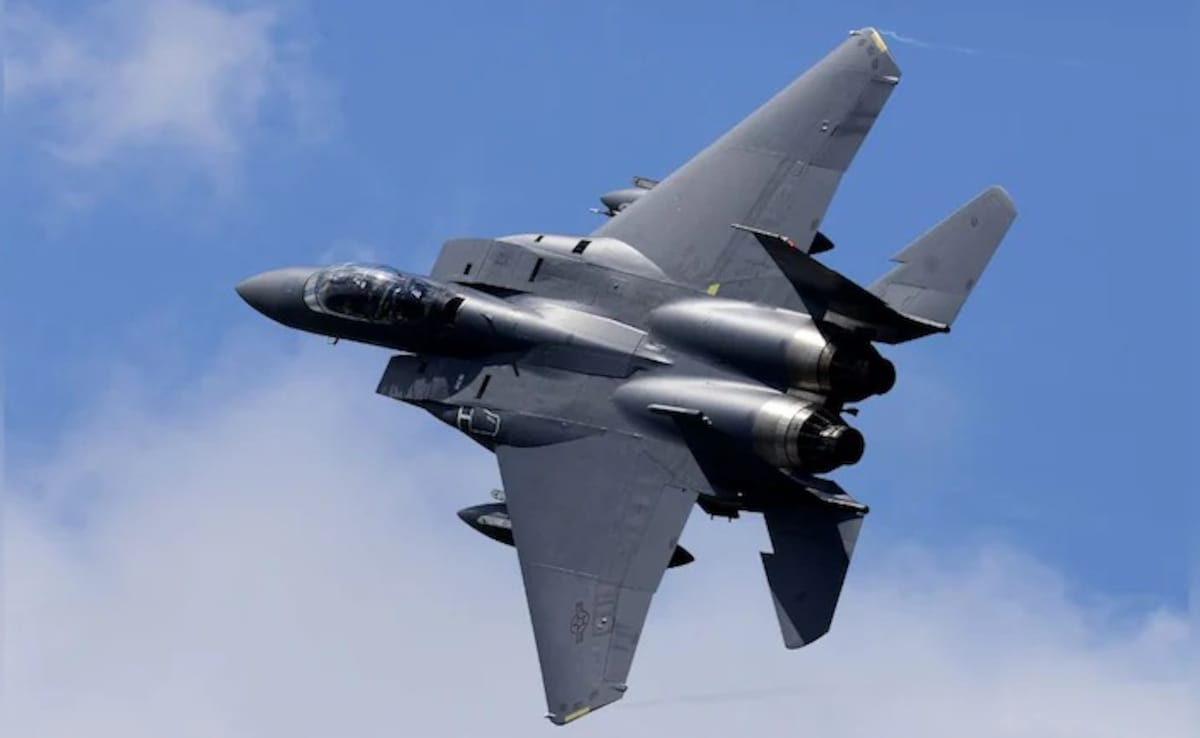
US F-15E Strike Eagle Crash: One Crew Member Rescued, One Missing
A US F-15E Strike Eagle crashed in Iranian-controlled territory, leaving one crew member missing two days after the incident. While one officer was rescued, Iran has deployed “tribesmen” and “popular forces” to secure the crash site, escalating geopolitical tensions and complicating recovery efforts as of April 5, 2026.
This isn’t just a missing pilot; It’s a strategic crisis. When a high-performance aircraft like the F-15E goes down, the wreckage is a goldmine of intelligence. The sensors, the encryption hardware, and the weapons systems are precisely what adversaries want to dismantle. By deploying irregular forces—the “tribesmen”—Tehran is effectively creating a buffer zone of plausible deniability while ensuring that any US attempt at a recovery operation faces a chaotic, non-uniform resistance.
The tension here is palpable. It is the kind of friction that turns a localized accident into a regional flashpoint.
The Geopolitical Chessboard: Why Irregular Forces Matter
The deployment of “popular forces” (Basij or similar paramilitary groups) is a calculated move. Unlike the regular Iranian Army, these groups operate with a level of fluidity that makes traditional military engagement risky. They are embedded in the local geography, often possessing intimate knowledge of the rugged terrain where the jet likely plummeted. For the US, the problem is twofold: they must locate a missing comrade while avoiding a direct kinetic clash with Iranian state actors that could trigger a full-scale war.
Historically, the region has seen similar tensions. The 2019 shoot-down of an Iranian drone by the US and the subsequent tensions over the guardianship of the Persian Gulf highlight a cycle of “tit-for-tat” escalation. This current incident occurs against a backdrop of fragile diplomacy. If the missing pilot is captured, they become a high-value political pawn; if they are deceased, the wreckage becomes the primary prize.
“The use of irregular proxies to secure a crash site is a classic asymmetric strategy. It allows the state to maintain a degree of separation from the initial confrontation while ensuring the physical assets are seized before international monitors can intervene.”
This quote comes from Dr. Arash Vahidi, a senior fellow at the Institute for Middle East Strategic Studies, who specializes in Iranian paramilitary structures. His analysis underscores the danger: when the “rules of engagement” are blurred by the presence of non-state actors, the risk of accidental escalation increases exponentially.
The Logistics of Crisis: Infrastructure and Legal Limbo
The crash likely occurred in a remote or contested border region, where infrastructure is minimal. The immediate aftermath of such an event creates a vacuum of authority. Local municipalities in these border zones often uncover themselves caught between the demands of a sovereign state and the pressures of international superpowers. For the civilians living in these corridors, the arrival of “popular forces” often means restricted movement, checkpoints, and an economy that suddenly shifts to a wartime footing.
From a legal perspective, the status of the missing crew member is precarious. If they are held in a non-military facility by irregular forces, the UN Charter and the Geneva Conventions regarding Prisoners of War (POWs) become difficult to enforce. The US State Department must navigate a diplomatic minefield to ensure the safety of its personnel without appearing to concede territory or sovereignty.
For businesses and NGOs operating in these volatile corridors, the sudden militarization of the landscape is a nightmare. Supply chains are severed, and legal protections vanish. Companies are now scrambling to find international law firms specializing in sovereign immunity and diplomatic protection to safeguard their assets and personnel from being caught in the crossfire.
The Technical Stakes: F-15E Intelligence Leakage
To understand why Iran is so desperate to control the site, one must look at the aircraft. The F-15E Strike Eagle is not just a fighter; it is a sophisticated platform for electronic warfare and precision strikes. Even a fragmented piece of the radar system or a recovered data module could provide insights into US stealth capabilities or targeting algorithms.
| Asset at Risk | Intelligence Value | Potential Impact |
|---|---|---|
| Avionics Suite | High | Reverse engineering of signal processing |
| Encrypted Comms | Critical | Compromise of secure tactical networks |
| Engine Components | Medium | Insights into thrust-to-weight performance |
| Flight Data Recorder | Critical | Detailed telemetry of US flight patterns |
The race to the wreckage is a race for technological superiority. While the US focuses on the human element—the missing pilot—the Iranian state is focused on the hardware. This dichotomy creates a dangerous tension where the US may be forced to conduct a “snatch-and-grab” operation, potentially risking the lives of more personnel to prevent a massive intelligence breach.
Such high-stakes environments demand more than just military precision; they require sophisticated risk management. Organizations operating in these high-risk zones are increasingly relying on global risk assessment consultants to map out evacuation routes and contingency plans before the next “black swan” event occurs.
The Human Cost and the Diplomatic Path Forward
Beyond the hardware and the geopolitics is the agonizing wait for a family. The uncertainty of whether the missing officer is alive or dead creates a political pressure cooker in Washington. The administration cannot be seen as abandoning a service member, but it also cannot afford to stumble into a regional war over a single airframe.
The most likely path forward involves a clandestine negotiation, possibly mediated by a third party like Oman or Qatar. These nations often serve as the “quiet rooms” where the US and Iran trade prisoners or negotiate the return of sensitive equipment. However, the presence of the “tribesmen” adds a layer of complexity; the central government in Tehran must first ensure that these irregular forces are willing to relinquish the site.
As the search enters its third day, the window for a successful rescue narrows. The environment is harsh, and the political will of the opposing side is rigid. The tragedy of this event is that the pilot’s fate is now inextricably linked to the value of the aluminum and silicon left in the sand.
In times of global instability, the gap between a crisis and a solution is often filled by the right expertise. Whether it is navigating the complexities of international diplomacy or securing assets in a conflict zone, the ability to find verified, professional guidance is the only way to mitigate the chaos. For those caught in the wake of these geopolitical storms, the World Today News Directory remains the essential bridge to the professionals equipped to handle the unthinkable.