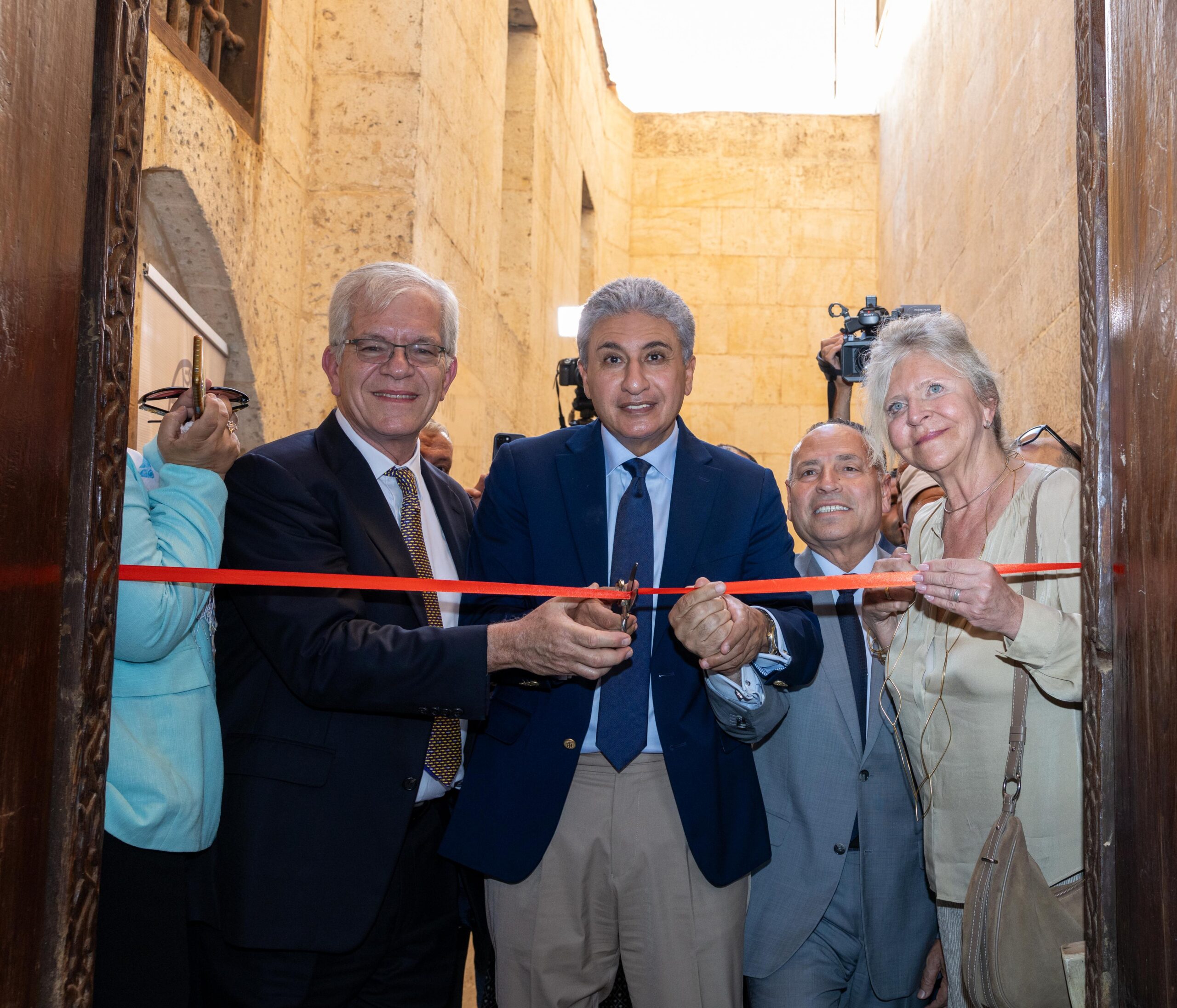
US Embassy and Egypt Celebrate Completion of Restoration of 15th-Century Sultan Qaitbey Mausoleum in Cairo
Funded by a $340,000 American grant and executed by Archinos Architecture, the project safeguards a key Mamluk landmark while revitalizing the surrounding neighborhood.
Located in Cairo’s historic City of the Dead, the Sultan Qaitbey Mausoleum features a prominent dome recognized globally as a masterpiece of Mamluk architecture, appearing even on the Egyptian one-pound banknote. Historically, the site served as a burial ground for rulers and dignitaries during the Mamluk period before later becoming a cemetery for prominent Egyptian families.
Funding, Partnerships, and Architectural Execution
The project came to fruition through a targeted partnership uniting the US Embassy in Cairo, the Egyptian Ministry of Tourism and Antiquities, and Archinos Architecture. Financing was secured through a $340,000 grant awarded in 2022 by the US Embassy via the US Ambassador’s Fund for Cultural Preservation. Agnieszka Dobrowolska, Director of Archinos Architecture, joined government officials at the celebratory event to mark the project’s conclusion.
According to Robert Silverman, the initiative serves a dual purpose beyond mere brick-and-mortar repair. “These efforts are more than a record of the past – they are a bridge to the future,” Silverman stated during the celebration, adding that the support reflects America’s commitment to honoring shared history and empowering communities. Minister Sherif Fathy echoed these sentiments, praising the longstanding cooperation between Egypt and the United States in heritage conservation, archaeological missions, and the recovery of smuggled antiquities. Fathy emphasized the Ministry’s ongoing commitment to preserving Egyptian heritage according to the highest scientific standards to maximize economic and social benefits.
Macro-Investment and Urban Revitalization
The US Ambassador’s Fund for Cultural Preservation has maintained an active footprint across Egypt. Through this mechanism, the United States has invested more than $3.5 million to support 17 distinct cultural preservation projects nationwide. These interventions safeguard historic buildings, monuments, archaeological sites, museum collections, manuscripts, and indigenous traditions.
The project successfully catalyzed the revitalization of the surrounding neighborhood by drawing an increasing influx of domestic and international visitors to the Qaitbey complex. The Qaitbey complex, renowned for its distinctive mausoleum dome, is one of Egypt’s most recognisable Mamluk monuments and is featured on the Egyptian one-pound banknote.
Future Preservation Pipelines in Historic Cairo and Luxor
The Sultan Qaitbey project represents only a fraction of ongoing bilateral conservation efforts. Two additional preservation initiatives funded through the Ambassador’s Fund are scheduled to launch shortly. These upcoming projects will focus on the Al-Gamalia district within Historic Cairo and the Medinet Habu Temple in Luxor.
The successful delivery of the Sultan Qaitbey Mausoleum demonstrates how targeted international grants can protect irreplaceable architectural heritage while breathing economic life back into historic urban districts. As teams mobilize for upcoming projects in Al-Gamalia and Luxor, the framework established in Cairo provides a proven model for future international archaeological cooperation.