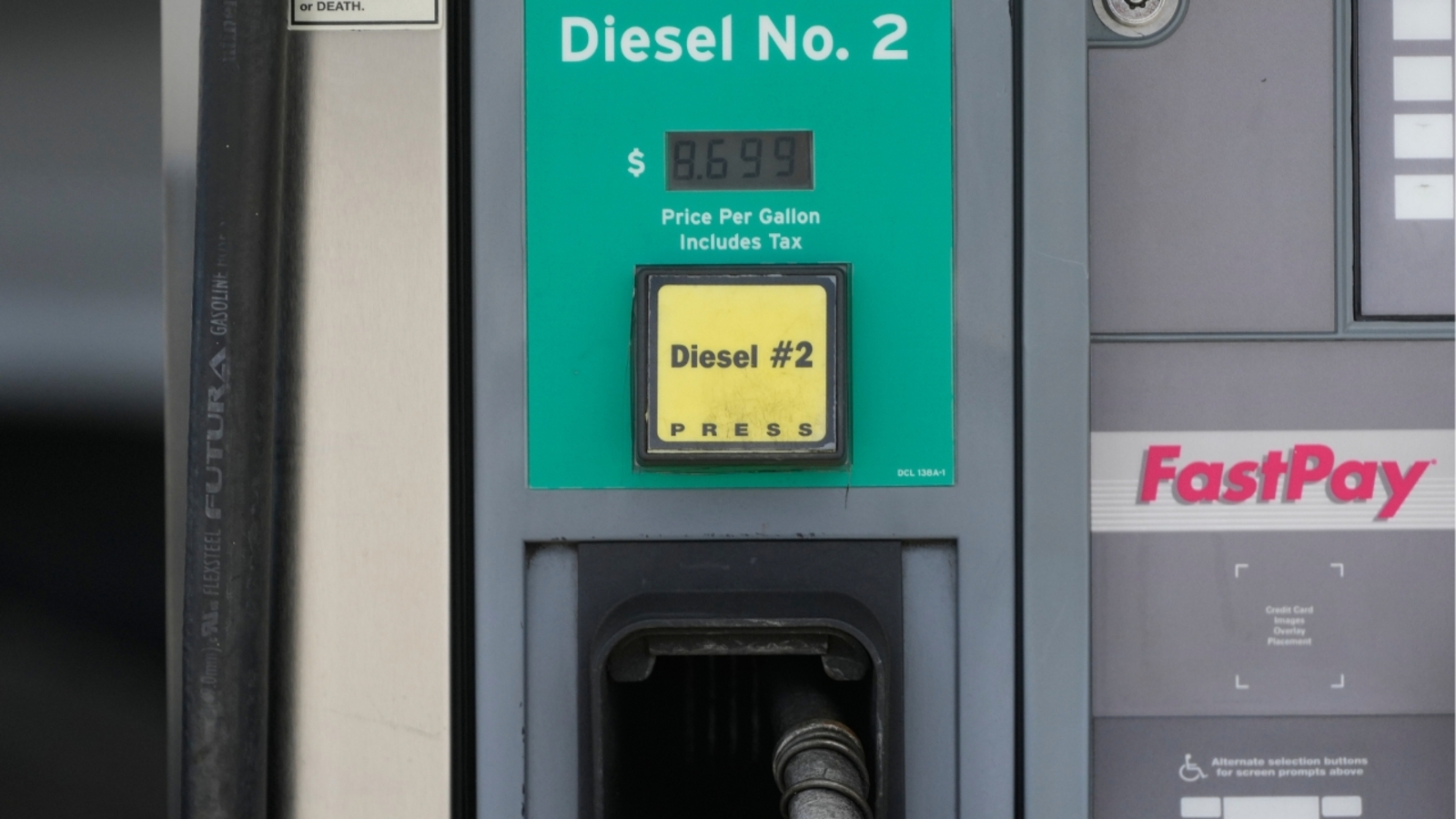
US Diesel Prices Hit Record Highs as California Stations Near $10 a Gallon
California diesel prices surged to an all-time statewide average of $7.98 per gallon on Friday, with multiple Bay Area stations nearly hitting the $9 mark and some digital signs maxing out at $9.99, according to data from GasBuddy and AAA. The fuel squeeze is driving up operational expenses for trucking fleets and supply chains, threatening broader macroeconomic inflation as energy markets react to geopolitical instability and local refinery constraints.
The Anatomy of a $9 Fuel Squeeze in the Golden State
Motorists and fleet managers across California are confronting unprecedented fueling costs that have completely decoupled from seasonal post-Labor Day trends. At three specific locations tracked by GasBuddy—two in San Jose and one in Santa Clara—digital price boards hit their absolute maximum technical display limit at $9.99 a gallon. A similar maximum pricing threshold was recorded at a station in San Diego’s Serra Mesa neighborhood.

This structural dislocation stems from a combination of localized supply contraction and international market shocks. California relies on a specialized, proprietary fuel blend mandated to prevent smog, a formulation that can only be produced by domestic refineries and specific overseas facilities. Recent refinery closures have severely pinched local inventories. Simultaneously, international disruptions in the Strait of Hormuz and Middle Eastern conflicts involving Saudi Arabia and Houthi rebels in Yemen have driven global Brent crude benchmarks past $100 per barrel, according to market analyses cited by regional broadcasters.
Wildwood Express, a Fresno-based trucking firm, reported that its weekly diesel expenditure jumped from a historical range of $25,000 to $30,000 up to $54,000 for the identical volume of fuel. As operating expenses double over a fortnight, logistics providers face acute liquidity pressures.
Macroeconomic Transmission and Supply Chain Vulnerabilities
The price acceleration extends well beyond West Coast highways, threatening to reignite input-cost inflation across national distribution channels. GasBuddy head of petroleum analysis Patrick De Haan noted that while retail consumers may absorb the shock gradually, the compounding freight tariffs will inevitably reprice every cargo shipment moving through domestic supply chains ahead of the winter holiday season. Colorado and other agricultural hubs have similarly registered multi-year highs, though California’s unique regulatory burdens—including elevated excise taxes, carbon pricing mechanisms, and specialized boutique fuel requirements—exacerbate the state-specific premium.

As long as refining capacity remains constrained on the West Coast and geopolitical risk premiums persist in global oil trade, transportation operators will operate under severe margin pressure. Market participants navigating this environment must rely on real-time tracking aggregators like GasBuddy and AAA to monitor localized price dispersions, while corporate leadership turns to specialized advisors to secure long-term operational resilience.