
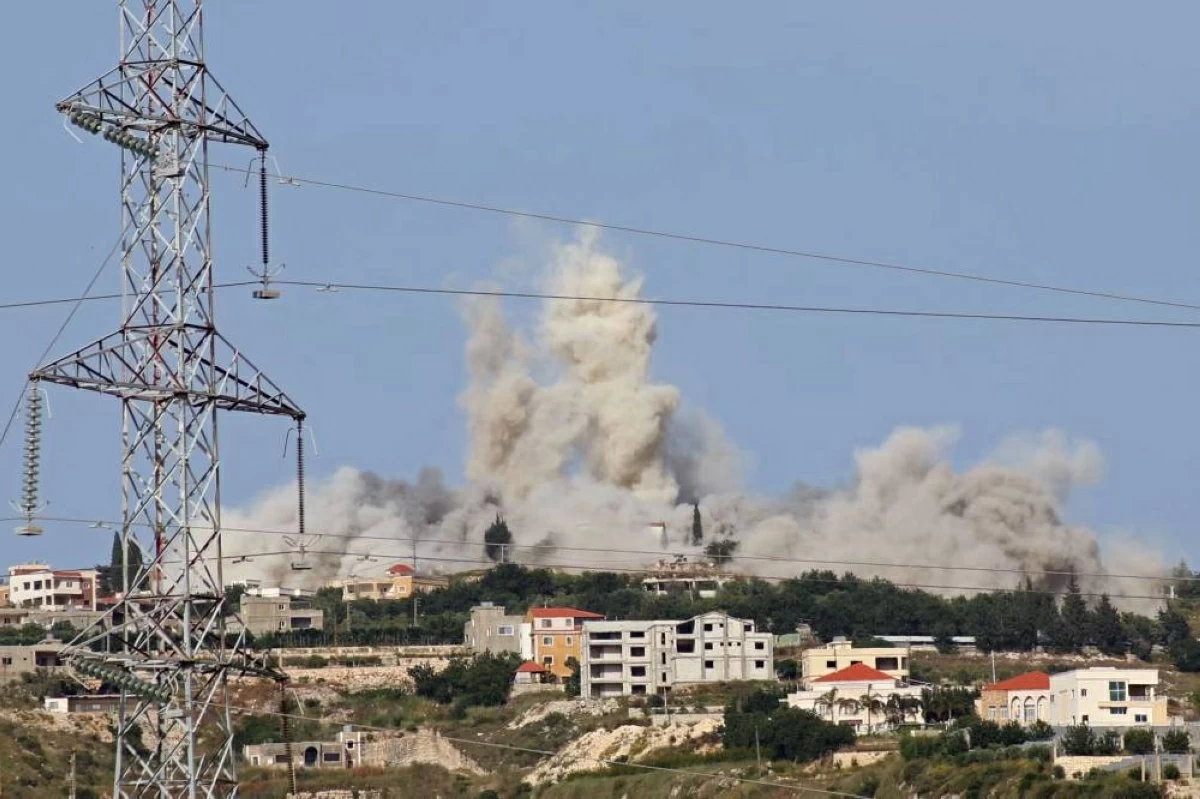
US-Backed Partial Ceasefire in Lebanon: Conditions & Escalation Risks After Truce Extension
Israel and Lebanon have extended their fragile ceasefire by 45 days under U.S. Mediation, but sporadic violence continues—with Hezbollah-linked strikes in southern Lebanon and Israeli airstrikes in Tyre and Hanuf raising fears of a full-scale resumption of hostilities. The May 17 agreement, brokered after two days of talks in Washington, aims to establish a U.S.-facilitated security framework by May 29, but the absence of a comprehensive political solution leaves critical infrastructure, humanitarian corridors, and regional stability at risk.
A Ceasefire That Isn’t: How the 45-Day Extension Exposes Lebanon’s Fractured Recovery
The ceasefire extension announced on May 15—just hours before its expiration—was framed as a diplomatic victory. But the timing reveals a deeper crisis: Lebanon’s inability to secure even a temporary pause in violence without external pressure.
Washington’s role is now pivotal. The U.S. State Department’s spokesperson, Tommy Pigott, emphasized that the extension would “advance lasting peace” and “genuine security along the shared border.” Yet, the same day the ceasefire was renewed, Israeli airstrikes in Tyre wounded 37 people, including children, while Hezbollah targeted Kiryat Shmona with drones. The contradiction underscores a harsh reality: this is not a ceasefire—it’s a truce with an expiration date.
The Human Cost: Tyre and Hanuf as Flashpoints
In Tyre, a city already reeling from months of displacement, the Israeli strikes on May 15 killed six paramedics and wounded nine women and four children. The Lebanese Health Ministry reported that the attacks hit a Hezbollah-linked Islamic Health Committee, a facility that had become a de facto emergency hub for civilians.
“The strikes on Tyre weren’t just military— they were surgical strikes on the last functioning medical infrastructure in the south. This isn’t war; it’s collective punishment.”
The attack in Hanuf, where three paramedics were killed, mirrors a pattern seen in Gaza: the deliberate targeting of humanitarian workers as a tactic to erode civilian morale. In Lebanon, where the government’s healthcare system is already collapsing under economic crisis, these strikes accelerate a humanitarian catastrophe.
The Geopolitical Chessboard: Why Washington’s “Security Track” May Not Be Enough
The U.S. Has positioned itself as the neutral broker, but its leverage is limited. The ceasefire extension hinges on three unproven assumptions:
- A security mechanism can be imposed without political buy-in from either side. Historically, Lebanon-Israel conflicts have escalated when one party perceives the other as gaining unilateral advantages.
- Hezbollah will accept U.S.-led demilitarization talks. The group has repeatedly rejected Western-led negotiations, framing its resistance as non-negotiable.
- Israel will halt strikes long enough for diplomacy to work. The May 15 attacks in Tyre suggest otherwise.
The “security track” announced for May 29 is vague. What does it entail? Will it include:
- Joint patrols along the Blue Line?
- A buffer zone enforced by international troops?
- Or merely a monitoring system with no teeth?
Without clarity, the extension risks becoming a 45-day countdown to the next escalation.
The Economic Time Bomb: How the Conflict is Accelerating Lebanon’s Collapse
Lebanon’s economy was already in freefall before the conflict. The lira has lost 98% of its value since 2019, inflation is at 200% annually, and the government’s ability to pay salaries has ground to a halt. Now, the conflict is adding a humanitarian layer to the crisis.
Key sectors under threat:
| Sector | Immediate Impact | Long-Term Risk |
|---|---|---|
| Healthcare | Targeting of medical facilities forces closures; paramedic deaths reduce emergency response capacity. | Collapse of public health system, leading to mass disease outbreaks. |
| Infrastructure | Israeli strikes on power grids and roads disrupt fuel and electricity supplies. | Permanent damage to critical infrastructure, increasing refugee flows. |
| Tourism | Southern Lebanon’s coastal resorts—already hit by economic collapse—face total abandonment. | Loss of foreign currency reserves, deepening the balance-of-payments crisis. |
| Agriculture | Farmers in the Bekaa Valley and south Lebanon lose crops due to displacement and supply chain disruptions. | Food insecurity worsens, requiring international aid. |
For context, Lebanon’s pre-war economy relied on tourism and agriculture—both now under siege. The World Bank estimates that without immediate intervention, Lebanon’s GDP could shrink by another 10-15% in 2026.
The Legal Gray Zone: Can Lebanon Sue for War Crimes?
The targeting of paramedics and civilians raises serious questions about international humanitarian law violations. Under the Geneva Conventions, deliberate attacks on medical personnel are war crimes. Yet, accountability remains elusive.
“Lebanon’s legal options are limited. The ICC has jurisdiction, but political will is lacking. Meanwhile, domestic courts are paralyzed by corruption and lack of resources. The victims are left with no recourse.”
This legal vacuum creates opportunities for international human rights organizations and war crimes documentation networks to step in. But with both sides refusing to acknowledge violations, progress is slow.
Who Can Help? Critical Services for Lebanon’s Crisis
The problems created by this conflict are immediate and systemic. Here’s where professionals and organizations are already mobilizing:
- [Emergency Medical Relief Organizations] — With hospitals in southern Lebanon overwhelmed, International Federation of Red Cross and Red Crescent Societies affiliates are rushing mobile clinics and trauma teams. Local NGOs like Lebanese Red Cross are coordinating with UN agencies to fill the gap.
- [Infrastructure Repair Contractors] — The repeated strikes on power grids and roads require UN-backed engineering firms specializing in post-conflict reconstruction. Beirut’s Order of Engineers and Architects is already vetting contractors for safety compliance.
- [International Law Firms with War Crimes Expertise] — Families of victims are consulting firms like Clifford Chance’s International Arbitration Group to explore legal avenues, including ICC referrals and civil litigation against state actors.
- [Humanitarian Logistics Specialists] — The UN’s World Food Programme is scaling up air drops and cross-border convoys, but local supply chain managers are needed to navigate Lebanon’s fractured infrastructure.
The Kicker: A Ceasefire Without Peace is Just a Pause Before the Next War
The 45-day extension is not a solution—it’s a temporary bandage on a gaping wound. Without a political roadmap, the cycle of violence will repeat. The real question is no longer if the next escalation will happen, but when.
For businesses, NGOs, and governments watching this unfold, the message is clear: Lebanon’s crisis is not just a regional issue—it’s a global stability risk. The professionals already working to mitigate this—from medical relief teams to war crimes investigators—are the ones who will determine whether this pause becomes the foundation for peace or just another footnote in history.
To find verified experts and organizations equipped to handle this crisis, explore World Today News Directory for:
- [Emergency Medical Relief Organizations]
- [Post-Conflict Infrastructure Reconstruction Firms]
- [International Human Rights and War Crimes Law Firms]
- [Humanitarian Logistics and Supply Chain Specialists]
Sources: U.S. State Department statements (May 15, 2026); Lebanese Health Ministry reports; International Committee of the Red Cross (ICRC) protocols; World Bank economic data (2026 projections).