US and Iran Clash Over Fees for Shipping Through Strait of Hormuz
US and Iran clash over Hormuz transit toll as international waterway dispute escalates
On 2026-06-25, the US and Iran intensified their standoff over Tehran’s plan to levy fees on ships passing through the Strait of Hormuz, a critical global shipping lane. Washington rejected the move, citing international law, while Iran asserted its right to charge for maritime services. The dispute, rooted in a 60-day negotiation period under a recently signed memorandum of understanding, risks disrupting global trade and regional stability.
Why the Strait of Hormuz matters: A lifeline for global energy
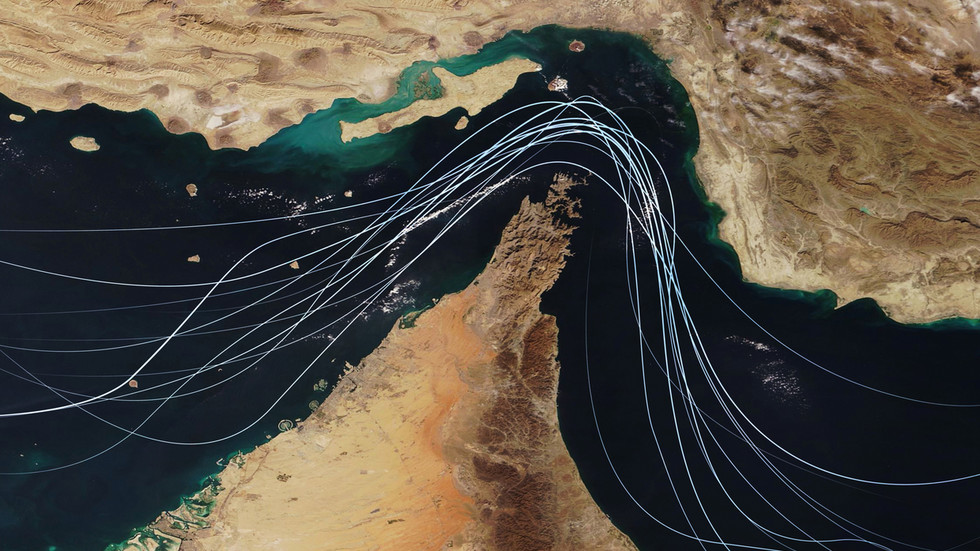
The Strait of Hormuz, a narrow waterway between Iran and Oman, is a linchpin for global commerce, with approximately 20% of the world’s oil passing through its waters daily. Its strategic importance has made it a flashpoint for geopolitical tensions, particularly between the US and Iran, which have clashed over control and access since the 1970s. The current dispute centers on Iran’s claim to impose fees for navigation services, a move Washington calls a violation of international law.

“The Strait is not just a waterway—it’s an economic artery,” said Dr. Layla Al-Maktoum, a Middle East energy analyst at the Dubai-based Gulf Research Center. “Any disruption here could send shockwaves through global markets, especially given the region’s reliance on oil exports.”
US stance: No tolls on international waterways, says State Department
US Secretary of State Marco Rubio reiterated Washington’s position on 2026-06-24, stating, “No country is allowed to charge tolls or fees on an international waterway. That’s existing international law.” Rubio’s remarks followed a memorandum of understanding (MOU) signed between the US and Iran, which included a 60-day roadmap for negotiations on the strait’s management. The agreement also established a high-level committee to oversee talks, though details remain unclear.

The US has long argued that the strait is an “international waterway,” a designation that grants it neutral status under the United Nations Convention on the Law of the Sea (UNCLOS). Iran, however, contends that the strait’s territorial waters fall under its sovereignty, allowing it to regulate passage. This legal ambiguity has fueled the current crisis.
Iran’s position: Sovereignty over maritime fees
Iranian officials have framed their demand for fees as a matter of national sovereignty. Mohammad Bagher Ghalibaf, Iran’s chief negotiator, told state media on 2026-06-23, “The administration of the Strait of Hormuz will never return to the way it was before the war.” Tehran has suspended planned transit fees for 60 days while negotiations continue, but the threat of imposing charges if no agreement is reached looms large.
“Iran sees this as a way to assert control over a resource it considers vital to its economy,” said Dr. Ali Rezaei, a legal scholar at Tehran University. “The government is balancing domestic pressure to protect national interests against the risk of further isolation.”
Regional implications: Oman, UAE, and the Gulf’s uncertain future
The dispute has sent ripples through the Gulf region, particularly affecting Oman and the UAE, which share the strait’s waters. Oman, which has historically maintained a neutral stance, has agreed to explore joint administration of the strait with Iran, a move that has raised concerns among Gulf Cooperation Council (GCC) members. The UAE, a key US ally, has called for “transparent and equitable” solutions to avoid destabilizing the region.
“The conflicting guidance from Iran, the US, and insurers is creating a logistical nightmare for shipowners,” said Ahmed Al-Mazrouei, a UAE-based shipping executive. “Operators are caught between following Iranian routes and seeking US-backed protection, both of which carry risks.”
Historical context: A recurring battleground
The Strait of Hormuz has been a flashpoint for decades. In 1987, the US Navy clashed with Iranian forces during the Iran-Iraq War, and in 2019, tensions flared again after attacks on oil tankers. The current standoff echoes these past conflicts, with both sides leveraging the strait’s strategic value to advance their agendas. Iran’s push for fees comes amid broader efforts to challenge US influence in the region, while the US seeks to uphold its maritime dominance.

“This isn’t just about money—it’s about power,” said Professor Sarah Mitchell, a geopolitical analyst at the London School of Economics. “The outcome could reshape the balance of influence in the Middle East for years to come.”
What happens next: Negotiations, sanctions, or escalation?
The 60-day negotiation period, set to expire in late August 2026, will determine whether the dispute escalates into a broader conflict. If no agreement is reached, Iran may impose fees, prompting potential US sanctions or military posturing. Alternatively, a diplomatic breakthrough could ease tensions, though both sides have shown little willingness to compromise.
The International Maritime Organization (IMO) has called for “urgent dialogue” to prevent a crisis, while the UN Security Council remains divided. With global oil prices already volatile, any disruption in the strait could trigger a financial crisis, according to the International Energy Agency (IEA).
How to navigate the crisis: Legal and logistical solutions
For businesses and governments affected by the uncertainty, legal and logistical frameworks are critical. [Maritime Law Firms] specializing in international trade are advising clients on compliance with conflicting regulations, while [Global Shipping Associations] are pushing for standardized guidelines. [Trade Compliance Consultants] are also helping companies navigate the risks of operating in the region.
“This is a complex web of legal and political challenges,” said Laura Chen, a trade compliance expert at [Global Risk Solutions]. “Companies need tailored strategies to mitigate exposure, whether through insurance, route diversification, or legal recourse.”