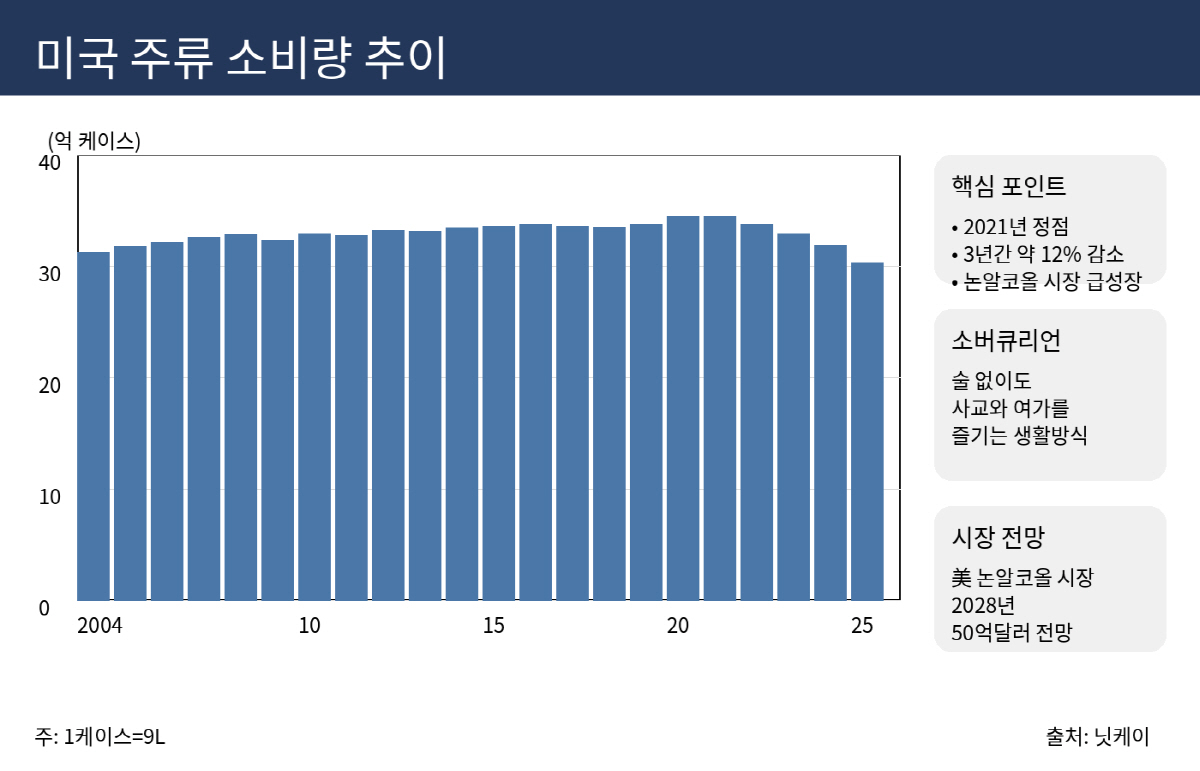
US Alcohol Consumption Drops 5% Year-on-Year
United States alcohol consumption declined by approximately 5% in 2025 compared to the previous year, marking a sustained departure from the peak intake levels recorded during the 2021 COVID-19 pandemic, according to data from the market research firm IWSR. This shift, often characterized by the rise of the “sober-curious” movement, represents a significant transition in public health behavior with potential long-term implications for chronic disease prevention and systemic morbidity rates.
Key Clinical Takeaways:
- Alcohol consumption in the U.S. has experienced a consistent downward trend since 2021, driven by increased health consciousness and the availability of non-alcoholic alternatives.
- The medical community notes that even moderate reductions in ethanol intake can significantly lower the risk of alcohol-associated liver disease and certain oncological pathologies.
- Patients seeking to optimize metabolic health or manage alcohol-related comorbidities should consult with specialized medical providers to ensure evidence-based lifestyle transitions.
Epidemiological Context of Reduced Ethanol Consumption
The recent contraction in alcohol sales is not merely a market phenomenon; it aligns with a growing body of evidence regarding the physiological impact of ethanol. Ethanol is classified as a Group 1 carcinogen by the International Agency for Research on Cancer (IARC). Longitudinal studies, such as those published in The Lancet, have consistently demonstrated that there is no “safe” threshold for alcohol consumption regarding the risk of all-cause mortality and specific cancers, including esophageal and breast cancer.

“The shift toward ‘sober-curiosity’ is reflective of a broader societal move toward preventative health. When patients reduce their alcohol intake, we observe a reduction in systemic inflammation markers and an improvement in hepatic enzyme profiles,” notes Dr. Elena Rossi, an internal medicine specialist focusing on metabolic health.
The reduction in consumption is particularly notable among younger demographics, who are increasingly prioritizing physical performance and mental clarity. This behavioral change mirrors findings from the National Institute on Alcohol Abuse and Alcoholism (NIAAA), which emphasizes that early intervention and lifestyle modification are the most effective strategies for preventing alcohol use disorder (AUD) and related chronic morbidity.
Clinical Considerations for Lifestyle Modification
For individuals transitioning away from alcohol, the clinical focus must remain on metabolic support and psychological equilibrium. Sudden cessation in patients with long-term dependency requires medical supervision to manage potential withdrawal syndromes, which range from mild anxiety to life-threatening delirium tremens. Patients currently navigating these changes should engage with board-certified addiction specialists or internal medicine practitioners to conduct baseline diagnostic screenings, including liver function tests (LFTs) and lipid panels.

| Clinical Metric | Benefit of Alcohol Reduction | Scientific Basis |
|---|---|---|
| Hepatic Function | Reduced steatosis/fibrosis risk | Reversibility of early-stage liver damage |
| Cardiovascular Health | Lowered systemic blood pressure | Reduction in ethanol-induced vasoconstriction |
| Oncological Risk | Decreased DNA damage | Lowering of acetaldehyde exposure |
Addressing the Diagnostic Gap
Despite the positive trend in reduced consumption, a significant portion of the population remains at risk for undiagnosed alcohol-related physiological damage. Alcohol-associated liver disease (ALD) often remains asymptomatic until advanced stages of fibrosis or cirrhosis occur. Healthcare providers are increasingly utilizing non-invasive diagnostic tools, such as transient elastography (FibroScan), to assess hepatic health in patients who report historical high-volume consumption. Accessing these advanced diagnostic modalities is essential for early detection.
Patients who suspect they may have underlying metabolic or hepatic issues due to past consumption should prioritize a comprehensive clinical evaluation. Connecting with vetted gastroenterologists or hepatology centers is a critical step in establishing a baseline for long-term health monitoring. These specialists can provide the necessary oversight to transition safely toward a reduced-alcohol or alcohol-free lifestyle while managing any pre-existing clinical vulnerabilities.
Future Trajectory of Public Health Trends
The “sober-curious” trend appears to be more than a temporary shift in consumer preference; it is becoming integrated into the standard of care for preventative medicine. As public health initiatives continue to emphasize the dangers of ethanol, the demand for clinical support in nutrition, mental health, and substance cessation will likely grow. The integration of behavioral health into primary care settings remains the most effective mechanism for sustaining these gains in public health.
The scientific consensus remains clear: reducing ethanol intake is a high-yield intervention for improving population health outcomes. As the landscape of alcohol consumption evolves, maintaining contact with qualified healthcare professionals remains the cornerstone of individual health optimization. For those requiring specialized guidance, our directory provides access to preventative medicine experts who can tailor care plans to individual biological needs.
Disclaimer: The information provided in this article is for educational and scientific communication purposes only and does not constitute medical advice. Always consult with a qualified healthcare provider regarding any medical condition, diagnosis, or treatment plan.