
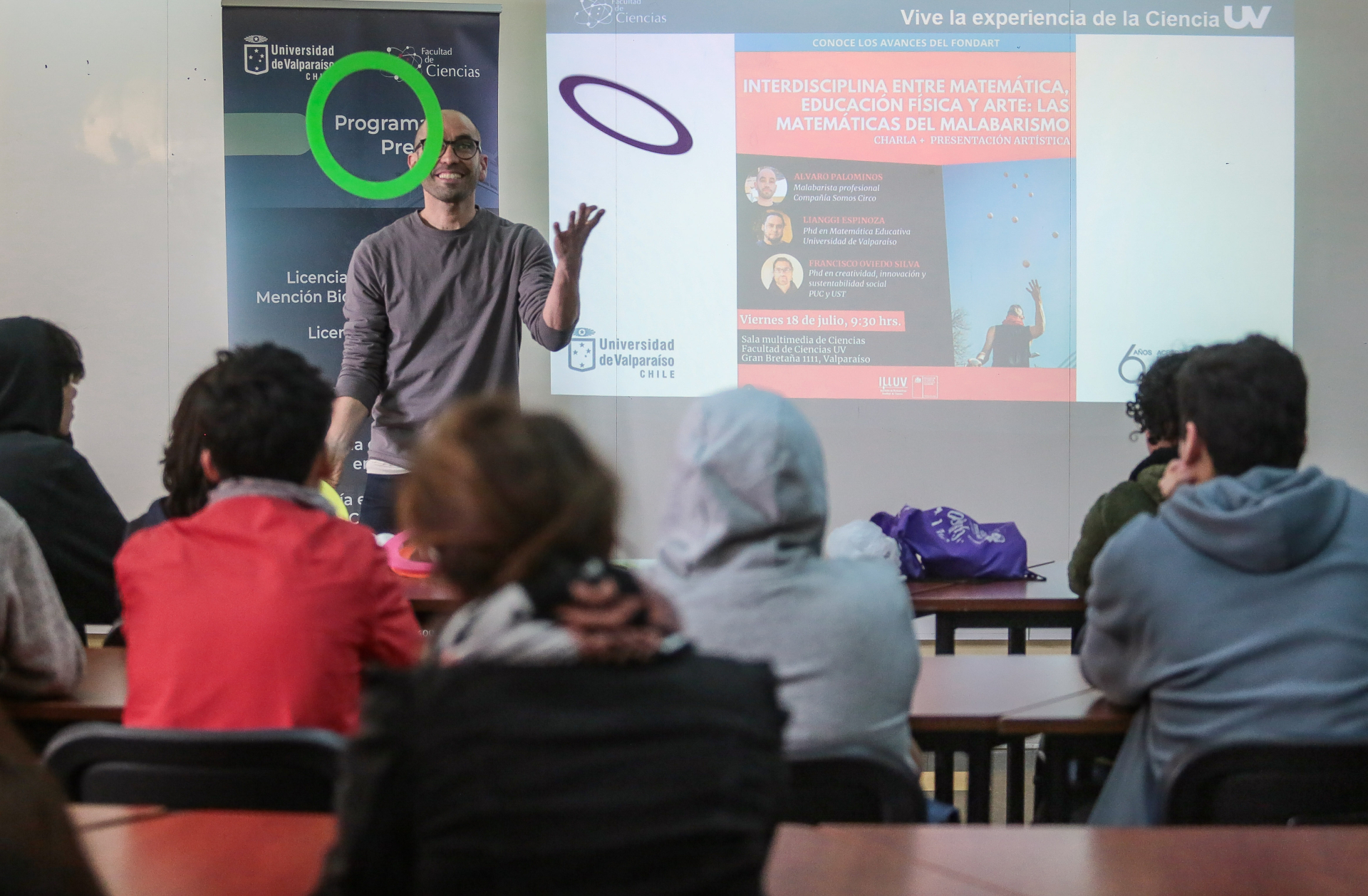
Juggling as a Tool to Bridge Math and Physical Education
A groundbreaking project, funded by Fondart, is exploring the integration of mathematics, art, and physical education through the practice of juggling. The initiative aims to combat educational fragmentation by demonstrating that mathematics is not confined to textbooks but is an integral part of everyday life,even in enjoyable activities like art and sports.
Dr. Espinoza, one of the project’s authors, highlights the common educational challenge of breaking down disciplinary silos. “Mathematics is not just thinking; it is indeed also about moving the body,” she states. “Numerous studies underscore the vital connection between mind and body for well-being and learning. We want students to recognize that mathematics extends beyond notebooks and tests, permeating their daily lives, including activities they enjoy, such as art and sport.”
Professor Francisco Oviedo elaborates on this vision, explaining that while physical education focuses on bodily experiences, its integration with mathematics and art fosters a more holistic engagement. “Understanding mathematics as part of everyday life, beyond mere numbers, allows us to connect it to human action and the meaning behind our endeavors,” he adds.
The Fondart project encompasses a year of research, culminating in a book that will document the mathematical principles, exercises, and experiences associated with juggling. this publication is intended to serve as an innovative educational resource.
“This work is the culmination of over a decade of study, but we are now focused on a truly interdisciplinary approach,” says Espinoza. “Our goal is for teachers to implement these ideas in their classrooms, enabling students to discover that learning mathematics can be as engaging as mastering a juggling trick.”
Palominos emphasizes the positive impact of this teaching methodology on young people. “When students witness a juggling performance, they experience curiosity and excitement, viewing it as a challenge,” she observes. “This opens a pathway to explain mathematical concepts in a tangible and entertaining manner. While not everyone is initially drawn to mathematics, connecting it to something they enjoy, like the circus or sports, provides a new source of motivation.”
dr. Oviedo further stresses the significance of incorporating the corporeal aspect into this research.”Valuing experience is key,” he asserts. “We understand that every action has a meaning that transcends the physical. It’s about a sense of life, something that extends beyond the customary notion of movement associated with physical education.”
He also points out that a primary driver of this project is to dismantle the self-imposed disciplinary boundaries within physical education. “At times, we become too insular within our own field,” Oviedo admits. “However, by looking outward and engaging with colleagues from other disciplines, such as education or circus arts, we realize we are all exploring the same world, albeit from different perspectives.”
The project is supported by a Fondart grant, with research and book growth spanning one year. The initiative aims to equip teachers with novel tools to make mathematics more accessible and engaging for students by linking it to physical activity and artistic expression.
