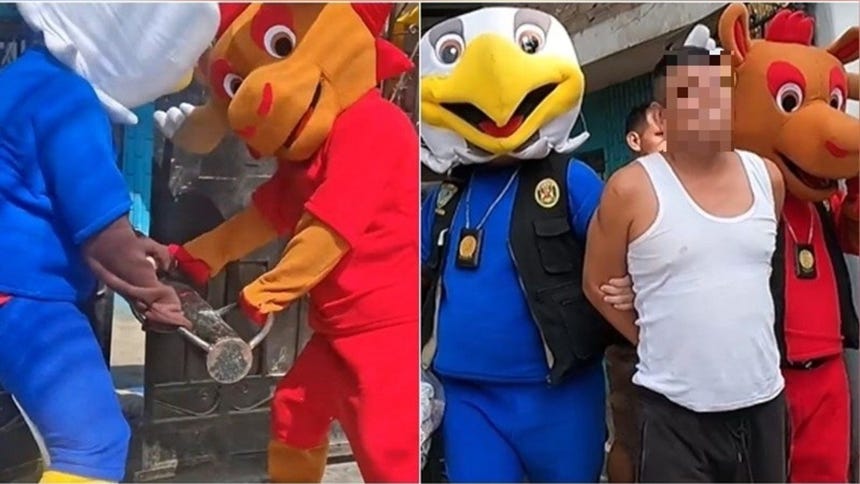
Undercover Police in World Cup Stuffed Animals Bust Drug Seller in Peru
Peruvian National Police (PNP) officers from the elite Terna Group arrested a suspected drug dealer in San Juan de Lurigancho (SJL) on June 11, 2026, by utilizing a tactical disguise as World Cup-themed mascots. The operation, designed to bypass neighborhood surveillance, resulted in the seizure of illicit narcotics and the detention of the suspect.
Tactical Deception: The Terna Group’s Operational Strategy
The Terna Group, a specialized unit within the PNP known for undercover operations, deployed agents in oversized, colorful mascot costumes to patrol a high-crime sector of San Juan de Lurigancho. According to reports from RPP Noticias, the agents utilized the festive appearance of the costumes to move through residential areas without triggering the suspicions of local lookouts who typically monitor for police presence.
The arrest occurred during the afternoon, as the undercover officers closed in on a residential property frequently identified as a point of sale for retail narcotics. By maintaining a non-threatening appearance, the officers were able to reach the target before the suspect could discard evidence or flee the scene. This method of “stealth surveillance” has become a hallmark of the Terna division, which frequently uses unconventional disguises to infiltrate environments where standard-issue uniforms would be immediately identified.
“Criminal networks in dense urban areas like San Juan de Lurigancho rely on sophisticated ‘campana’ systems—lookouts who signal the arrival of marked patrol vehicles. By subverting the visual expectations of these lookouts, the Terna Group effectively neutralizes the primary advantage of the local distribution network,” said a security consultant familiar with Lima’s metropolitan policing strategies.
The Escalating Security Challenges in San Juan de Lurigancho
San Juan de Lurigancho remains one of the most densely populated districts in Lima, and it faces significant challenges regarding micro-trafficking and organized crime. The district’s complex urban layout provides numerous hiding spots for illicit activity, complicating traditional law enforcement efforts.
The use of creative tactical disguises highlights a shift toward unconventional intelligence-led policing in Peru. However, the presence of these markets often stems from deeper societal issues, including gaps in community oversight and the lack of robust legal advocacy services for residents caught in the crossfire of turf wars. For citizens and business owners concerned about safety, engaging with professional security risk management firms is increasingly viewed as a necessary step to protect commercial property and residential perimeters from the spillover effects of local drug trade.
Comparative Analysis of Undercover Policing Tactics
The use of costumes by law enforcement is not unprecedented in Peru, though it remains a controversial and highly visible tactic. The following table contrasts the traditional patrol method with the Terna Group’s specialized approach used in this operation:
| Feature | Traditional Uniformed Patrol | Undercover Terna Operation |
|---|---|---|
| Visual Profile | High (Deterrence-focused) | Low/Camouflaged (Infiltration-focused) |
| Primary Objective | Visibility and Presence | Evidence Acquisition and Arrest |
| Detection Risk | High (Lookouts alert suspects) | Low (Deceptive disguise) |
| Operational Environment | Public Thoroughfares | High-density residential/Commercial |
Legal Implications and Community Safety
The legality of such operations often hinges on the distinction between entrapment and legitimate undercover investigation. Under Peruvian law, police are permitted to use deception to uncover crimes, provided they do not incite the suspect to commit an offense they would not otherwise have committed. The Peruvian National Police maintain that these operations are strictly evidence-based and target individuals already actively engaged in illegal distribution.

For those affected by the ongoing instability in districts like SJL, the legal landscape is often difficult to navigate. Families and local business owners often require assistance from civil rights and criminal defense specialists to understand their rights when police operations occur in their immediate vicinity. The intersection of aggressive policing and community rights requires a delicate balance, particularly as the state attempts to reclaim territory from organized criminal groups.
Future Outlook for Metropolitan Policing
As the PNP continues to refine its tactical responses, the reliance on specialized units like Terna is expected to grow. The use of unconventional disguises is a direct response to the adaptation of criminal groups that have become increasingly adept at identifying standard police protocols.
Moving forward, the effectiveness of these operations will likely be measured by the long-term reduction in local crime rates rather than singular high-profile arrests. Community leaders are urging the government to pair these tactical arrests with long-term socioeconomic investments to prevent the rapid replacement of arrested individuals by new recruits in the local drug trade. The success of the June 11 operation serves as a reminder that as criminal methods evolve, the state’s counter-measures must remain equally fluid and unpredictable.
The environment in Lima’s northern and eastern sectors remains volatile. Whether you are a business owner seeking to fortify your premises or a resident navigating local legal challenges, the necessity for verified, professional support has never been higher. Accessing the right expertise—from security risk management to specialized legal counsel—is the most reliable way to maintain safety in an unpredictable climate. Consult our directory to connect with vetted professionals who understand the specific security realities of the region.