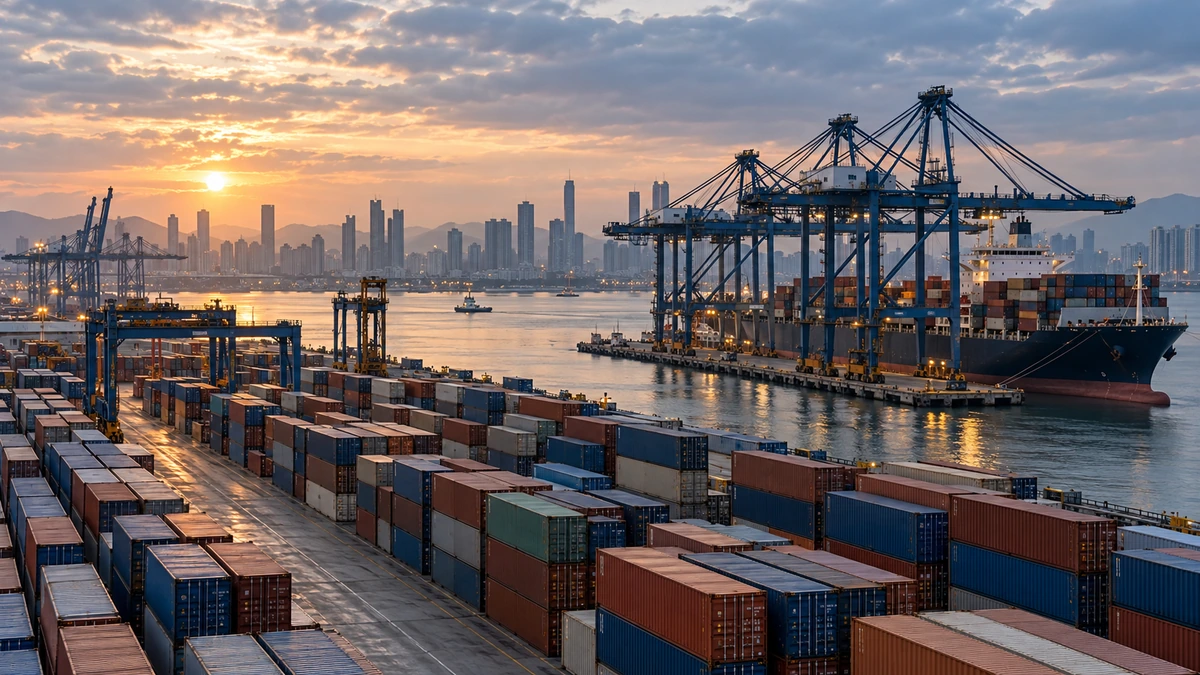
UNCTAD projects global economy to slow down to 2.6 percent
The global economy is projected to decelerate to 2.6 percent in 2026, dropping from a 2.9 percent expansion rate registered in 2025, according to the Trade and Development Report published by UNCTAD and reported by Reuters. This growth slowdown stems from rising energy costs, geopolitical uncertainty, and mounting barriers to investment across strategic sectors.
Trade Volumes Outpace Real Economic Expansion
International commerce continues to advance even as overall macroeconomic growth cools. Goods and services trade will increase by approximately 4 percent at constant prices, stripping out the distorting effects of inflation. Total world trade reached a peak of 35 trillion dollars in 2025. However, a significant portion of the higher trade value projected for 2026 reflects elevated prices driven by the ongoing energy crisis rather than surging physical output.
Energy importers face higher baseline costs for identical cargo volumes, forcing both corporate entities and households to compress discretionary budgets. This dynamic produces a divergent economic reality. Global trade remains active while the broader economic engine loses momentum.
Asian Markets Drive Most Global Economic Growth
Asian markets anchor the bulk of worldwide economic expansion this year. The region accounts for 59 percent of global economic growth. India leads major forecasts with a 7.3 percent expansion rate, followed by Indonesia at 5.2 percent and China at 4.5 percent.
Supply chain routes continue to fracture beneath regulatory and geopolitical pressures. Direct trade exchanges between China and the United States have fallen by more than 20 percent since 2024. Meanwhile, East Asia has deepened commercial integration with both superpowers.
Developing economies as a collective group will grow by 4 percent, trailing behind the 4.7 percent rate recorded in 2025. Export controls, tighter investment reviews, and stringent supply chain mandates complicate market entry for emerging industrial participants seeking higher-value manufacturing segments.
Concentrated AI Investment Creates Systemic Financial Vulnerability
Semiconductors and artificial intelligence hardware drive a substantial portion of current merchandise trade. Yet, high technology sales figures do not automatically translate into broad productivity gains or distributed income growth across domestic markets.

Developed economies captured roughly 70 percent of new investment project values announced between 2020 and 2025 within strategic domains such as advanced chips, AI infrastructure, and energy transition technologies. This heavy market concentration exposes financial systems to systemic vulnerability. Capital allocations rely heavily on a narrow cohort of companies linked to the AI boom. Any downward revision in corporate earnings expectations for these key players risks triggering capital drawdowns across investments, stock markets, and specialized supply chains.
Oil price volatility, shifting maritime shipping lanes, and the localized distribution of technology capital expenditures will determine whether international trade expansion can support balanced global development.