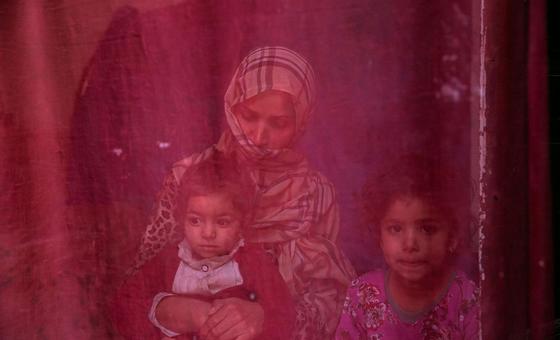
UN Women Warns 22 Million Afghan Women Face Healthcare Denial
UN Women warns that 22 million Afghan women and girls face growing risk of healthcare denial as restrictions prevent access to vital medical care.
Restrictions imposed by authorities in Afghanistan are preventing growing numbers of women and girls from accessing vital medical care, according to aid and development agencies.
More than 100 edicts issued by the de facto authorities since they came to power in 2021 have drastically restricted women’s movement outside the home, education, and employment.
The situation has worsened due to serious funding cuts for relief work, UN Women reported.
Sofia Calltorp, UN Women’s Chief of Humanitarian Action, warned that the country’s 22 million women and girls face a growing risk of being denied healthcare access in the longer term.
“One woman that I met in Kunar told me that she had suffered multiple miscarriages without access to healthcare. I also met with men who spoke of restrictions preventing them from supporting women,” Calltorp told news.un.org.
She also described meeting women facing their second winter after being displaced from their homes by an earthquake last year, hostilities with Pakistan, or severe flooding.
Nearly 300 humanitarian health facilities have closed or suspended operations due to aid cuts, affecting more than one million women and girls.
Data from UN Women, the UN aid coordination office OCHA, and partners also show that more than 193 focal points for survivors of gender-based violence have closed.
Around 3.4 million women and girls in need are now unlikely to have access to water, sanitation, and hygiene services.
While UN Women provides emergency cash assistance, counselling, and small business training, these services cannot undo the impact of edicts that have removed guardrails against violence in the home.
Calltorp described the case of a 24-year-old woman detained in her home by her father for 18 months, who experienced abuse and lack of food until participating in a local women’s organization program designed to prevent violence.
Women continue finding ways to survive, support one another, and hold onto hope, but this cannot be accepted as normal, Calltorp insisted.
Approximately 2.6 million girls have been barred from secondary education, a restriction projected to increase child marriage and maternal mortality rates.
Susan Ferguson, UN Women’s Special Representative in the country, described Afghanistan as the world’s worst women’s rights crisis, stating that Afghan women are fighting for their own survival.
UN Women became operational in 2011 after the General Assembly merged four UN entities focused on gender equality, including the UN Development Fund for Women founded in 1976. The resolution creating it was adopted unanimously on 2 July 2010, and former President of Chile Michelle Bachelet served as its inaugural executive director.
“I urge all governments and other international donors to stand with us and with Afghan women and girls. Stay the course and increase, not cut, your support. Back these women,” Ferguson said.
- Southeast Asian Media Surprised by Vietnam U17 Showing vs Belgium U17
- USC Men’s Basketball Community Heroes Theme Night Set for Feb 3 at Galen Center
- Royal Biographer Robert Hardman Warns Sussexes Risk ‘Popularity Contest’ With Timing (archyde.com)
- No. 16 Penn State Women’s Volleyball Defeats No. 18 Indiana 3-1 (newsdirectory3.com)