UN Top Court to Deliver Landmark Judgment on Myanmar Genocide Allegations Against Rohingya
The International Court of Justice delivers its judgment in The Hague on Thursday on whether Myanmar committed genocide against the Rohingya, in a case The Gambia brought in 2019 under the 1948 Genocide Convention.
The ruling would be the court’s first finding that a state committed genocide, if judges rule that way. In 2007, the court said that Serbia “violated the obligation to prevent genocide” in the 1995 Srebrenica massacre, when Bosnian Serb forces murdered some 8,000 mostly Muslim men and boys. The judgment also lands while the same court weighs genocide allegations tied to Gaza and the war in Ukraine.
“Genocides have similarities in how they are committed so this decision will have an impact on other cases,” Melanie O’Brien, a professor of international law at the University of Western Australia, told The Associated Press.
The Gambia asked the court to rule that Myanmar breached the Genocide Convention, order an end to any illegal activities targeting the Rohingya, and ensure those responsible are punished.
The Gambia has also requested reparations, including an order that Myanmar grant the Rohingya full citizenship and the right to return home. Myanmar, in public hearings early last year, defended its military campaign as a legitimate counter-terrorism operation that did not amount to genocide.

The road to Thursday’s judgment
The case has moved through the court for years. Judges held closed-door sessions in January to hear directly from Rohingya survivors who traveled from camps in Bangladesh. One witness described her child being taken from her arms, stabbed and thrown into a fire, according to Legal Action Worldwide, the group representing hundreds of survivors. Another described seeing piles of bodies in a mass grave.
At the hearings, Gambian Justice Minister Dawda Jallow rejected Myanmar’s framing of the case as an abstract legal dispute.
“It is about real people, real stories and a real group of human beings,” Jallow told the court. “The Rohingya of Myanmar. They have been targeted for destruction.”
Myanmar’s position is that its actions targeted a military uprising by insurgents, not a people.

What Myanmar did in Rakhine State
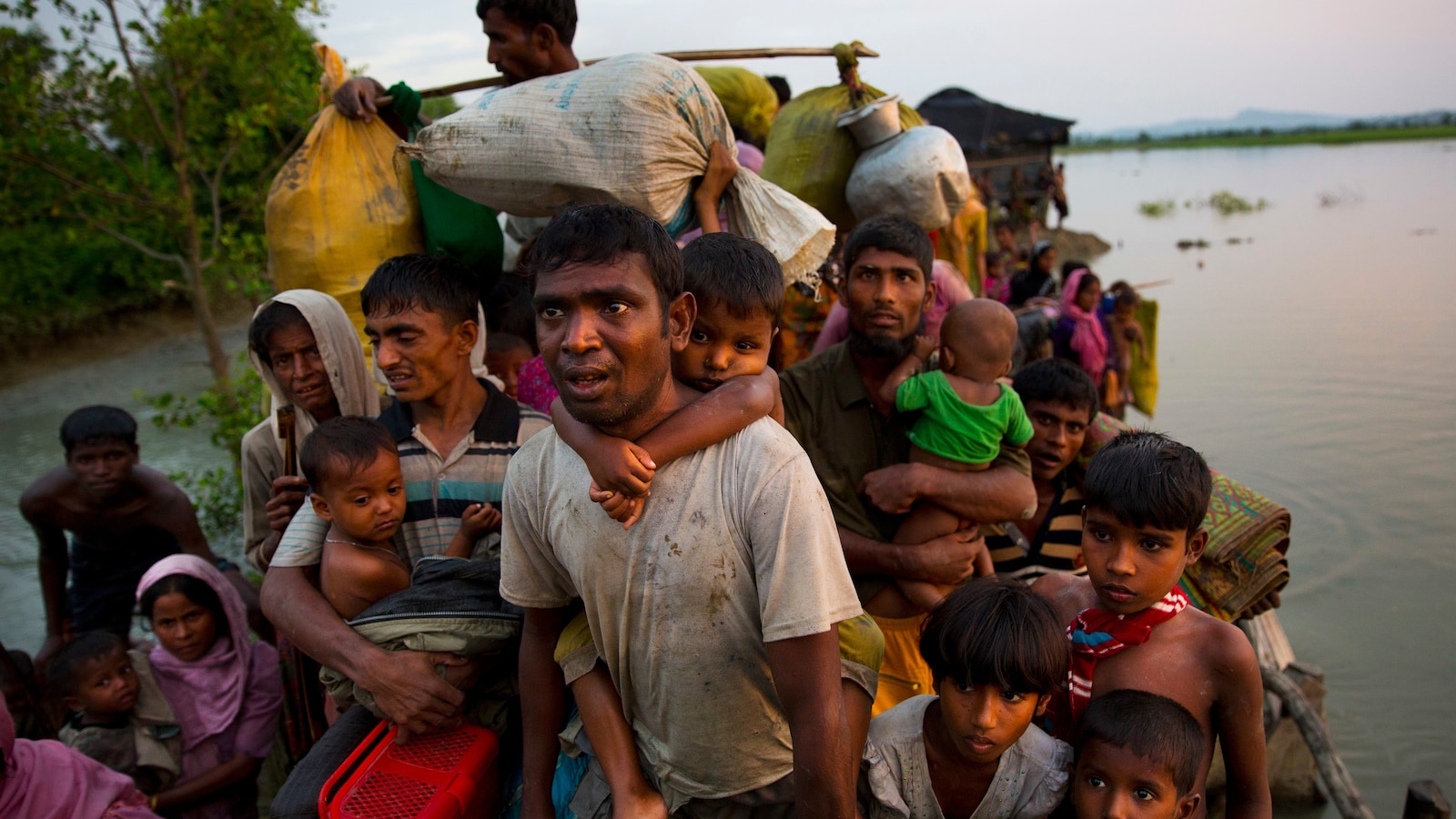
The crisis reached its climax in August 2017, when Myanmar’s military launched what it called a clearance campaign in northern Rakhine State, responding to an attack by a Rohingya insurgent group. More than 700,000 Rohingya fled to Bangladesh. Security forces stand accused of mass rapes, killings and burning thousands of homes.
The roots run deeper. Buddhist-majority Myanmar has long called the Rohingya “Bengalis” from Bangladesh, even though their families have lived in the country for generations. Nearly all have been denied citizenship since 1982, leaving them effectively stateless, and they are denied freedom of movement and other basic rights.
Where the Rohingya stand today
About 1.2 million Rohingya refugees now live in Bangladesh, most in congested camps across Cox’s Bazar district. Conditions there are harsh: fire hazards, infectious diseases, monsoon landslides, inadequate sanitation and strict work restrictions.
Severe funding cuts in recent years have made things worse, pushing thousands toward perilous sea journeys to Malaysia. The U.N. refugee agency recorded more than 6,500 attempted crossings in 2025, with nearly 900 people — roughly one in seven — reported dead or missing at sea.
Around 550,000 Rohingya remain inside Myanmar, facing heavy restrictions on movement, healthcare and livelihoods. Their situation deteriorated further after the military takeover in 2021.
What the court can and cannot do
The court’s rulings are final and legally binding, but enforcement is thin. The ICJ has no way to compel compliance beyond reporting non-compliance to the U.N. Security Council. Even so, O’Brien told The Associated Press that a finding of genocide carries weight of its own.
“A finding of genocide is a form of validation. It is someone publicly acknowledging what happened to them,” O’Brien said. “This is a justice process for people who have nowhere else to turn.”
Antonia Mulvey, founder of Legal Action Worldwide, said she was “cautiously optimistic” the court would hold Myanmar fully accountable, citing “patterns of conduct” in the attacks on villages. Her team has documented sexual violence as part of the campaign, and she argued the judgment’s handling of rape as an act of genocide will matter.
“You don’t need to gang-rape people. You don’t need to kill their children in front of them. You don’t need to do it in public. What is the purpose of that? The purpose is to destroy the group,” Mulvey said.
The other genocide cases waiting behind it
The ruling will not arrive in a vacuum. South Africa has accused Israel of breaching the Genocide Convention during its offensive in Gaza, a claim Israel vehemently denies; Israel insisted that its war in Gaza was a legitimate defense of its people and that it was Hamas militants who were guilty of genocide.
That case was launched after Hamas’ Oct. 7, 2023, attack, when militants stormed through Israeli communities, killing some 1,200 people and taking around 250 people hostage. A judgment there will take years.
Nicaragua has separately accused Germany of breaching the convention by selling Israel weapons used in the Gaza conflict. Germany denies the claim and has asked the court to toss out the case. Ukraine also has a case pending against Russia, filed shortly after Moscow’s full-scale invasion in February 2022, accusing Russia of fabricating genocide claims against Ukraine to justify the attack. A final decision there is likely still years away.
In the camps, waiting for the ruling
For Rohingya in Cox’s Bazar and beyond, the case is about recognition. Yasmin Ullah, a Rohingya human rights activist who fled Myanmar as a young child with her mother in the 1990s, said the demands are rooted in her community’s desire for dignity.
“Because so far, we’ve just been pushed around into this limbo state,” Ullah said. “It’s been almost 10 years now that Rohingya have been living in very, very precarious conditions across the Asia Pacific.”
Yousuf Ali traveled from his home in a Cox’s Bazar camp to witness Thursday’s decision in person. He sees the stakes as wider than one community. “This isn’t just for our community, it is for all communities who have faced this,” he said.
Yanghee Lee, a former U.N. rights investigator to Myanmar, said: “The international community failed to prevent Myanmar military atrocities against the Rohingya nine years ago. It must seize this opportunity to finally secure justice for the Rohingya and begin to reckon with these failings.”
The open question the court cannot answer is whether Myanmar would comply at all; the judgment’s own enforcement runs only as far as the Security Council’s door.