
UN Declares Transatlantic Slave Trade a ‘Crime Against Humanity’, Calls for Reparations
UN Declares Transatlantic Slave Trade a Crime Against Humanity, Calls for Reparations
The United Nations General Assembly on Wednesday overwhelmingly approved a resolution declaring the transatlantic chattel slave trade a “crime against humanity” and calling for reparations as a means of addressing historical injustices. The vote, 123 in favor, with Argentina, Israel and the United States dissenting, and 52 abstentions, marks a significant moment in the ongoing global conversation surrounding reparatory justice.
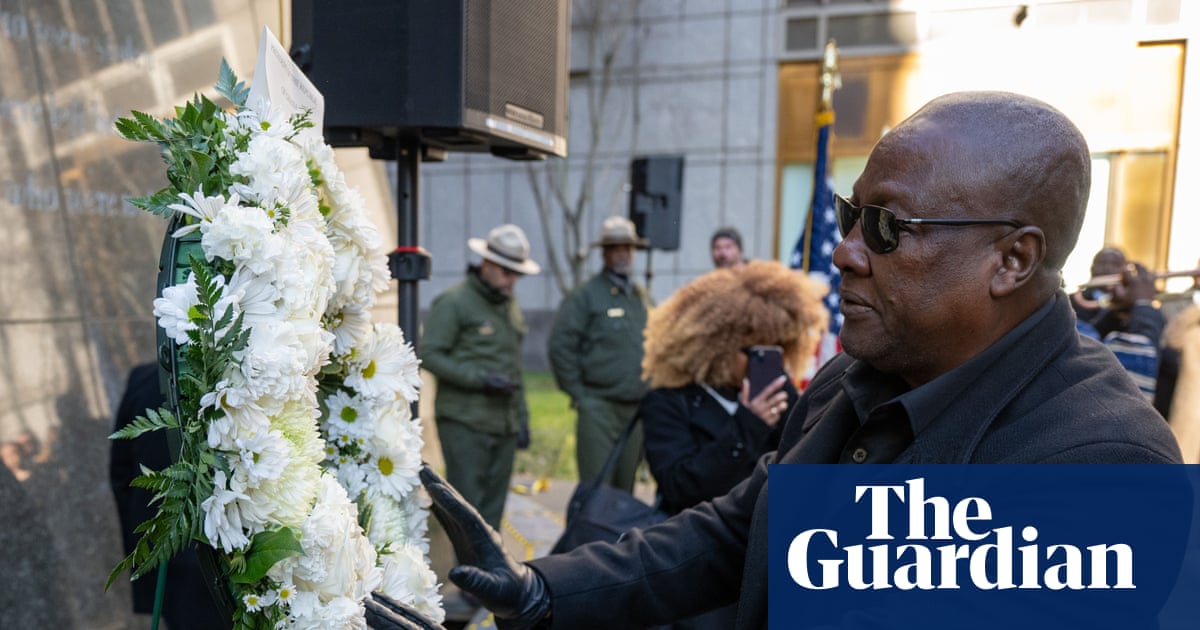
The resolution was spearheaded by Ghana’s President John Dramani Mahama, who framed the move as a necessary step toward acknowledging the enduring legacy of slavery. “Let it be recorded that when history beckoned, we did what was right for the memory of millions who suffered the indignity of slavery,” Mahama stated, according to reports.
The African Union (AU) and the Caribbean Community (Caricom) were key backers of the resolution, pushing for updated terminology to reflect the lasting impact of the trade. Kyeretwie Osei, head of the economic, social and cultural council at the AU, explained the intent was to achieve “political recognition at the highest level” for a period of history whose impact continues to resonate today. He emphasized that the resolution aims to properly contextualize the era, highlighting how it laid the foundation for subsequent atrocities and crimes against humanity.
The resolution’s passage comes as a culmination of decades of advocacy from scholars and activists. Panashe Chigumadzi, a historian and rapporteur for the AU’s committee of experts on reparations, noted that previous UN acknowledgements of slavery, such as the 2001 Durban conference, were limited by framing the issue as a “retroactive moral judgment rather than a continuous legal reality.” The AU framework, she explained, establishes that the inception of the transatlantic slave trade marked a definitive break in world history, initiating a racial capitalist system that continues to shape global relations.
While the resolution is not legally binding, it is expected to galvanize further efforts toward securing reparatory justice. The vote occurred alongside a separate petition presented to the British House of Commons by MP Bell Ribeiro-Addy, calling for a formal apology from the UK for its role in the enslavement and colonization of Africans. The petition highlighted the connection between the legacies of slavery and contemporary global challenges, including geopolitical instability, racism, inequality, and climate breakdown.
Historians estimate that seven European nations were responsible for enslaving and trafficking over 15 million Africans across the Atlantic over four centuries. The scale of the trade led 18th and 19th-century abolitionists to define it as a “crime against humanity.” Experts point to the wealth generated through enslavement as a key driver of industrialization in the West.
Mahama also addressed the increasing erasure of Black history in the United States, citing policies that censor the teaching of slavery, segregation, and racism in schools. He warned that such policies are becoming a template for other governments and risk normalizing the suppression of historical truth.
The UN’s action follows years of work by the AU to codify chattel slavery as a crime requiring not only apologies but also concrete reparations. The next steps remain unclear, with no immediate plans for implementation outlined following the vote.