UMD Report: 8 of 15 Chesapeake Bay Regions Show Health Improvements
Eight of the 15 regions in the Chesapeake Bay watershed are showing long-term environmental health improvements, according to a report from the University of Maryland Center for Environmental Science. The Lower Bay near Virginia Beach achieved a record B+ grade, though Maryland’s western shoreline south of Annapolis lagged with a D-.
While decades of wastewater treatment upgrades and runoff curbs have improved oxygen levels and aquatic life sustainability, the Lower James watershed—including Richmond—is one of only two regions in the entire watershed showing a long-term decline in water quality.
Richmond and the Lower James face declining water quality
The James River earned a C+, tying for the highest score among the Bay’s major tributaries. However, the data for Richmond is contradictory. The river saw its most significant improvement in phosphorus levels, a pollutant known to fuel harmful algae growth.
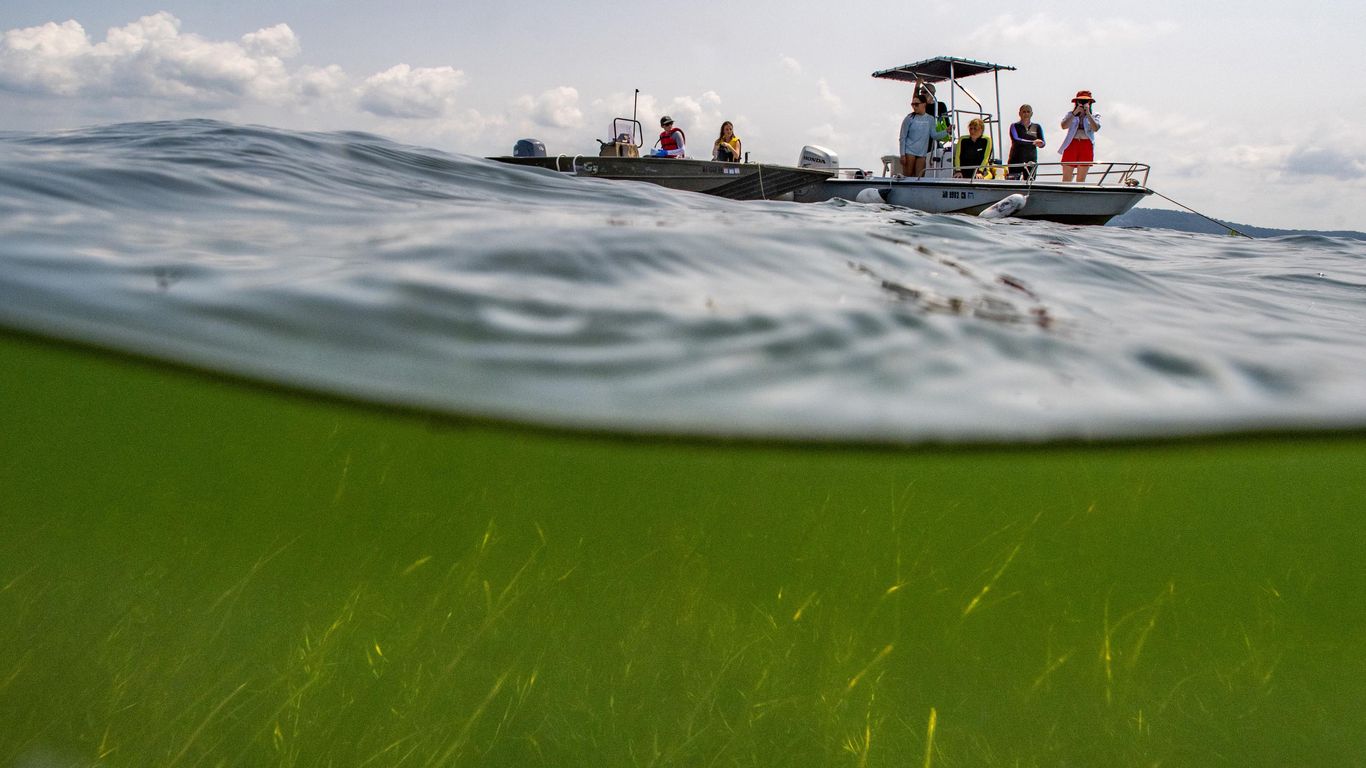
This gain is offset by a decline in water clarity. Reduced clarity can inhibit the growth of underwater grasses, which are essential for the ecosystem. Jamie Brunkow, advocacy director for the James River Association, told Axios that while overall river health has improved, indicators in the lower James—specifically water clarity and underwater grass scores—remain concerning.
The Lower James is now one of only two regions in the entire Chesapeake Bay watershed exhibiting a long-term downward trend in quality; the other is the Lower Eastern Shore in Maryland.
Federal restoration shifts under Trump administration
The current environmental gains have occurred despite significant pressures. Virginia Natural and Historic Resources Secretary David Bulova noted that progress has been made amid population growth, climate change, and the spread of invasive species like blue catfish.
“I’m amazed that we make progress at all,” Bulova said during Tuesday’s announcement. “It really does speak to the incredible job that we are doing to push the ball forward.”
Pollution sources and restoration needs
The James River Association identifies several key areas for improvement to reverse the decline in the Lower James. These include reducing the volume of pollution washing into the river from wastewater systems, city streets, and farms.
Investment in nature-based infrastructure is also cited as a necessity. Specifically, the association points to the restoration of oyster habitats—which act as natural water filters—and the replanting of underwater grasses.
The broader Bay’s success is attributed to a combination of systemic upgrades:
- Modernization of wastewater treatment plants to reduce nutrient loading.
- Stricter controls on stormwater runoff and fertilizer use.
- Large-scale restoration of oyster reefs.
Regional grade comparisons
| Region | Grade/Status | Trend/Detail |
|---|---|---|
| Lower Bay (VA Beach) | B+ | Record high grade |
| James River | C+ | Highest among major tributaries |
| Potomac River | C- | Score rose three points from last year |
| Western Shoreline (MD) | D- | Lagging performance |
| Lower James/Lower Eastern Shore | Declining | Only two regions showing long-term decline |
The divergence between the record-setting B+ in the Lower Bay and the decline in the Lower James suggests that restoration is not occurring uniformly.