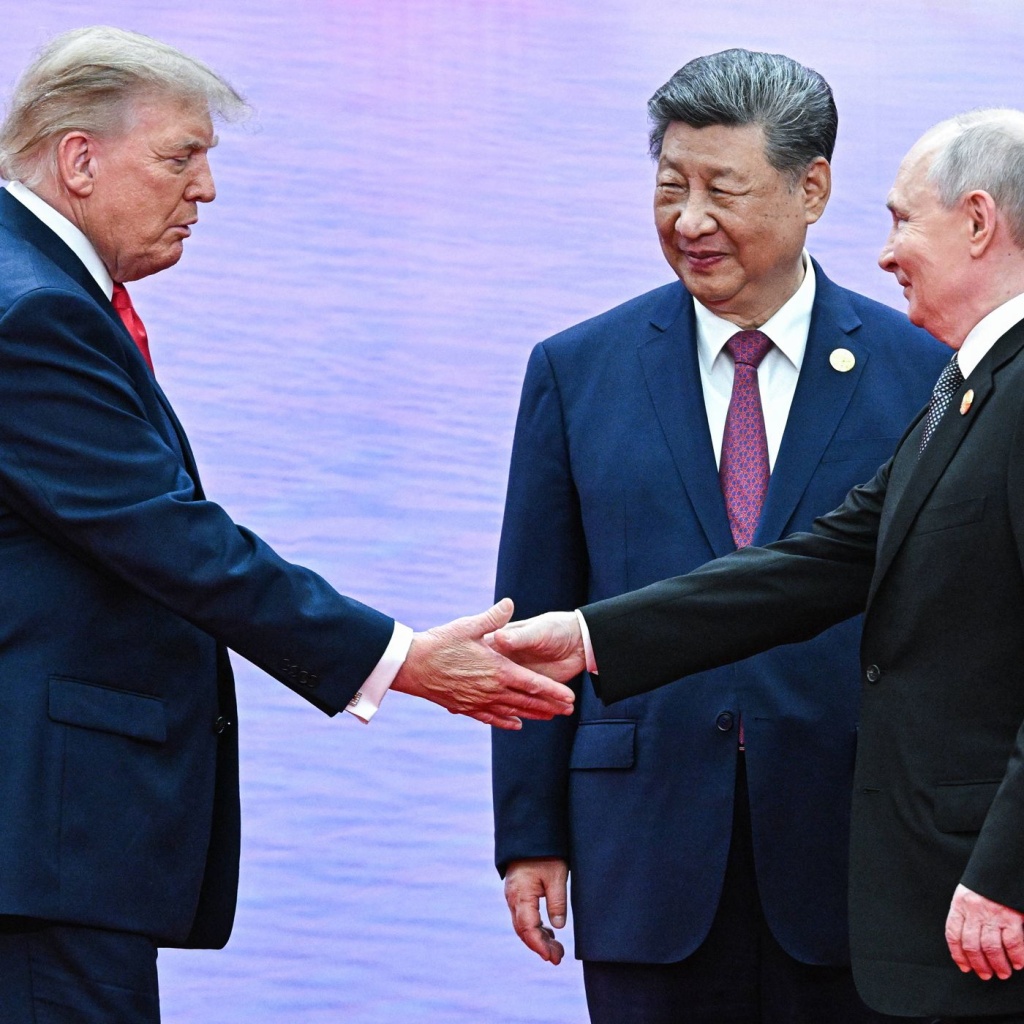
Ulrich Kühn: Trump, Putin and Xi Meeting in Shenzhen Is About Optics
“China is a profiteer of this war,” peace Ulrich Kühn said of the meeting set for Thursday, when Donald Trump, Vladimir Putin and Xi Jinping gather in Shenzhen, according to ARD Sounds.
It is the first time the leaders of the three nuclear powers have ever met.
The summit takes place on the sidelines of the APEC economic summit in Shenzhen. Kühn, a peace researcher, expects it to be about appearance more than substance. The key message from Trump, Putin and Xi, he said, is to show “We are powerful, we respect the other and we show the other where it’s going in this world.”
What readers should not expect, Kühn said, is a common line among the three. The differences are too massive. Trump wants to talk about nuclear disarmament, not Ukraine. The Chinese side does not want to talk about nuclear disarmament.
The Shenzhen meeting is the first time the leaders of these three nuclear powers have met.
Kühn expects no progress on disarmament, and he grounds that judgment in hard numbers. “The Russians have around 5400 warheads, the Americans have circa 5000 and the Chinese have circa 600,” he said, according to Inforadio.

That gap shapes China’s position. The Chinese, Kühn said, are demanding that the two other countries reduce their stockpiles first before they do so.
The arithmetic explains the deadlock.
On Ukraine, Kühn sees even less room for movement. Xi Jinping, he said, will not put Russia under pressure — there is no reason for Beijing to do so. China is a profiteer of this war, because it receives oil and gas from Russia at significantly lower prices, because Russia can no longer supply Europe.
Kühn’s assessment leaves little doubt about where Beijing’s incentives lie.
For Ukraine itself, Kühn points to a different meeting entirely. About 30 supporter countries are gathered in Berlin to work out how support for Ukraine continues: where the money comes from, and who supplies weapons.
“Whoever wants peace must first support Ukraine,” Kühn said.
The contrast between the two gatherings is the sharpest fact in this story. In Shenzhen, three nuclear powers perform unity for the cameras; in Berlin, the countries actually funding and arming Ukraine do the unglamorous work of sustaining it. Kühn’s judgment is unambiguous about which one matters more.
The realistic outcomes in Shenzhen are symbolic. Substantive movement on warhead reductions would require China to reverse its demand that the other two countries cut first — and the United States and Russia to accept ceilings far below their current stockpiles of roughly 5000 and 5400.
None of that is on the table, by Kühn’s reading.
Whether that signal outlasts the APEC summit will depend on the follow-through in Berlin, where the decisions on money and weapons for Ukraine are being made while the cameras in Shenzhen move on.
Keep reading
- Iran’s Educated Young People Leave in Growing Numbers Amid Conflict and Uncertainty
- Selena Gomez Wondermind Fraud Lawsuit Dismissed With Prejudice by Investors
- Putin Claims Russian Economy Grew Over 10% in Three Years at APEC (time.news)
- US, China Can Help End Ukraine War, Trump Tells Xi (newsy-today.com)