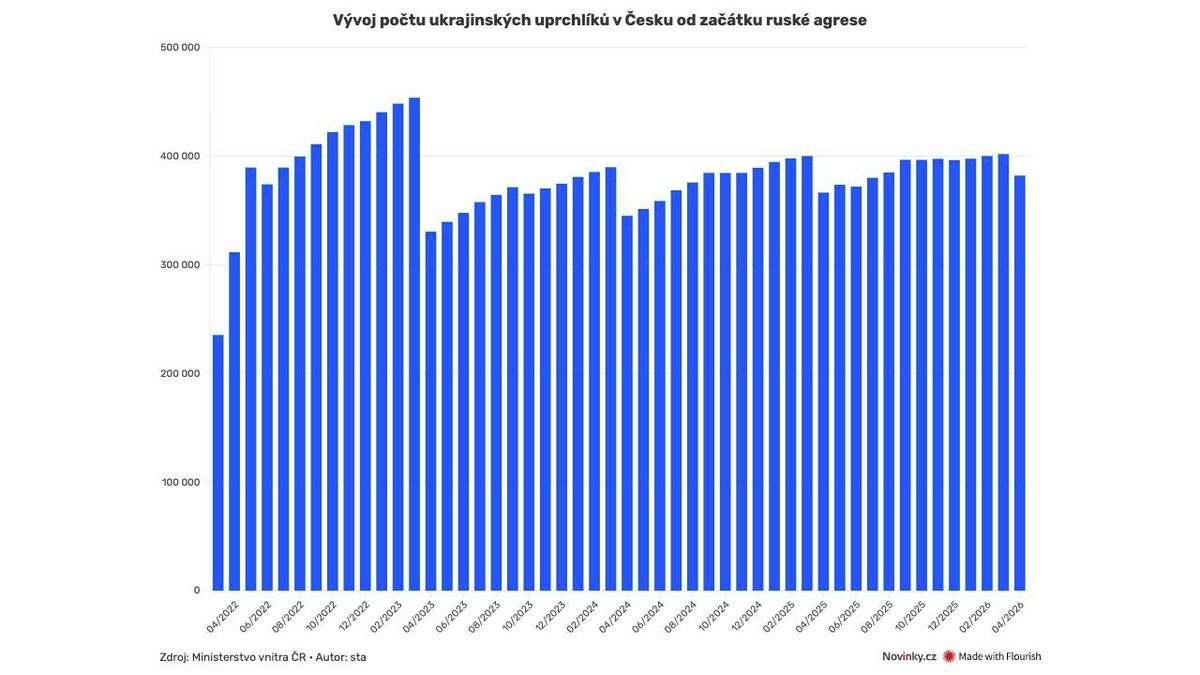
Ukrainian Refugees Continue to Increase in the Country, Seeking Long-Term Stay Under New Government
As of April 24, 2026, the number of Ukrainian refugees seeking long-term residency in the Czech Republic continues to rise despite the formation of a new government, signaling a sustained displacement crisis that tests national integration systems and local service capacities across Bohemia and Moravia.
What began as an emergency influx following Russia’s 2022 invasion has evolved into a structural demographic shift, with over 412,000 Ukrainians now holding temporary protection visas in the country—nearly 4% of the total population—and a growing share applying for permanent residence under amendments to Act No. 326/1999 Coll. On the Residence of Foreign Nationals. This trend presents both humanitarian imperatives and complex administrative challenges, particularly in urban centers like Prague, Brno and Ostrava where housing markets, school systems, and labor offices face persistent strain. The Czech government’s extension of temporary protection status through March 2027, approved in January 2026, provides critical stability but does not resolve the underlying need for pathways to integration, employment recognition, and social cohesion.
The decision to remain is not merely bureaucratic—it reflects deepening ties formed over years of displacement. Many refugees initially expected to return home within months now report establishing careers, enrolling children in Czech schools, and purchasing property. According to data from the Czech Statistical Office released in March 2026, 68% of working-age Ukrainian refugees are now employed, up from 42% in 2022, with significant concentrations in healthcare, IT, and manufacturing sectors. Yet credential recognition remains a bottleneck: only 29% of Ukrainian-trained physicians and 19% of teachers have obtained full authorization to practice in their professions, forcing many into underemployment despite critical labor shortages in these fields.
We are not asking for charity—we are asking for fairness. My medical license is valid in Kyiv, but here I clean hospital halls because my diploma isn’t recognized. That’s a loss for everyone.
The integration challenge extends beyond the labor market. Municipalities report increasing pressure on social housing waitlists, with Ukrainian families comprising 31% of new applicants in Prague’s public housing system as of Q1 2026, according to the City of Prague’s Housing Department. Simultaneously, demand for Czech language instruction has surged, with over 98,000 refugees enrolled in state-funded courses last year—yet waiting lists for advanced B2-level classes persist in regions like Ústí nad Labem and Karlovy Vár.
Local NGOs and community initiatives have stepped in where state systems lag. Organizations such as migrant integration nonprofits provide essential services ranging from legal aid for residency applications to trauma-informed counseling, while credential assessment services help refugees navigate the complex process of having foreign qualifications recognized under EU directives. In Brno, the South Moravian Innovation Hub has partnered with local tech firms to create accelerated retraining programs for Ukrainian IT specialists, reducing average requalification time from 18 to 9 months.
Legal pathways to permanency remain intricate. Under the amended foreign nationals law, refugees may apply for long-term residence after five years of continuous stay, provided they demonstrate adequate housing, income, and Czech language proficiency at B1 level. However, adjudication delays persist: the Ministry of the Interior reported an average processing time of 14 months for long-term residence permits in 2025, up from 9 months in 2022, creating limbo for those seeking stability. Immigration lawyers specializing in EU asylum and residency law—accessible through immigration law specialists—play a critical role in guiding applicants through document preparation, appeals, and compliance with evolving procedural requirements.
The system works, but We see slow and uneven. What refugees need most isn’t just permission to stay—it’s a clear, dignified path to contribute fully. When we waste professional talent through bureaucratic inertia, we all lose.
Economically, the long-term retention of Ukrainian refugees presents a net benefit. A 2025 study by the CERGE-EI Institute found that refugees who obtained permanent residency and worked in their qualified professions contributed an average of 280,000 CZK annually in net fiscal value—far exceeding the cost of integration services. Conversely, underemployment due to unrecognized qualifications resulted in a net fiscal drain of 90,000 CZK per person per year. These figures underscore the economic imperative of streamlining credential recognition and expanding targeted upskilling initiatives.
As the Czech Republic navigates its post-election policy landscape, the refugee integration challenge will remain a defining test of its social fabric and institutional adaptability. Success will depend not only on state policy but on the capacity of local communities, employers, and professional services to welcome, recognize, and utilize the skills and resilience of those who have chosen to build their lives here.
The path forward requires more than goodwill—it demands coordinated action across sectors. For municipalities managing housing shortages, employers seeking skilled labor, and refugees navigating bureaucratic hurdles, the solution lies in connecting with verified professionals who understand both the human stakes and the systemic levers for change. Whether through legal counsel, credential evaluation, or community support networks, the right expertise can transform a prolonged crisis into a lasting opportunity for renewal.