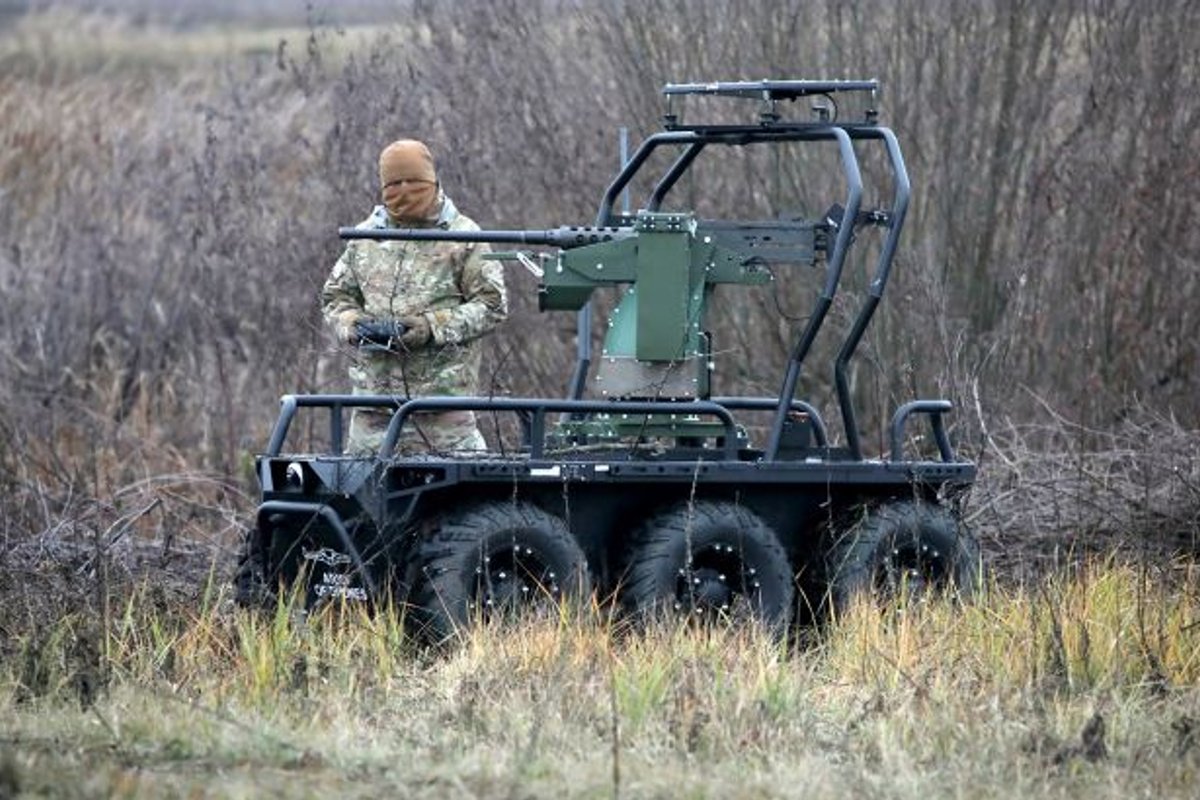
Ukraine’s Robot Army: Machines Revolutionize the Battlefield
Ukraine has successfully deployed autonomous robotic systems to seize Russian positions for the first time, marking a pivotal shift in attrition warfare. By replacing infantry with “killer robots” in high-risk assaults, Kyiv is fundamentally altering the casualty calculus of the conflict and accelerating the global transition toward unmanned combat.
This is not merely a tactical victory in the Zaporizhzhia region; it is a systemic disruption. For decades, the “infantry charge” has been the bloodiest instrument of territorial gain. Now, the logic of the battlefield has shifted. When machines can clear trenches and seize fortifications without risking human life, the traditional concept of “manpower” as a strategic asset begins to evaporate.
The macro-problem is clear: we are witnessing the birth of a “post-human” frontline. As the global defense industry pivots toward autonomy, the gap between traditional military doctrines and the reality of AI-driven warfare is widening. This creates a massive security vacuum for nations still relying on 20th-century mobilization strategies.
“The integration of autonomous systems to seize territory is the ‘Sputnik moment’ for modern land warfare. We are no longer talking about drones as scouts or bombers, but as the primary agents of territorial conquest.” — Dr. Aris Papadopoulos, Senior Fellow for Defense Innovation
The Industrialization of the ‘Iron Army’
Reports from the front indicate that thousands of robotic missions have already been executed this year, with a “robot army” delivering over 7,000 lethal strikes. The psychological impact on Russian forces—described as a “nightmare” in the Zaporizhzhia sector—stems from the predictability and relentlessness of autonomous systems. Unlike human soldiers, robots do not experience fear, fatigue, or hesitation.
This shift creates an immediate logistical crisis for the adversary. To counter robots, you cannot simply add more men; you need specialized electronic warfare (EW) capabilities and signal-jamming infrastructure. This arms race in the electromagnetic spectrum is pushing the conflict into a realm where software updates are as critical as ammunition shipments.
For multinational corporations operating in Eastern Europe or investing in the region’s reconstruction, this volatility necessitates a new kind of risk management. Firms are no longer just looking at political stability, but at “technological contagion.” Those operating in high-risk zones are increasingly relying on global risk consultants to map out the evolving security architecture of a digitized battlefield.
Macro-Economic Ripples and the Global Supply Chain
The scale of this robotic deployment is only possible through a decentralized, rapid-prototyping ecosystem. Ukraine has effectively turned its domestic tech sector into a frontline laboratory. This “war-time innovation” is driving a massive surge in demand for high-end semiconductors, sensors, and carbon-fiber components.
Although, this reliance on dual-use technology creates a precarious dependency on global supply chains. A disruption in the flow of microchips from Taiwan or specialized components from the US could ground this “Iron Army” overnight. The strategic vulnerability has shifted from the trench to the factory.
This volatility in the defense-tech sector is forcing a realignment of Foreign Direct Investment (FDI). Investors are moving away from traditional heavy industry and toward the “deep tech” firms capable of scaling autonomous hardware. As these technologies proliferate, the legal frameworks governing “autonomous lethality” are lagging. International firms are now scrambling to hire international trade lawyers to navigate the tightening export controls on AI and robotics imposed by the U.S. Department of Commerce and the EU.
Comparative Defense Shift: Human vs. Autonomous Logic
| Metric | Traditional Infantry Assault | Autonomous Robotic Seizure |
|---|---|---|
| Casualty Rate | High (Human Life) | Low (Replaceable Hardware) |
| Logistical Burden | Food, Medical, Housing | Energy, Signal, Parts |
| Psychological Impact | Combat Stress/Trauma | Technological Terror/Paralysis |
| Strategic Speed | Limited by Human Endurance | Limited by Battery/Signal Range |
The Geopolitical Fallout: NATO and the New Deterrence
The success of Ukrainian robots is being watched closely in Washington and Brussels. NATO is currently grappling with how to integrate these lessons into the SACEUR’s strategic planning. If a smaller nation can neutralize a larger army’s numerical advantage through robotics, the traditional “mass” advantage of superpowers like Russia or China is diminished.
This is a democratization of lethality. Small, agile tech hubs can now produce effects that previously required a division of tanks.
But there is a darker side to this evolution. The proliferation of “killer robots” lowers the threshold for conflict. When the political cost of casualties drops, the temptation to engage in “low-cost” territorial incursions increases. We are entering an era of persistent, automated skirmishing.
“We are witnessing the end of the Westphalian monopoly on organized violence. When algorithms decide the point of breakthrough, the diplomatic levers of the past—treaties and ceasefires—become secondary to the code.” — Ambassador Elena Vance, Transatlantic Security Institute
As this technological frontier expands, the need for secure, resilient digital infrastructure becomes paramount. Multinational entities are rapidly onboarding global cybersecurity consultants to ensure that the same AI logic used to seize trenches cannot be turned against corporate networks or critical national infrastructure via remote exploitation.
The Kicker: The New Global Chessboard
The seizure of Russian positions by Ukrainian robots is not a footnote in a regional war; it is the opening move of a global paradigm shift. The “Iron Army” has proven that geography can be conquered by code. For the global business community, the lesson is clear: the intersection of security and technology is no longer a niche concern—it is the primary driver of geopolitical risk.
As the lines between software and sovereignty blur, the ability to navigate this chaos depends on having the right partners. Whether it is securing a supply chain against AI-driven disruptions or restructuring a corporate footprint in a volatile region, the World Today News Directory remains the definitive gateway to the international legal, financial, and security experts capable of mastering the new rules of the global game.