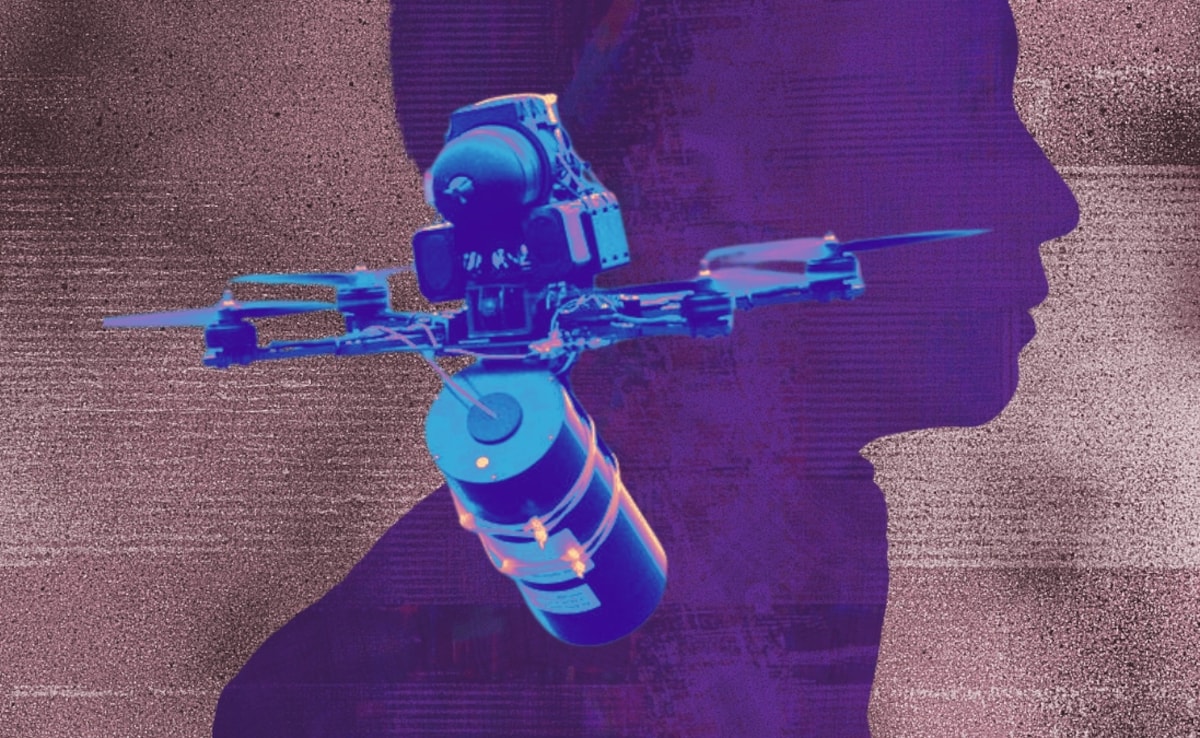
Ukraine War: Commercial Drones Targeting Civilians
A 12-year-old in Ukraine developed the technical skill to disable commercial drones after witnessing their use against civilians, only to have his own family targeted by such a device. This incident underscores the weaponization of consumer technology and the profound psychological trauma inflicted on children living within modern conflict zones.
The transformation of a child’s curiosity into a survival mechanism is a grim hallmark of the current conflict. In an environment where the sky is no longer a source of wonder but a source of potential lethality, the technical aptitude of a pre-teen has become a primary line of defense. When commercial drones—devices designed for photography and recreation—are repurposed as precision weapons, the traditional boundaries of the battlefield vanish. The home, the school, and the backyard are now active engagement zones.
This is not an isolated anomaly. The integration of compact, off-the-shelf drones into military operations has created a new paradigm of warfare where the barrier to entry for aerial surveillance and strike capabilities is virtually non-existent. For a 12-year-old to spend his formative years learning the frequencies and vulnerabilities of these machines is a testament to a lost childhood and a desperate necessity.
The problem extends beyond the immediate physical danger. The constant presence of these devices creates a state of hyper-vigilance that fundamentally alters human neurology, particularly in developing children. The psychological weight of knowing that a commercial product, available at any electronics store, can be converted into a tool for targeted harm creates a pervasive sense of insecurity that persists long after the drones have left the airspace.
“We are seeing a generation of children who are not learning to play, but learning to survive a digital war. When a child’s primary skill becomes the neutralization of weaponized consumer electronics, we have entered a territory of trauma that our current mental health frameworks are barely equipped to handle.”
The legal implications of this shift are equally complex. International humanitarian law is designed to distinguish between combatants and civilians, yet the use of commercial drones to target non-combatants deliberately blurs these lines. The anonymity and distance provided by remote piloting often decouple the operator from the human cost of their actions, leading to an institutionalization of civilian harm.
Navigating the aftermath of such attacks requires more than just physical reconstruction. Families targeted by these devices often find themselves in a legal and emotional vacuum. Securing the expertise of international human rights lawyers is often the only way to document these incidents for future accountability and to seek reparations under international frameworks. The process of gathering forensic evidence from a downed commercial drone is a specialized task that requires a marriage of technical expertise and legal precision.
The Architecture of an Invisible Threat
The technical evolution of these drones has outpaced the development of civilian defense systems. Most residential areas lack the electronic warfare capabilities required to jam or spoof drone signals, leaving individuals to rely on improvised methods or the intuitive brilliance of the youth living among them. The 12-year-old in this instance did not learn these skills in a classroom; he learned them through observation and the urgent need to protect those he loves.
This democratization of aerial weaponry means that the threat is no longer limited to state actors with massive budgets. Small cells and non-state actors can now achieve tactical effects that were previously reserved for air forces. This shift necessitates a complete overhaul of how municipal governments approach urban security and infrastructure protection.
- Signal Proliferation: The use of standard Wi-Fi and radio frequencies makes commercial drones easy to deploy but also creates a chaotic electronic environment.
- Low Cost, High Impact: The affordability of these units allows for “swarm” tactics, overwhelming traditional defenses through sheer volume.
- Civilian Camouflage: Because these drones look like hobbyist equipment, they can operate in civilian areas with less immediate suspicion than military-grade UAVs.
As cities attempt to adapt, the need for civilian infrastructure security experts has skyrocketed. Protecting power grids, water treatment plants, and residential hubs from low-altitude drone incursions requires a sophisticated blend of physical barriers and electronic countermeasures that most cities are only beginning to implement.
The human toll, however, remains the most pressing issue. For the family targeted in this event, the technical victory of disabling a drone does not erase the terror of the encounter. The intersection of technology and trauma requires specialized care. Many families are now seeking trauma-informed pediatric therapists who specialize in conflict-induced PTSD to help children process the burden of being their family’s sole technical protector.
“The weaponization of the ‘commercial’ means that the threat is ubiquitous. You cannot simply look for a military aircraft; you have to look for a plastic toy that carries a payload. This creates a psychological environment of total vulnerability.”
The international community must address this gap in the International Committee of the Red Cross guidelines and UN Human Rights frameworks. The current definitions of “military objectives” are being stretched to a breaking point by the use of consumer electronics in residential zones. Without clear, enforceable boundaries, the precedent is being set that any civilian with a laptop and a drone can be a legitimate target, or a combatant, regardless of their age or intent.
For further analysis on the evolution of unmanned systems, the Associated Press has tracked the proliferation of these technologies across multiple global conflict zones, noting a consistent trend toward the targeting of critical civilian infrastructure.
The story of a 12-year-old fighting a digital war is not a story of precocious talent; it is a story of systemic failure. When the defense of a home falls to a child, the failure is not technical—it is moral. The world is watching a blueprint for future conflicts being written in real-time, where the line between a toy and a weapon is erased entirely. To survive this new era, we must move beyond improvised defenses and toward a global standard of protection for the most vulnerable. Finding verified professionals through the World Today News Directory is the first step in moving from desperate improvisation to structured, professional recovery and protection.