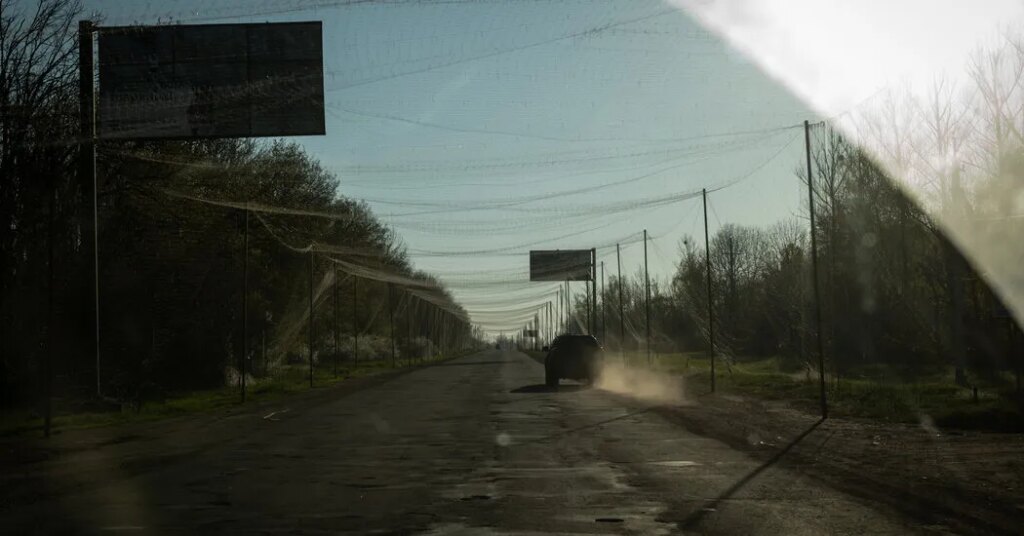
Ukraine Broadcasts Russian Rock, Surrender Calls Near Izium
Ukrainian special operations forces are broadcasting classic Russian rock and surrender instructions on frequencies once used by Russian propaganda stations near Izium, a psychological operation designed to erode the morale of frontline soldiers, The New York Times reported.
- The station “Radio Infantry” mixes unaltered Russian hits with spoken-word surrender guides.
- Ukraine jammed a Russian Belgorod transmitter in 2024 and replaced the signal.
- Programming varies by sector; a Donetsk outlet calls itself “Radio Station Choose Life.”
- The DJ, using the call sign Humanist, says the goal is a “depressive mood” that spurs surrender.
Jamming and replacement in 2024
When the Ukrainian project began in 2024, Russia was transmitting propaganda from a powerful station in Belgorod into Ukraine’s Kharkiv region, according to a special forces serviceman who helped deploy the first Ukrainian transmitters. The military jammed that frequency and substituted its own broadcast, initially airing only appeals to lay down weapons, messages on the war’s futility and evacuation calls for civilians, The New York Times reported.
Music added to hook listeners
Ukrainian operators later added music to attract Russian soldiers who stumbled onto the frequency. Early programming relied heavily on artificial intelligence to create songs that sounded Moscow-made and exploited Soviet nostalgia, but such productions are now a minority, the Times reported. Most tracks today are unaltered Russian hits drawn from decades of antiwar material — Chechen bard ballads, Soviet-Afghan war rock and Perestroika-era punk.

Network of local transmitters
Special operations forces run a network of transmitters across the country, each programmed for its sector like a local station. Musical blocks are interrupted by front-line news from a Ukrainian perspective, prisoner-of-war updates and step-by-step surrender instructions: find a white cloth, yell “I surrender,” drop the weapon, leave the trench or vehicle, remove armor and lie down to wait for Ukrainian troops, the Times reported.
“Radio Infantry” and the DJ called Humanist
Near Izium, the station identifies as “Radio Infantry.” The voice behind the microphone uses the call sign Humanist, a 34-year-old coordinator and content manager who appeared on a video call against a beige background wearing a black balaclava, the Times reported. He works from an ordinary room with windows, “simply a guy sitting at a laptop,” stitching audio tracks alongside soldiers performing other tasks.

Humanist described the vibe as “drowsily nostalgic,” aiming to evoke homesickness and “a depressive mood” with the message “that nothing good awaits them, that war is always, first and foremost, blood, death, and fatalities, and that they are unlikely to see the end of this war.”
He relies on “opposition-oriented” Russian genres, citing Viktor Tsoi of Kino, Boris Grebenshikov of Aquarium and Chechen bard Timur Mutsurayev as staples. The 1980s DDT anthem “Don’t Shoot” and Aquarium’s “Train on Fire” are playlist anchors for their antiwar lyrics, he said.
Izium sits about 120 kilometres southeast of Kharkiv on the Donets River, a transport hub linking the regional capital to the Donbas. Russian forces occupied the city in April 2022 after heavy fighting, and Ukrainian troops recaptured it during the 2022 Kharkiv counteroffensive, placing Izium near the current front line.
“There are actually quite a lot of them. They were created at different times, but each one is cool in its own way, each one touches the soul in its own way.”
Humanist, on the supply of Russian antiwar songs, told The New York Times
Radio psyops trace back to World War II
Radio psyops date to World War II with “Tokyo Rose” and “Axis Sally” and to Vietnam with “Hanoi Hannah,” the Times said. The U.S. also broadcast into northern South Vietnam. Ukraine’s modern version adds AI-assisted production, though Humanist said the station now experiments less with retransmitting Ukrainian radio and sticks to original playlists.
He laughed off listener complaints, saying, “We’re not that easy to find in order to express dissatisfaction,” and admitted passengers in his car have questioned the Russian music — to which he replies it is no accident, the Times reported.
Worth a look