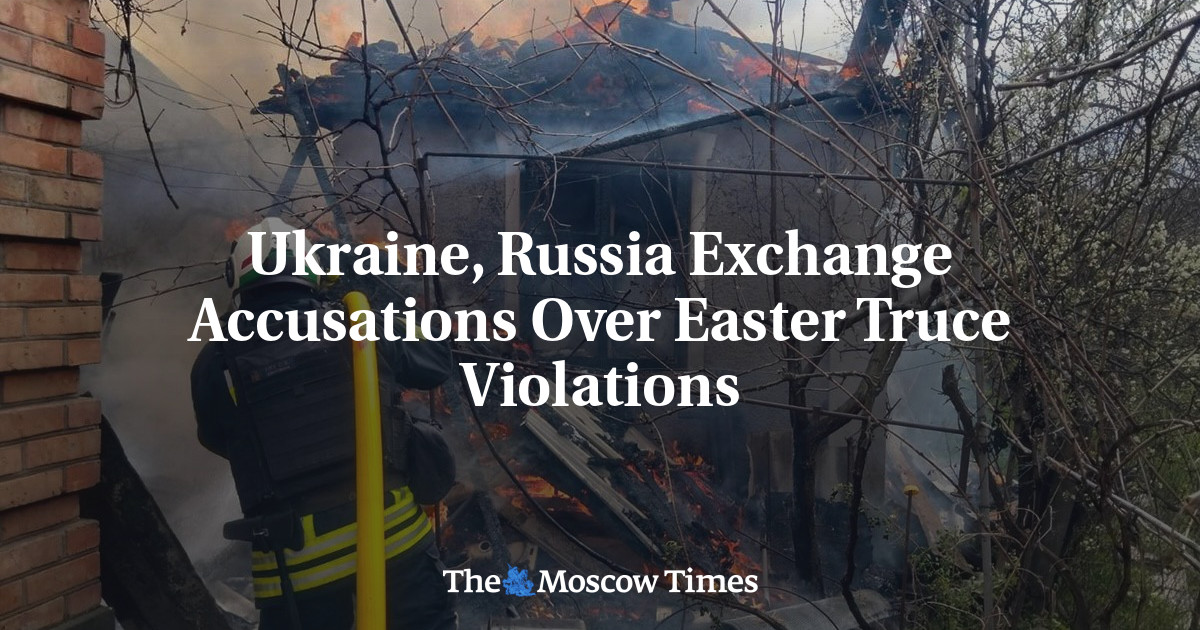
Ukraine and Russia Report Thousands of Military Violations
Ukraine and Russia traded accusations of Easter truce violations on April 12, 2026, with Ukraine reporting 2,300 breaches and Russia claiming 2,000. This failure of the ceasefire continues a trend of escalating civilian harm and systematic disregard for international humanitarian law across the conflict-torn region.
The collapse of this fragile pause is not an isolated diplomatic failure. it is a symptom of a much deeper, more violent trajectory. For those living in the crosshairs, a “truce” is often little more than a statistical exercise in counting breaches. The problem is that every violation translates directly into destroyed homes, severed power lines, and lost lives.
When diplomatic agreements fail, the burden shifts entirely to the civilian population and the professionals tasked with keeping society functioning amidst the chaos. From the legal battle to document war crimes to the physical struggle of repairing a frozen city’s heating grid, the need for verified, high-capacity expertise has never been more urgent.
The Data of Defiance: Truce Violation Metrics
As of Sunday morning, the numbers provided by both military commands illustrate a stalemate of accusations. While the specific targets of these breaches remain fluid, the sheer volume of reports suggests that neither side viewed the Easter window as a genuine opportunity for de-escalation.
| Reporting Party | Reported Violations (as of April 12, 2026) | Primary Concern |
|---|---|---|
| Ukrainian Military | ~2,300 | Systematic breaches of ceasefire terms |
| Russian Military | ~2,000 | Alleged breaches by opposing forces |
This numerical deadlock masks a more harrowing reality. The failure to maintain a truce is a continuation of a trend that saw civilian casualties spike throughout 2025. Data from the UN Human Rights Monitoring Mission in Ukraine (HRMMU) reveals that civilian casualties in 2025 were 31 per cent higher than in 2024 and a staggering 70 per cent higher than in 2023.
The numbers are cold. The reality is not.
Since February 2022, conflict-related violence has killed more than 15,000 people and injured over 41,000. The vast majority of these casualties have occurred in territory controlled by Ukraine, highlighting the disproportionate impact of the ongoing aggression on civilian populations.
The Infrastructure Crisis and the Winter Toll
The failure of the current truce is particularly devastating when viewed alongside the strategic targeting of energy infrastructure. Starting in October 2025, Russian armed forces intensified attacks on the power grids that maintain millions of Ukrainians alive during the winter.
By January 2026, the situation reached a critical tipping point. Attacks specifically targeted district heating infrastructure, leaving thousands of high-rise apartment buildings without warmth as temperatures plummeted below 20 degrees Celsius. This is a calculated form of pressure that turns basic survival into a daily struggle.
With regional infrastructure heavily compromised and the truce failing to provide a window for safe repairs, securing vetted infrastructure restoration specialists is now the critical first step in preventing a total municipal collapse in affected cities.
“The situation has demonstrably worsened. More people are killed and injured each year. Millions have only a few hours of electricity per day. Hundreds of thousands are suffering without heating in freezing temperatures.”
The quote comes from Danielle Bell, Head of the HRMMU, and serves as a stark reminder that for many, the “war” is not a series of front-line movements, but a desperate search for a working radiator or a few hours of light.
A Legal Landscape of Crimes Against Humanity
Beyond the immediate tactical failures of the Easter truce, there is a broader legal reckoning unfolding. The full-scale invasion that began on February 24, 2022, is not merely a territorial dispute; it is a violation of the United Nations Charter and constitutes a crime of aggression under international law.

Recent findings from Human Rights Watch, published in March 2026, emphasize that Russian forces continue to commit crimes against humanity and war crimes. These are not accidental outcomes of war, but systemic violations of international humanitarian law.
The complexity of documenting these abuses—ranging from illegal detentions to forced disappearances—requires a level of legal precision that transcends standard litigation. Families and survivors are increasingly relying on international human rights lawyers to preserve evidence and pursue reparations in international courts.
The scale of the crisis is unprecedented in modern European history.
As noted by Amnesty International, the invasion triggered Europe’s largest refugee crisis since World War II, upending millions of lives and creating insurmountable obstacles to basic rights, including education and health.
The Path Forward: From Truces to Accountability
The exchange of accusations on April 12 is a reminder that temporary ceasefires are fragile instruments. They cannot replace a comprehensive adherence to international law or the restoration of sovereign borders. The “Information Gap” between official military reports and the lived experience of civilians is where the true cost of the war resides.
For the millions of displaced persons and the thousands of injured, the solution is not found in a Sunday morning report on truce violations, but in the sustained support of humanitarian aid agencies capable of delivering medical care and shelter in active conflict zones.
We are witnessing a consistent deterioration in civilian protection nationwide. When the mechanisms of diplomacy fail, the only remaining safeguards are the rigorous documentation of abuses and the unwavering support of the global community.
The failure of the Easter truce is a warning that the window for a peaceful resolution continues to narrow, leaving behind a trail of broken infrastructure and shattered lives. As the legal and physical reconstruction of Ukraine begins in earnest, the need for verified professionals—from forensic investigators to energy engineers—will only grow. Finding these experts through the World Today News Directory is no longer just a matter of convenience; it is a necessity for those seeking to rebuild from the ruins of aggression.