
The Quiet shift: are Workers Regaining Power in the UK?
echoes of the ’70s: A New Era of Wage Growth?
In early 2022, Eastbourne’s refuse collectors secured an impressive 11% pay raise, with the lowest-paid workers seeing a 19% increase. This victory sparked discussions about a resurgence of worker power,reminiscent of the labor movements of the 1970s. As inflation soared to a peak of 11%, workers across the UK’s public and private sectors engaged in widespread industrial action, demanding fair compensation to keep pace with rising prices.
Did You Know?
The 1970s in the UK were marked by meaningful industrial unrest, including numerous strikes and wage disputes, largely driven by high inflation and economic instability.
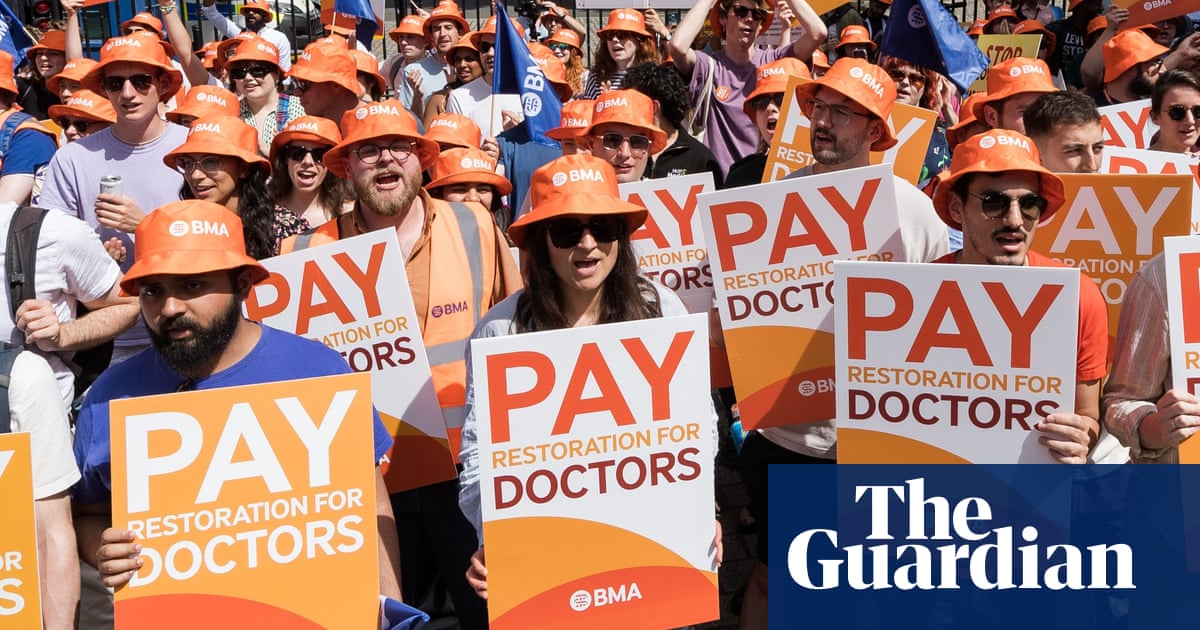
Now, a similar, albeit more subtle, trend is emerging. The Bank of England has observed a steady rise in wages over the past year, prompting concerns about a potential long-term shift in the dynamics between employers and employees. Recent public sector pay awards exceeded initial government projections and outpaced higher than expected inflation, although some, like disgruntled doctors, labelled the rise “derisory.”
Remote Work and Return-to-Office Tensions
The shift towards remote work during the pandemic has also strained relations between employers and employees. Companies’ increasing insistence on employees returning to the office has further complicated the labor landscape, creating friction and potential power struggles.
The bank of England’s Outlook: A Seismic Shift?
Policymakers at the Bank of England are closely monitoring these wage increases, questioning whether they signal a shift in the balance of power towards workers.This shift could potentially allow workers to safeguard their financial interests, nonetheless of economic fluctuations, including the impacts of global conflicts and Donald Trump’s trade offensive.
Data Insights: Wage Growth Across Sectors
Data from the Office for National Statistics (ONS) supports this view. Payroll data indicates that hotels and restaurants increased staff pay by 8.5% in the year leading up to april, while inflation stood at 3.5%. Retail workers saw a median pay increase of 6.9% during the same period. The average pay increase across the economy was 6.4%.
Economist’s Corner: Labor Market Adaptability and Wage Compression
Huw Pill, the central bank’s chief economist, noted that the UK’s labor market is becoming less flexible, suggesting employers no longer have the same ease in hiring and firing. While businesses, charities, and public sector organizations have been implementing layoffs and freezing job postings, the remaining employees are frequently enough receiving better compensation.
Ben Caswell, an economist at the National Institute of Economic and Social Research (NIESR), shares this perspective, stating, I am quite sympathetic to pill’s view.
Wages adjusted for inflation have returned to pre-cost of living crisis levels, and the share of national income secured by workers has also recovered to 2021 levels.
Pro Tip
Understanding wage compression can definitely help employees negotiate for fair compensation. Wage compression occurs when the pay gap between entry-level and more experienced employees narrows, potentially devaluing the skills and experiance of long-term staff.
Caswell emphasizes that while average pay figures may vary, the overall trend indicates that most workers have benefited from inflation-busting pay raises, recovering lost ground. He highlights that average regular earnings for employees rose by 5.6% in Great Britain from January to March 2025, exceeding inflation, although not as significantly as PAYE data suggests.
According to Caswell, minimum wage increases are also likely to drive further pay rises as companies strive to maintain a significant difference between the salaries of those on the bottom rung and more skilled workers. There has been a compression of differentials that cannot be sustained. At some point soon the pressure on employers to reward workers higher up the pay scales will play out,
he says.
The Wile E. coyote Effect: A temporary Pay Surge?
James Smith, research director at the resolution Foundation, cautions that the weakening economic outlook could hinder a prolonged recovery in pay. He likens the current pay figures to the Looney Tunes character Wile E.Coyote, who runs off a cliff before realizing there is no support beneath him.
Smith explains: If we believe that wages consistent with the Bank of England’s 2% target would be about 3.5%, then we are well above that level at the moment. And that would give the Bank good reason to be cautious about cutting interest rates.
He adds, However, other pay surveys are showing earnings rising at a much slower rate, so the official figures might be a bit like Wile E Coyote and about to be brought down to earth.
Employer Perspectives and Future Projections
The Bank of England’s regional agents report that employers are limiting pay rises to between 3% and 4% by the end of the year. The government plans to cap public sector pay increases at 4% on average, and upcoming spending reviews are likely to squeeze departmental budgets.
Several factors may contribute to the potentially exaggerated pay increases observed in various industries over the past year. Restaurants, cafes, and hotels, which employ a high proportion of minimum wage workers, along with the retail industry, experienced a boost in pay this year. However, this trend may not continue in subsequent years as the legal minimum wage rises more slowly.
Construction workers saw a 6.7% rise in earnings after a two-year recession in the building trade. With firms preparing to construct more homes as part of a government pledge, wage increases in this sector are understandable.
The significant return to offices demanded by employers suggests that worker power has its limits.
The Digital Skills Gold Rush
Seemanti Ghosh, principal economist at the Institute for Employment Studies, suggests that any paradigm shift in the labor market is linked to a high demand for digital skills. Employers need to retain skilled staff and pay them more while searching for workers who are adaptable in a constantly evolving work environment.
This adds an extra layer of cost to employers, following increases to the minimum wage and national insurance contributions. Ghosh notes that job adverts are remaining unfilled for longer this year than in 2024, giving in-demand workers a pay premium when they secure a new role.
if wage increases are not driven by negotiations with unions, then they are due to employers wanting to hang on to skilled staff,
she says. This matters for all companies that increasingly rely on soft skills for things like project management and tech skills in other areas. We also see it in the green sector, where there is a shortage of people with the skills the industry needs.
Monetary Policy and the Future of Wages
The extent to which this dislocation is systemic and will sustain higher wages remains a subject of debate. Huw Pill has indicated his preference for maintaining elevated interest rates until these trends become clearer, believing there is less damage from higher rates than allowing inflation to surge again.
However, other members of the Bank’s monetary policy committee (MPC) disagree, arguing that high borrowing costs hinder businesses from investing in skills training. These colleagues, Swati Dhingra and Alan Taylor, advocate for a rapid reduction in rates, revealing a distinct split when rates were cut this month.
The outcome of this internal debate within the central bank could determine whether workers or employers gain the upper hand in the ongoing struggle over pay.
