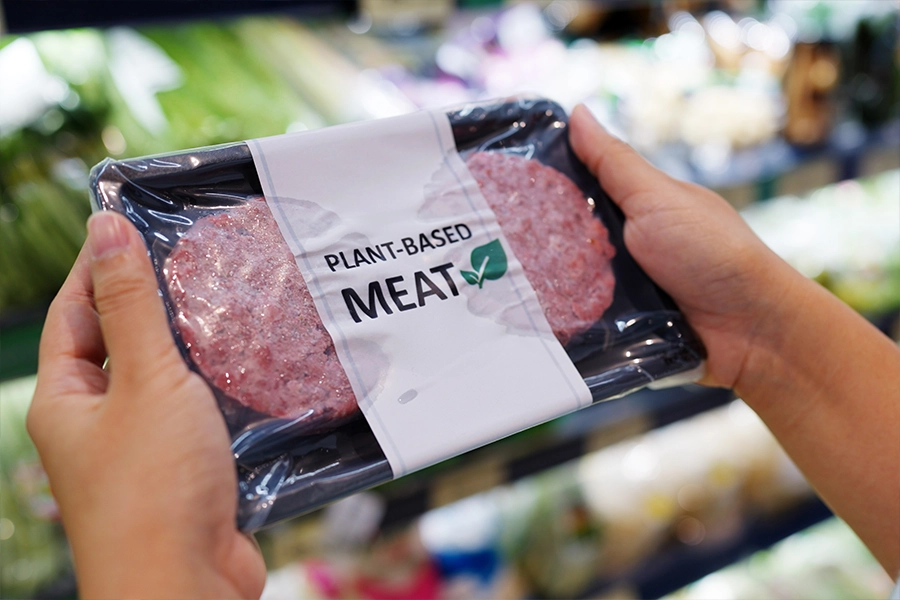
UK Plant-Based Meat: Experts Call for Fortification Standards and Lower Prices
The transition toward plant-based meat alternatives is no longer a niche dietary preference but a significant public health pivot. As the United Kingdom moves toward aggressive meat-reduction targets to meet climate and health goals, the clinical focus has shifted from mere substitution to the critical necessity of nutritional adequacy.
Key Clinical Takeaways:
- Plant-based meat (PBM) alternatives generally provide higher fiber content and lower levels of saturated fat compared to conventional animal meats.
- Significant nutritional variance exists between plant-based and mycoprotein alternatives, complicating “like-for-like” dietary replacements.
- Experts are advocating for mandatory fortification standards and price reductions to prevent micronutrient gaps in populations shifting away from animal proteins.
The central clinical challenge lies in the “like-for-like” replacement fallacy. While plant-based meats are engineered to mimic the sensory experience of animal protein, they do not always mirror the micronutrient density required for long-term metabolic health. The current lack of standardized fortification creates a regulatory void, leaving consumers vulnerable to nutrient deficiencies if these alternatives are not carefully integrated into a balanced diet. For individuals managing complex metabolic conditions, this transition requires professional oversight from registered dietitians to ensure that the removal of animal proteins does not lead to unintended clinical deficits.
The Nutritional Divergence in UK Meat Alternatives
Recent evidence highlights a stark contrast in the nutrient profiles of available meat substitutes. A cross-sectional survey conducted by researchers at the Wolfson Institute of Population Health, Barts and the London School of Medicine and Dentistry, Queen Mary University of London, analyzed 207 plant-based meat products and 226 conventional meat products across 14 UK retailers. This study, published in the peer-reviewed journal Nutrients, underscores the growing popularity of these alternatives driven by concerns over animal welfare, environmental impact, and personal health.
The data suggests that swapping processed meats for popular plant-based alternatives can lead to meaningful dietary improvements. Specifically, the integration of PBMs is associated with an increase in dietary fiber and a reduction in the intake of saturated fats, both of which are critical markers in reducing the risk of cardiovascular morbidity. Yet, the breadth of the UK market reveals a fragmented nutritional landscape. When the “like-for-like” substitution occurs, the resulting change in energy and nutrient intake is not uniform, varying wildly based on the specific product category.
The nutritional composition of plant-based alternatives varies considerably, meaning that a simple substitution of meat for a plant-based option does not guarantee a nutritionally equivalent outcome.
This variability is further explored in research published via Nature, which examined a larger dataset of 475 plant-based meat alternatives and 754 meat products. By utilizing data from the UK National Diet and Nutrition Survey (NDNS), researchers categorized products into meat (ME), plant-based (PB), and mycoprotein (MP). The findings revealed statistically significant differences (P < 0.001) across price, fat, saturated fat, carbohydrates, sugar, protein, fiber, and total energy. These discrepancies indicate that the metabolic impact of a plant-based diet depends heavily on whether the consumer chooses a highly processed plant-based analog or a mycoprotein-based alternative.
Addressing the Fortification Gap and Public Health Infrastructure
The UK National Food Strategy has set a rigorous benchmark: meat production must be reduced by 30% within the decade to meet commitments regarding health, climate, and nature. This is a necessary move given that livestock production systems contribute substantially to the agricultural environmental footprint through excessive water and land use. Yet, from a clinical perspective, a 30% reduction in meat consumption without a corresponding rise in fortified alternatives could trigger widespread micronutrient deficiencies.
Meat is a primary source of essential vitamins and minerals. When these are removed from the diet, the “nutritional gap” must be filled through strategic fortification of plant-based alternatives. Experts are now calling for the implementation of strict fortification standards to ensure that PBMs provide the same essential nutrients—such as Vitamin B12, iron, and zinc—as the animal proteins they replace. Without these standards, the public health benefit of reducing saturated fat may be offset by the morbidity associated with nutrient deficiencies.
For healthcare providers, this shift necessitates a more granular approach to patient triage. Patients transitioning to plant-based diets, particularly those with pre-existing anemia or neurological concerns, should be referred to clinical nutritionists to monitor serum levels of key micronutrients and adjust supplementation protocols accordingly.
Economic Barriers to Nutritional Equity
Beyond the biological mechanism of nutrition, the cost of plant-based alternatives remains a significant hurdle to widespread adoption. Research into the cost and nutritional content of PBMs in UK supermarkets and restaurants indicates that price remains a primary deterrent. If the healthier, more nutrient-dense options are priced as premium products, the nutritional benefits of plant-based diets will remain accessible only to higher socioeconomic brackets, exacerbating existing health inequalities.
The call for price cuts is not merely an economic request but a public health imperative. Lowering the cost of fortified plant-based meats would allow lower-income populations to reduce their intake of processed animal meats—which are linked to various chronic diseases—without sacrificing essential nutrient intake. This transition requires a coordinated effort between government policy and food industry innovation.
As the industry evolves, the complexity of navigating these latest food standards will increase. Food manufacturers and distributors are increasingly seeking food regulatory consultants to ensure their products meet emerging fortification guidelines and avoid the legal risks associated with misleading nutritional claims.
The Trajectory of Plant-Based Clinical Nutrition
The move toward plant-based proteins is an inevitable evolution of the global food system, driven by the intersection of environmental necessity and cardiovascular health. However, the current “wild west” of plant-based meat composition is unsustainable from a clinical standpoint. The path forward requires a transition from voluntary nutritional improvements to mandatory, evidence-based fortification standards.
Future research must move beyond cross-sectional surveys to longitudinal clinical trials that measure the actual health outcomes of long-term PBM consumption compared to traditional meat diets. Until such data is available, the standard of care should remain focused on diverse, whole-food plant-based nutrition supplemented by fortified alternatives. To ensure this transition is handled safely, patients and providers should utilize vetted medical directories to identify specialists capable of managing the nuances of plant-based metabolic health.
Disclaimer: The information provided in this article is for educational and scientific communication purposes only and does not constitute medical advice. Always consult with a qualified healthcare provider regarding any medical condition, diagnosis, or treatment plan.