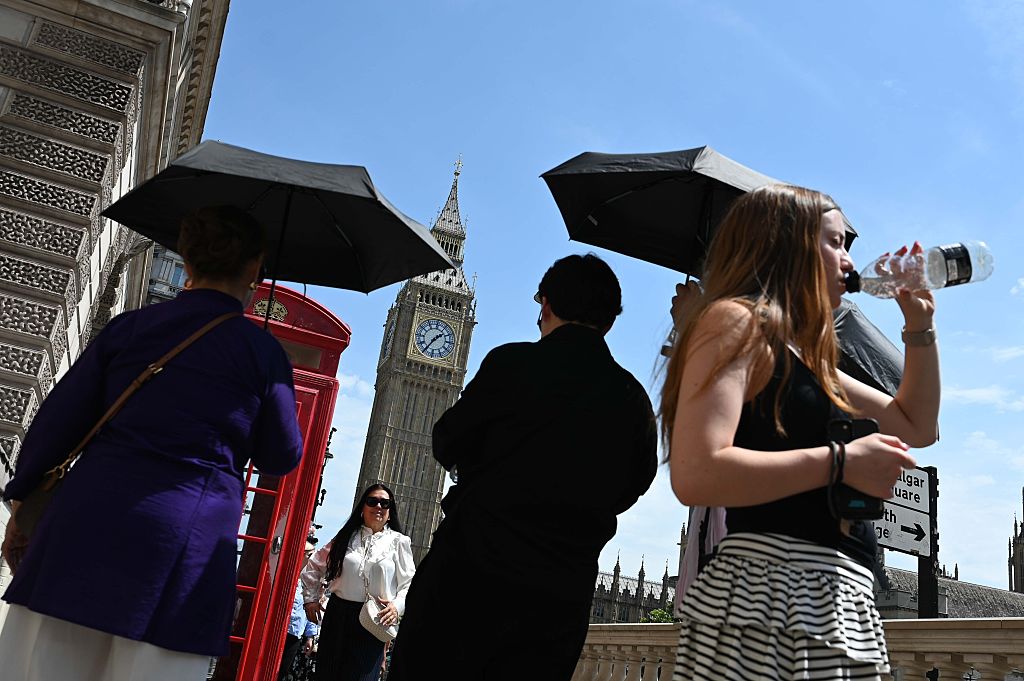
UK Heat Wave Costs Country Over $1.33 Billion in Lost Economic Output
The June 2026 heat wave in the U.K. cost the country’s economy more than £1.15 billion ($1.5 billion) in lost output during a single week, according to an analysis by the Grantham Research Institute on Climate Change and the Environment and the Euro-Mediterranean Center on Climate Change (CMCC). Driven by record-breaking temperatures peaking at 37.7°C (99.86°F) in Norfolk on June 26, the extreme weather disrupted transport networks, closed workplaces, and forced millions of workers to cut back their hours.
Record Temperatures and Widespread Economic Strain Across England
The intense heat wave spanned from June 18 to July 1, driving England to experience its warmest June since official record-keeping began in 1884. Daily maximum temperatures frequently surged past 90°F. The peak arrived on June 26 when a provisional high of 37.7°C (99.86°F) was registered at Lingwood, Strumpshaw Hill in Norfolk, marking a significant national benchmark for the month. Infrastructure buckled under the thermal stress, causing delayed and cancelled train services while offices, shops, and schools implemented emergency closures.
To quantify the financial damage, Elizabeth Robinson, director of the Grantham Research Institute, and Shouro Dasgupta, environmental economist at the Euro-Mediterranean Center on Climate Change and visiting senior fellow at the Grantham Research Institute, conducted a detailed evaluation. They surveyed 1,950 U.K. adults across diverse industrial sectors during the week of June 22. The questionnaire measured perceived impacts on working hours, physical effort, overall health, sleep quality, commuting adjustments, and workplace environments. Scaling these survey metrics to the broader national workforce revealed an estimated loss of approximately £1.15 billion in economic output in just one week.
Robinson notes that this figure represents a conservative baseline. The calculation excludes metrics such as reduced hourly productivity or diminished effort levels, which remain difficult to capture through standardized surveying methods.
Workforce Disruption and Sector Vulnerability
Survey data indicates that the average reported reduction in hours worked across the peak heat week reached 0.47 hours. Within a total working population of 34.4 million, this reduction translates to roughly 16 million lost working hours. Workers in physically demanding, outdoor industries—such as construction and agriculture—experienced much sharper declines in working hours compared to personnel in low-exposure, indoor office environments. Furthermore, approximately 3.6 percent of respondents reported being unable to work at all during that week due to the hazardous temperatures, representing roughly 1.25 million workers nationwide.
Employees deployed various strategies to cope with the thermal burden, including altered shift hours, modified commutes, and reduced physical exertion. While 49 percent of surveyed workers confirmed having access to air conditioning, only 27 percent reported that their employers actively modified the work environment—such as boosting ventilation, providing shade, or installing cooling units—to manage the heat.
Adapting physical infrastructure and operational protocols plays a vital measurable role in preserving output and safeguarding personnel.
Structural Vulnerability in U.K. Housing and Infrastructure
The severe economic toll highlights a deeper structural vulnerability across the United Kingdom. Much of the country’s housing stock and commercial real estate was constructed decades ago for a historically cool climate, utilizing architectural designs intended to trap heat indoors. During modern heat waves, these structures effectively function as enclosed furnaces.
The U.K. remains unequipped for Mediterranean-style weather patterns with buildings engineered to retain warmth rather than dissipate it. Without targeted interventions, future climate projections indicate that rising temperatures will continue to inflict heavy economic tolls.
Robinson emphasizes that the empirical evidence supports investing in adaptation measures, as they successfully protect worker health and minimize lost hours. Dasgupta advocates for institutional policy changes, arguing that governing bodies must introduce formal regulations regarding maximum temperature thresholds, mandatory rest periods, and hydration mandates. The frequency and intensity of these meteorological events mean the impacts are far too significant to leave unmanaged.