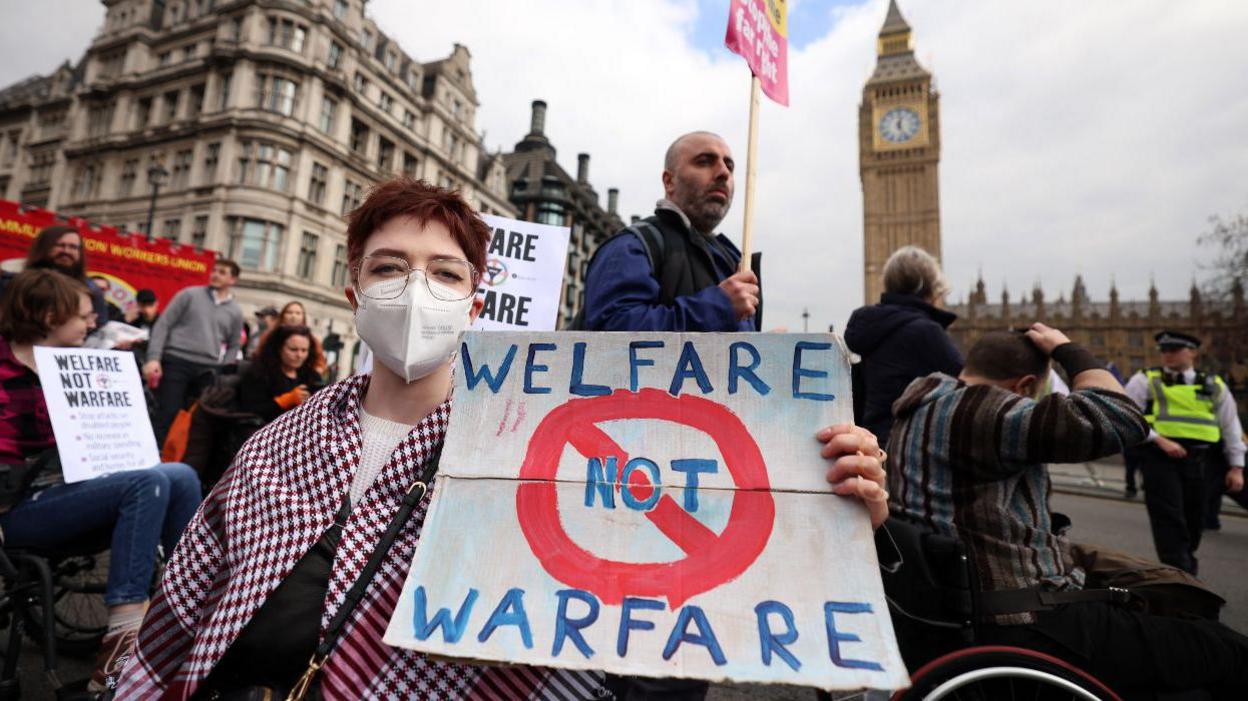
UK Government Faces Welfare vs. Defense Spending Crisis
The challenges facing the government are evident in two contrasting pressures: the need to strengthen national security amid global tensions, and the immediate financial burdens faced by citizens. While geopolitical risks demand increased military investment, domestic economic indicators—such as rising living costs—highlight the strain on household budgets. These competing demands are reshaping fiscal priorities and testing public support for policy adjustments.
Official discussions indicate the government is exploring ways to reconcile these pressures, with analysts noting that welfare spending now exceeds the earnings of a significant portion of the workforce. This dynamic complicates efforts to fund defense increases without triggering backlash over reduced social protections. The result is a delicate balancing act between maintaining essential services and preparing for potential security threats.
The friction between welfare and defense spending
A key area of debate centers on how to allocate limited resources between welfare programs and defense needs. Recent analysis suggests that over 600,000 households receive welfare payments exceeding the average worker’s salary, a figure that has become a focal point in political discussions. While the data was highlighted by opposition researchers, it underscores the scale of the challenge: ensuring financial support for vulnerable populations while also meeting increased defense requirements.
Prime Minister Keir Starmer faces pressure to address this imbalance without alienating key voter groups. The government must decide whether to adjust welfare spending to free up funds for military investments or risk underfunding both areas. This dilemma is further complicated by the fact that welfare outlays now surpass the earnings of many workers, raising concerns about fairness and economic stability. Any reduction in benefits could provoke public resistance, while maintaining current levels may leave the UK’s defense capabilities underprepared for emerging threats.
The tension between these priorities creates a high-stakes scenario. Cutting welfare to fund defense could trigger social unrest, while failing to address military needs may weaken the UK’s position in an unstable international environment. The government’s approach will determine whether it can navigate this conflict without deepening domestic divisions.
War contingencies and the pension gamble
In the event of a major conflict, such as a war with Russia, the government may need to reconsider long-standing financial commitments, including the state pension’s triple lock guarantee. While no official policy changes have been announced, reports from government sources suggest that extreme scenarios could force difficult trade-offs.
For more on this story, see LAFC vs. San Jose Earthquakes: 2026 MLS Player Status Report.
- Modifications to the triple lock pension protection
- Scaling back certain climate-related policies
- Reductions in general benefit payments
The triple lock, which ensures pension increases based on earnings, wage growth, or inflation, holds significant importance for retirees. Any discussion of altering this guarantee would mark a shift in how the government prioritizes defense needs over long-term financial security for older adults. While such measures remain speculative, their consideration reflects the fiscal constraints the UK could face in a high-stakes security environment.
It remains unclear whether these discussions are part of active planning or hypothetical stress tests. However, the fact that such scenarios are being explored by policymakers signals the severity of the fiscal challenges ahead. The government’s ability to maintain both defense readiness and social protections will depend on how it navigates these untested waters.
The micro-economics of the ‘urban squeeze’
While high-level policy debates unfold, the immediate economic pressures are being felt in everyday life. Recent data shows a notable rise in the cost of basic goods and services, including a record £10 price for a pint of beer in London. This increase is part of a broader trend affecting essential items, reflecting inflationary pressures that reduce purchasing power for urban residents.
The higher cost of leisure activities, such as drinks, serves as a visible marker of economic strain. While such prices may seem minor in isolation, they contribute to a sense of financial tightness that extends to housing, transportation, and other necessities. This “urban squeeze” is further exacerbated by local governments seeking new revenue streams to address budget shortfalls.
Some councils are exploring significant increases in parking fines, with proposals to raise penalties from the current £70 cap to as much as £160. A trial in one local authority reportedly doubled fines, suggesting a broader trend of using enforcement measures to generate additional income. While these changes are framed as necessary to cover deficits, they also introduce new financial burdens for residents, particularly in high-cost urban areas.
The political cost of fiscal realignment
The combination of rising welfare costs, defense demands, and increased everyday expenses creates a politically sensitive environment. The government is attempting to address financial gaps by both reducing support for vulnerable groups and raising costs for the general public. For example, proposals to increase parking fines or allow living costs to climb while considering pension adjustments signal limited fiscal flexibility.
When traditional revenue sources prove insufficient, the government may turn to measures like higher penalties for minor infractions, which can be perceived as punitive. This approach risks eroding public trust, especially if citizens feel that essential services are being compromised while everyday costs rise. The cumulative effect of these changes—such as a £10 pint or a £160 parking fine—contributes to a broader sense of economic insecurity.
The political fallout could intensify as opposition groups frame the issue around fairness. If the government prioritizes defense spending while households struggle with inflation, the narrative may shift toward perceptions of neglect for domestic needs. This dynamic could make any welfare reductions politically contentious, as critics argue that such moves are necessary but potentially harmful to social stability.
Ultimately, the UK faces a period of fiscal realignment with significant consequences. The government must balance military preparedness with domestic expectations for affordable living and secure retirements. The challenge lies in managing these contradictions without deepening public dissatisfaction or undermining economic confidence. The coming months will reveal whether policymakers can navigate this tightrope without triggering broader social or political backlash.