
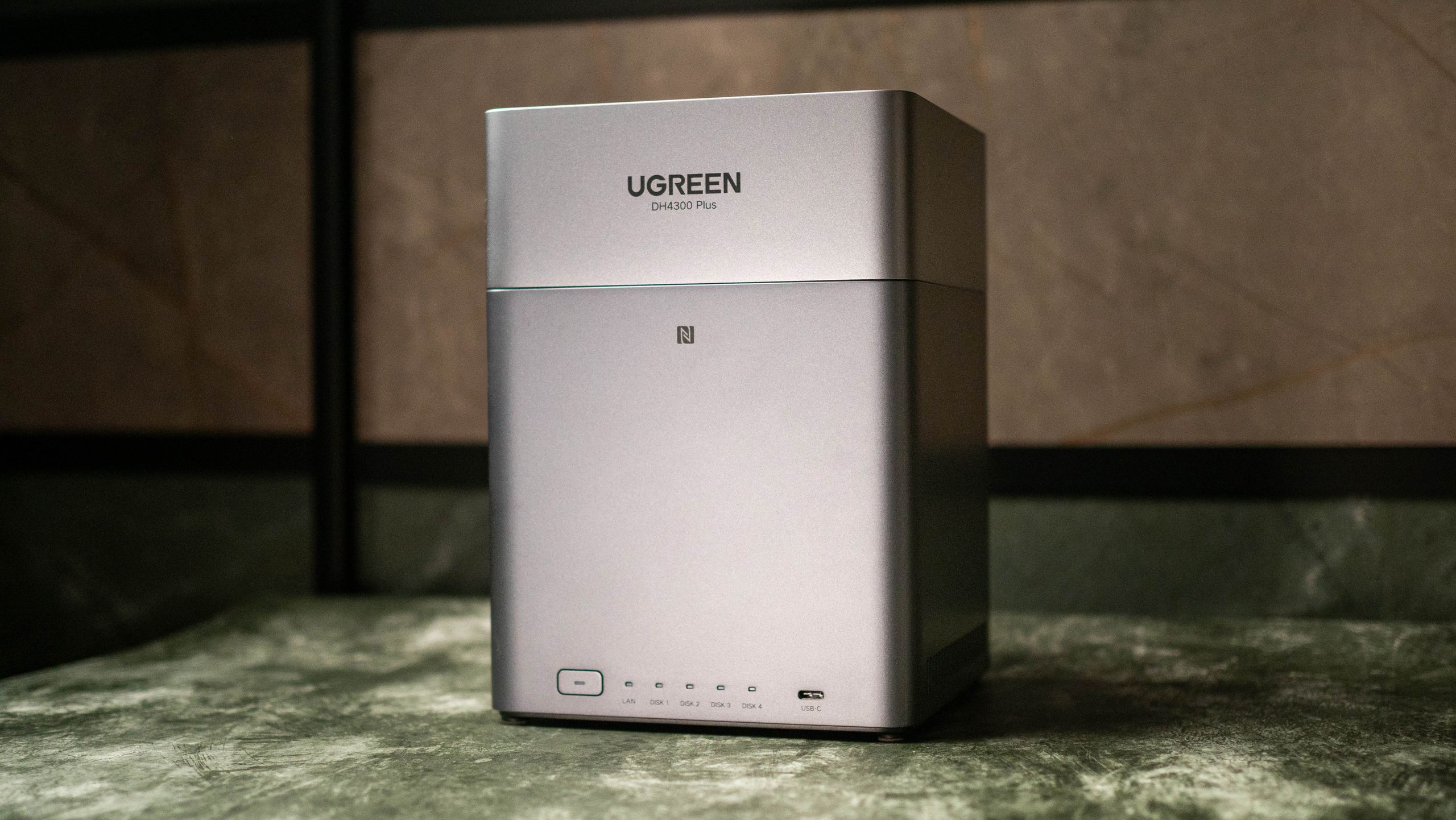
UGREEN NASync DH4300 Plus 4-Bay NAS Server Hits Lowest Price of $351 on Amazon
The $351 NAS Deal Isn’t Just Storage; It’s a Security Endpoint
Local storage sovereignty is collapsing under the weight of cloud subscription fatigue, but swapping SaaS for a home lab introduces a new attack surface. The UGREEN DH4300 Plus hitting $351 on Amazon represents a significant drop from its $439 retail baseline, yet hardware acquisition is only the initial commit in a broader deployment strategy. For the pragmatic engineer, this 4-bay unit offers a viable entry point into self-hosted infrastructure, provided you acknowledge the architectural limitations of its ARM-based silicon and the inherent risks of exposing local networks to public interfaces.
- The Tech TL;DR:
- Hardware Reality: Rockchip ARM architecture limits heavy transcoding compared to x86 equivalents; 8GB soldered RAM is non-upgradeable.
- Security Posture: Default configurations often lack rigorous firewall rules; external exposure requires immediate hardening.
- Market Position: At $351, this undercuts enterprise entry-level NAS by 40%, but lacks M.2 caching found in the DXP4800 Plus model.
Shifting data gravity from public clouds to local racks solves latency and privacy concerns but introduces supply chain vulnerabilities. When you deploy a NAS, you are effectively becoming a data center operator. The Supply Chain Cybersecurity Services framework highlights that third-party hardware dependencies introduce risks often overlooked by consumer-grade buyers. UGREEN’s momentum in this category is undeniable, yet the DH4300 Plus relies on a closed-box design where physical access controls are minimal. This isn’t just about storing photos; it’s about managing an endpoint that could serve as a pivot point for lateral movement within a home network if compromised.
Silicon Constraints and Throughput Benchmarks
The DH4300 Plus utilizes an Arm-based Rockchip platform. While efficient for power consumption, this architecture creates a bottleneck for media transcoding workflows compared to Intel-based counterparts. Plex transcoding relies heavily on single-core performance and QuickSync capabilities, which are absent here. You are limited to direct play unless the client device supports the codec natively. The 2.5 Gigabit Ethernet connectivity is sufficient for multi-stream 4K direct play, but write speeds will saturate quickly during initial data migration.
| Specification | UGREEN DH4300 Plus | Enterprise Baseline (Synology DS923+) |
|---|---|---|
| SoC Architecture | ARM (Rockchip) | x86 (AMD Ryzen) |
| RAM | 8GB (Soldered) | 8GB (Expandable to 16GB) |
| Network Throughput | 2.5GbE | 1GbE (Expandable) |
| Expansion | None (No M.2) | M.2 NVMe Cache |
| Price Point | $351 (Deal) | $599+ |
The lack of M.2 storage slots is a critical architectural decision. Without SSD caching, random I/O performance for database-heavy containers will suffer. If your workflow involves high-frequency writes or running multiple Docker containers simultaneously, the disk latency becomes the governing factor. For pure archival storage, this is negligible. For active development environments or media servers with large libraries, the mechanical HDD bottleneck is real.
Security Triage and Directory Integration
Deploying a NAS without a security audit is negligent engineering. The Cybersecurity Risk Assessment and Management Services guide emphasizes structured professional oversight for data protection. Most consumer NAS devices ship with UPnP enabled and default ports open, creating an immediate exposure vector. Enterprise IT departments rarely accept this risk profile without mitigation.
For organizations or advanced users integrating this hardware into a broader infrastructure, engaging cybersecurity auditors and penetration testers is necessary to validate network segmentation. The rise of specialized roles, such as the Director of Security | Microsoft AI and Visa Sr. Director, AI Security positions, indicates that even AI-driven workflows require hardened security foundations. Your home lab is no different; it requires a zero-trust mindset.
“Cybersecurity consulting firms occupy a distinct segment of the professional services market, providing organizations with the expertise to validate infrastructure integrity before deployment.” — Security Services Authority, Cybersecurity Consulting Firms Guide
Ignoring this guidance leads to data breaches. If you lack the internal expertise to configure VLANs or firewall rules, relying on Managed Service Providers to secure the perimeter is a valid operational expense. The cost of a consultant is negligible compared to the loss of proprietary data or personal identity information stored on unprotected drives.
Implementation Mandate: Container Hardening
Default Docker configurations on NAS devices often run containers with root privileges. This violates the principle of least privilege. Below is a hardened Docker Compose snippet for Plex that restricts capabilities and enforces read-only root filesystems where possible. This mitigates the risk of container escape vulnerabilities.
version: '3.8' services: plex: image: linuxserver/plex:latest container_name: plex network_mode: "host" security_opt: - no-new-privileges:true cap_drop: - ALL cap_add: - NET_BIND_SERVICE - CHOWN - SETUID - SETGID volumes: - ./config:/config - ./media:/media:ro restart: unless-stopped environment: - PUID=1000 - PGID=1000 - VERSION=docker This configuration drops all capabilities except those strictly required for network binding and file ownership management. Mounting the media volume as read-only (:ro) prevents malicious processes from modifying source files if the container is compromised. Implementing these controls aligns with the selection criteria for robust security services, ensuring that software deployment does not undermine hardware security.
The Verdict: Buy for Storage, Not Compute
The UGREEN DH4300 Plus at $351 is a compelling hardware value for cold storage and direct-play media serving. It is not a compute node for heavy transcoding or virtualization. The 8GB RAM ceiling and ARM architecture define its operational boundaries. For users transitioning away from public cloud storage, this device offers control, but control demands responsibility. Secure the network, audit the access logs, and treat the device as a critical infrastructure component rather than a consumer appliance.
As enterprise adoption scales, the line between home labs and production environments blurs. Ensure your local storage strategy includes a plan for incident response. If the deal sells out, the DXP4800 Plus remains a viable alternative at $583, offering the M.2 caching required for higher IOPS workloads. Regardless of the model, the hardware is only as secure as the configuration managing it.
Disclaimer: The technical analyses and security protocols detailed in this article are for informational purposes only. Always consult with certified IT and cybersecurity professionals before altering enterprise networks or handling sensitive data.