
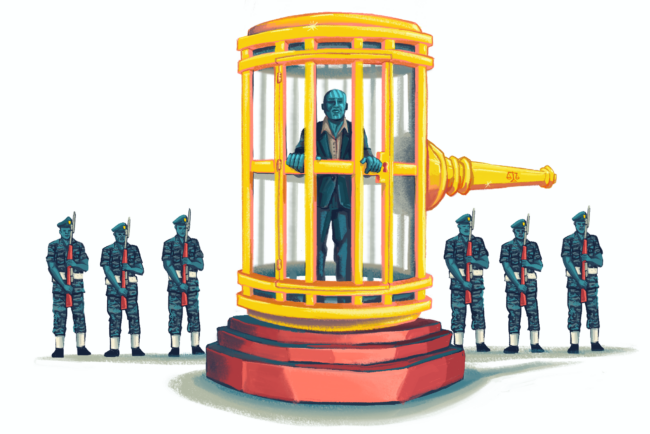
Ugandan authorities are facing criticism for a new law that critics argue stifles public participation and targets opposition supporters, while proponents maintain it is indeed essential for national security.
The legislation, which has drawn sharp rebukes from human rights advocates and opposition figures, is seen by some as a tool to suppress dissent ahead of future elections. Activists like Sarah Bireete of the center for Constitutional Governance highlight concerns about the legislative process itself,citing a lack of adequate public consultation.
“The clerk to Parliament sent an advert one day before the bill was tabled,” Bireete stated. “We were required to analyze the bill and file in a matter of hours. We submitted memorandum hoping to be invited to the committee.We were never invited.”
The context for these concerns is rooted in the aftermath of the 2021 general elections, where opposition supporters have faced ongoing legal challenges.Bireete further commented, “The regime wants this same court in place for the same purpose.”
Security or Oppression?
For many civilians, the law raises fears of increased vulnerability. Namukasa Khadija,a resident of Wakiso,expressed her apprehension about participating in upcoming elections,recalling instances of state brutality.
“I saw the arrest, the brutality against opposition supporters, especially bobi Wine supporters, by the armed forces in the last 2021 elections,” Khadija said. “I saw the brutality against journalists in the recent Kawempe North election, and I don’t know if I am ready to attend any political rally in the 2026 elections as I don’t think it will be safe.”
Conversely,some believe the law will bolster national security. Anthony Akol, a Member of Parliament for kilak North, asserted that the legislation will safeguard Ugandans from criminal activities, including armed robberies and individuals impersonating military personnel.
“The law is good,” Akol stated,”but the problem is that citizens of Uganda don’t trust this government.” He cited the situation in Karamoja as an example of the need for such measures.
“Some who have guns and use them to rob people and others put on army uniform and try to steal from people,” Akol explained. “I have no problem if such a person is arrested.”
Human rights lawyer Kiiza argued that the bill’s primary objective is to prevent meaningful citizen involvement in what should be a democratic electoral process. “Political activists and opposition supporters will be arrested and remanded to prison without trial,” Kiiza posited. “This only happened as the military started to engage in politics.”
