UdeS imaging tech detects breast cancer metastases, per Radio-Canada
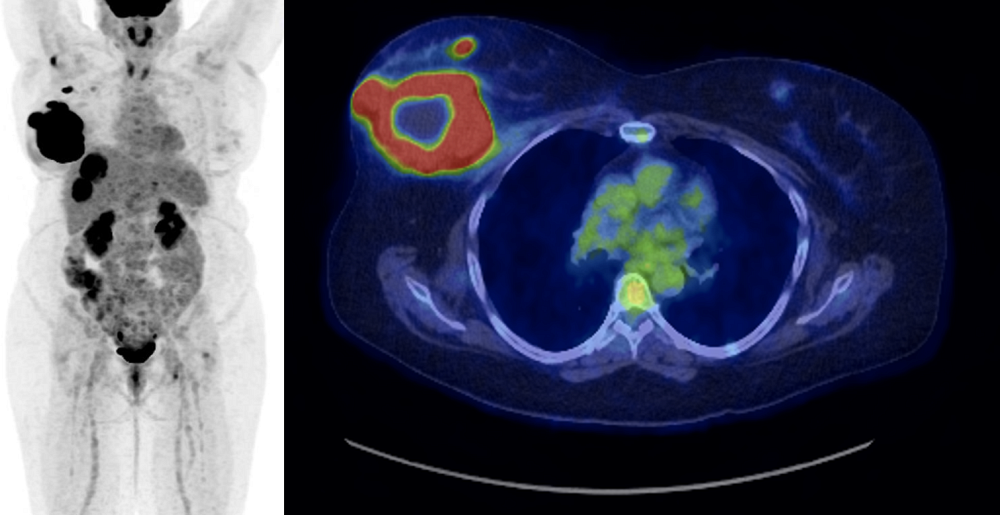
A new cyclotron-produced imaging tracer developed at the Université de Sherbrooke detects breast cancer metastases anywhere in the body, according to ici.radio-canada.ca.
-
Key Clinical Takeaways:
- The imaging technique identifies metastatic lesions in locations such as under the arm, hidden in bone, or within the lungs roughly one hour after injection, per ici.radio-canada.ca.
- Two local foundations have committed 50,000 dollars to fund tests for several hundred patients while awaiting public health coverage, according to ici.radio-canada.ca.
- The Institut de recherche sur le cancer de l’Université de Sherbrooke also secured 1.05 million dollars in recent grants to advance non-invasive metastatic breast cancer detection and immunotherapy response predictions, as reported by usherbrooke.ca.
Sherbrooke Imaging Technology Detects Breast Cancer Metastases
The diagnostic method utilizes a cyclotron-generated tracer designed to pinpoint cancer spread. Dr. Éric Turcotte, head of service and research lead at the department of medical imaging and radiation sciences at the Université de Sherbrooke, stated that the procedure takes ten minutes one hour after injection to locate lesions regardless of anatomical site. Dr. Brigitte Guérin of the CHUS research institute described the agent as a major development that will assist patients in receiving appropriate diagnoses and treatment follow-ups throughout their care pathway, as reported by ici.radio-canada.ca.
Patients often endure long waits for biopsy results, a period lasting five to six weeks in the experience of patient Marie-Andrée Quirion, who noted the intense worry such delays cause. Access to this novel imaging agent aims to bypass those prolonged intervals by delivering precise localization rapidly, according to ici.radio-canada.ca.

Foundation Funding Bridges Access While Awaiting Public Coverage
To provide immediate access before provincial health insurance integration, the Fondation du CHUS and the regional centre of the Fondation québécoise du cancer have allocated 50,000 dollars to cover tests for several hundred women. Sandra Asselin, director of the regional centre of the Fondation québécoise du cancer, noted that the decision was approved quickly after committee review upon witnessing the product’s clinical utility, per ici.radio-canada.ca.
Dr. Turcotte anticipates that the provincial public health system will assume the full cost of these examinations within a timeframe of one and a half to two years, according to ici.radio-canada.ca. Meanwhile, breast cancer rates in Canada show the ongoing demand for screening and diagnostic innovations. Estimates from the Canadian Cancer Society indicate that over a quarter of new cancer diagnoses in women in 2026 involve breast cancer, averaging 89 confirmed cases per day, with approximately one in eight Canadian women developing the disease in their lifetime, as noted by Coup d’Oeil.

Concurrent Research Grants Support Metastasis and Immunotherapy Studies
Complementing the imaging breakthrough, the Institut de recherche sur le cancer de l’Université de Sherbrooke (IRCUS) received two 525,000-dollar Defi 2026 grants from the Canadian Cancer Society totaling 1.05 million dollars, according to usherbrooke.ca. These funds support multidisciplinary teams working to improve the detection of metastatic breast cancer and predict patient responses to immunotherapy through non-invasive whole-body imaging approaches.
Disclaimer: The information provided in this article is for educational and scientific communication purposes only and does not constitute medical advice. Always consult with a qualified healthcare provider regarding any medical condition, diagnosis, or treatment plan.