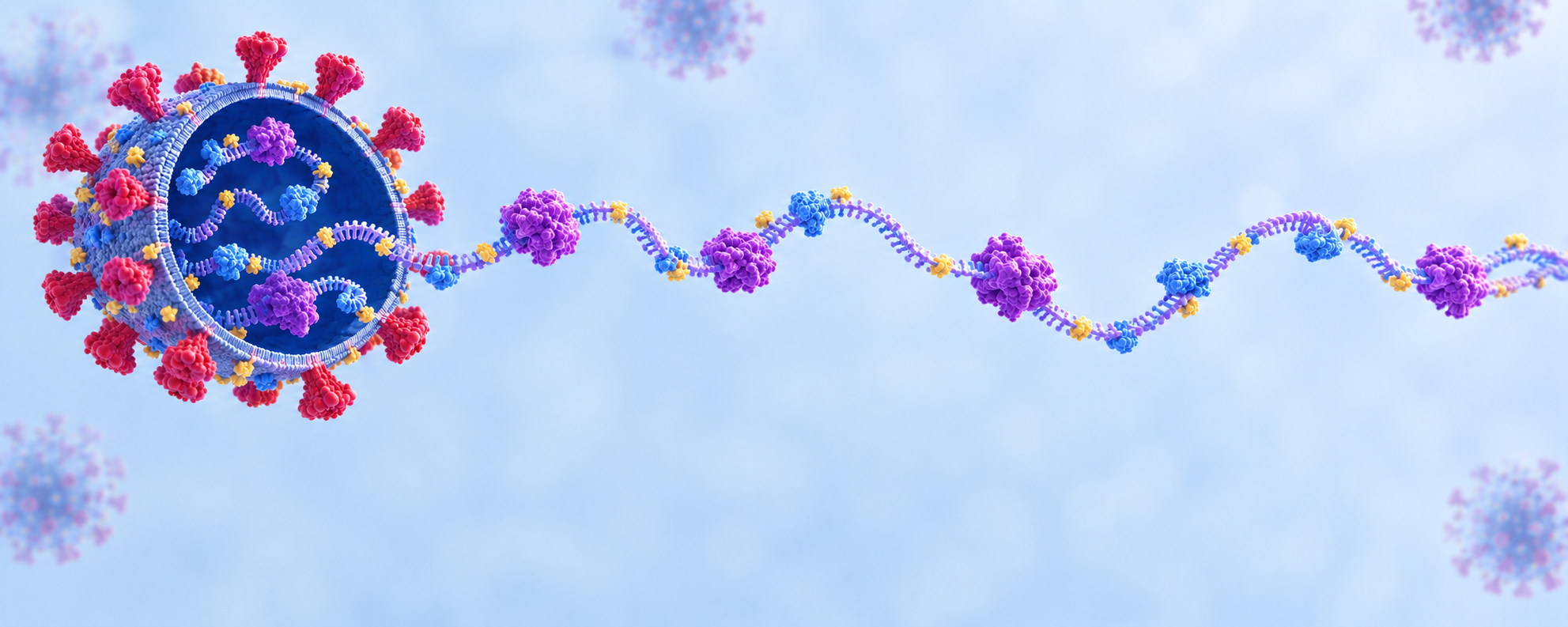
UCR study maps SARS-CoV-2 RNA-protein interactions for new targets
“SARS-CoV-2 evolves very quickly, so it’s important to understand the really basic and essential machinery of the virus,” Joy Xiang, an assistant professor of biomedical sciences in the UCR School of Medicine, said as news.ucr.edu reported on a new study mapping coronavirus RNA-protein interactions.
Key Clinical Takeaways:
- Researchers mapped hidden RNA-protein interactions across the SARS-CoV-2 genome to identify new antiviral drug targets that may be less vulnerable to the rapid evolution of these viruses.
- Disrupting these core interactions using antisense oligonucleotides significantly reduced viral replication in both monkey and human lung cell cultures.
- The findings point toward broad-spectrum treatments that could target conserved viral machinery shared across diverse coronaviruses.
The research, co-led by Xiang at the University of California, Riverside and Gene Yeo at UC San Diego, identifies vulnerability points in the virus that may resist the rapid mutations typical of emerging variants. Published in Nature Communications, the work surveyed the SARS-CoV-2 genome using a technique called enhanced cross-linking and immunoprecipitation, or eCLIP. Current treatments like Remdesivir target the RNA-dependent RNA polymerase, while Paxlovid focuses on viral protein processing. The new study expands potential drug targets by examining unexpected sites across the viral genome where proteins interact with RNA.
Blocking RNA Interactions Reduces Viral Replication
The investigative team discovered specific sites involving the RNA-dependent RNA polymerase and the nucleocapsid protein. When researchers blocked these interactions, viral replication dropped significantly. One major finding centers on the nucleocapsid protein and a conserved region at the start of the viral genome known as the 5′ untranslated region. This complex structure appears to regulate translation during infection.
Another newly identified interaction links the polymerase with the RNA encoding viral protein NSP3. This suggests that viral RNA manages regulatory duties beyond simply acting as a blueprint for protein production. “Viruses look simpler than humans at first glance, but there’s a lot of underlying complexity to their molecular biology we’re only just beginning to unravel,” Yeo said, as reported by news.ucr.edu.
Testing Antisense Oligonucleotides in Cell Cultures
To test whether these interaction sites could be disrupted, the researchers deployed antisense oligonucleotides—short, modified nucleic acid sequences designed to bind to exact regions of RNA. Blocking these sites lowered viral replication in Vero cells derived from African green monkey cells, as well as in human lung cells. These laboratory tests show that targeting conserved viral mechanisms can function across diverse cellular environments.
Xiang joined the UCR faculty in 2024, funding the initial phases through startup grants, a UC Regents Faculty Fellowship, and a UCR School of Medicine Dean’s Collaborative Seed Grant. While initial genome-wide mapping took place at UC San Diego, the project points toward treatments capable of acting against multiple coronaviruses.
Next Steps for Animal Studies and Therapeutics
Clinical translation remains distant because all current experiments were performed strictly in cell cultures. Animal studies must follow to determine whether targeting these specific RNA-protein interactions can yield safe and effective treatments for human patients. Xiang currently investigates similar interactions in other viral pathogens at UCR, while Yeo’s lab at UC San Diego continues refining RNA-protein mapping technologies.
“We need to understand the fundamental biology of these viruses instead of just being reactive to outbreaks,” Xiang said, according to news.ucr.edu.