UAE Leads with AI to Revolutionize Government Services & Cut Bureaucracy
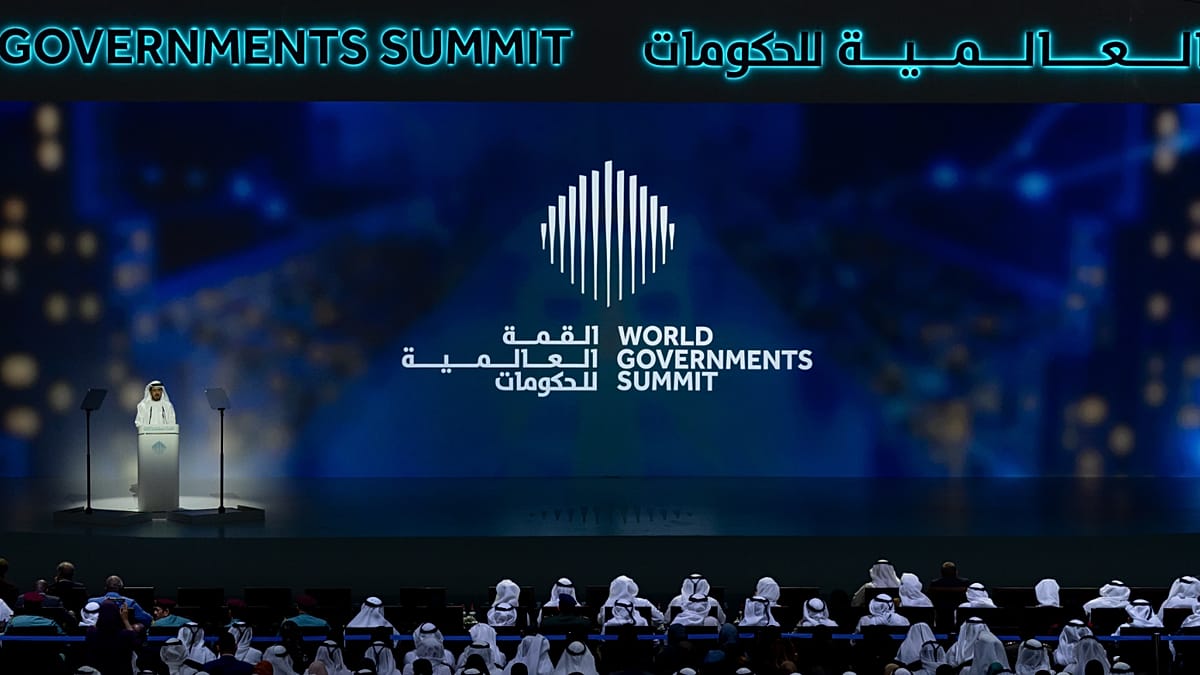
Dubai – The United Arab Emirates is rapidly deploying artificial intelligence to overhaul government services, aiming to reduce bureaucratic processes from weeks to minutes, officials announced following the conclusion of the World Governments Summit 2026. The summit, held February 3-5 in Dubai, convened over 6,250 global leaders, including more than 60 heads of state and government, to discuss the future of governance and the role of emerging technologies.
Mohammed Bin Taliah, Chief of Government Services of the UAE Government, detailed the country’s “zero-bureaucracy” program, launched in 2023, as a central component of this transformation. “This program is focused on eliminating bureaucracy and government procedures and processes in public services,” Bin Taliah told Euronews. Initial results, he said, have already exceeded expectations.
The shift is being driven by advancements in AI, including facial recognition and optical character recognition, automating tasks previously requiring extensive manual processing. Bin Taliah cited airport processing as a prime example, noting that Dubai and Abu Dhabi airports now operate “queue-less” systems utilizing “smart gates that employ spatial biometrics,” allowing for faster passenger throughput. As reported by the Khaleej Times, the UAE President Sheikh Mohamed bin Zayed Al Nahyan and Sheikh Mohammed bin Rashid Al Maktoum, Vice President and Prime Minister of the UAE and Ruler of Dubai, welcomed participants to the summit, underscoring the nation’s commitment to innovation in governance.
Beyond streamlining existing services, the UAE aims to be a global leader in AI deployment, according to Omar Sultan Al Olama, UAE Minister of State for Artificial Intelligence, Digital Economy and Remote Operate Applications and Vice-Chair of the World Governments Summit. “If the UAE has to be in the same conversation…the UAE innovates, but not just innovates, it accelerates,” Al Olama stated to Euronews. He emphasized the country’s agility and diverse governance model as enabling factors for rapid technology adoption.
The UAE is also positioning itself as a neutral platform for international dialogue, particularly as geopolitical tensions rise. Al Olama highlighted the country’s willingness to collaborate with nations across the political spectrum, stating, “We can work with east, west, north and south…To be a common place where everyone brings their best AI tools and deploys.” This approach, he argued, is crucial for fostering understanding and finding common ground on complex global challenges. The World Governments Summit, according to its official website, convened under the theme “Shaping Future Governments,” aiming to inspire and empower the next generation of governments through international cooperation.
Al Olama stressed that the UAE’s role is not to dictate solutions but to facilitate the exchange of best practices. “We don’t preach,” he said. “We seek to make sure that everyone’s point of view is represented.” Discussions at the summit encompassed a wide range of topics, including AI, climate intervention, and education reforms, attracting over 500 CEOs and representatives from more than 150 governments. The summit concluded with a call for sustained dialogue as a means of navigating global turbulence, leaving open the question of how these discussions will translate into concrete policy changes and international agreements.
Worth a look
- Red Hot Chili Peppers and Foo Fighters Revive Rare Songs at Benefit Concert
- Jaakko and Miia renovate their 1980s home in Remppa vai muutto Suomi
- Flensburg Leads Handball Standings After Eight Matches (newsdirectory3.com)
- Philippines Leads ASEAN Initiative to Combat Transnational Crime (newsy-today.com)