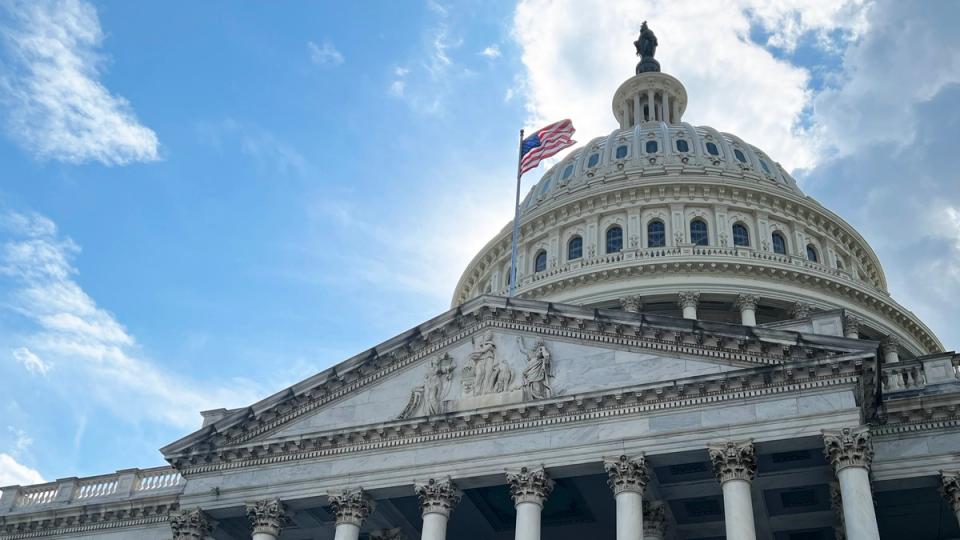
U.S. Senate Crypto Legislation Risks Money Laundering and Sanctions Evasion
The U.S. Senate is currently evaluating the Clarity Act, a legislative framework designed to regulate digital assets, yet critics warn that the bill leaves significant gaps regarding money laundering, sanctions evasion, and government conflicts of interest. As the bill progresses, institutional stakeholders face heightened compliance risks requiring immediate strategic oversight.
According to research from the U.S. Senate Committee on Banking, Housing, and Urban Affairs, the current draft of the Clarity Act fails to address the jurisdictional ambiguity that allows offshore crypto-exchanges to bypass U.S. anti-money laundering (AML) protocols. The primary fiscal concern for enterprise firms is the potential for regulatory “drift,” where shifting oversight creates sudden, costly compliance mandates. Without clear federal guidance, firms holding digital assets on their balance sheets remain exposed to the volatility of future enforcement actions.
The Five Structural Vulnerabilities in the Clarity Act
The legislative text, as debated on the Senate floor this June, contains five critical oversights that market participants must monitor to mitigate long-term operational risk. These gaps could force firms to seek external support from specialized corporate legal counsel to navigate the emerging regulatory landscape.
- Jurisdictional Arbitrage: The bill lacks a mechanism to force non-U.S. entities to report beneficial ownership, creating a loophole for sanctioned actors.
- Conflict of Interest Protocols: Current language does not explicitly bar members of Congress or their immediate families from holding private keys in digital asset protocols, creating potential for insider trading.
- Stablecoin Reserve Transparency: The legislation provides insufficient requirements for the public disclosure of collateralized assets, leaving institutional investors vulnerable to liquidity shocks.
- Cross-Border Sanctions Enforcement: There is no clear mandate for “Know Your Transaction” (KYT) standards, which are essential for preventing the movement of illicit funds across international ledgers.
- Data Privacy versus Auditability: The tension between blockchain immutability and the Right to Erasure remains unresolved, complicating compliance with global data protection standards.
“The current legislative trajectory ignores the reality of decentralized finance, where the lack of an intermediary does not equate to a lack of legal responsibility. Firms operating in this space without robust regulatory compliance consulting are essentially gambling with their Q4 EBITDA margins,” says Marcus Thorne, a senior partner at an institutional fintech advisory firm.
Financial Impacts on Corporate Balance Sheets
For publicly traded corporations, the uncertainty surrounding the Clarity Act creates a measurable “risk premium” in their valuation models. According to the Securities and Exchange Commission’s latest guidance on digital asset disclosures, companies must now categorize crypto-holdings under stricter liquidity classifications. This shifting requirement has led to a 12% increase in demand for third-party financial auditing services as firms scramble to reconcile their digital wallets with traditional GAAP reporting.

The following table outlines the projected impact of potential regulatory shifts on corporate capital allocation over the next four fiscal quarters.
| Risk Factor | Operational Impact | Mitigation Strategy |
|---|---|---|
| Regulatory Enforcement | Higher legal contingency reserves | Proactive compliance audits |
| Liquidity Contraction | Increased cost of capital | Diversified asset holding structures |
| Market Volatility | EBITDA margin compression | Dynamic hedging and risk management |
Institutional Challenges and the Role of Oversight
The absence of strict, clear language in the Clarity Act forces firms to rely on interpretation rather than statute. This ambiguity is particularly dangerous for firms managing cross-border transactions. Per the U.S. Department of the Treasury’s Office of Foreign Assets Control (OFAC) reports, the reliance on automated wallet screening tools is increasing, yet these tools are often insufficient to catch sophisticated obfuscation techniques used by state-sponsored actors.
Large-scale enterprises are increasingly turning to cybersecurity governance firms to bridge the gap between technical blockchain logs and the legal requirements for “reasonable efforts” in sanctions compliance. Without a standardized definition of “compliance” under the new act, firms remain at risk of significant civil penalties.
Navigating the Regulatory Horizon
As the Senate moves toward a final vote, the market is bracing for a period of heightened volatility. The primary challenge for the modern executive is not just understanding the law, but anticipating how the regulatory vacuum will be filled by federal agencies like the SEC and the Commodity Futures Trading Commission (CFTC). These agencies are expected to use existing authority to fill the gaps left by the Clarity Act, potentially leading to a “regulation by enforcement” environment.

The trajectory of digital asset regulation suggests that the firms best positioned for success are those investing in robust internal governance and external advisory partnerships. As companies prepare for the next fiscal year, the integration of specialized B2B services will be the deciding factor in maintaining operational continuity. For businesses looking to fortify their position against these regulatory shifts, connecting with vetted enterprise risk management providers through the World Today News Directory is a critical step in securing the long-term health of their digital balance sheets.