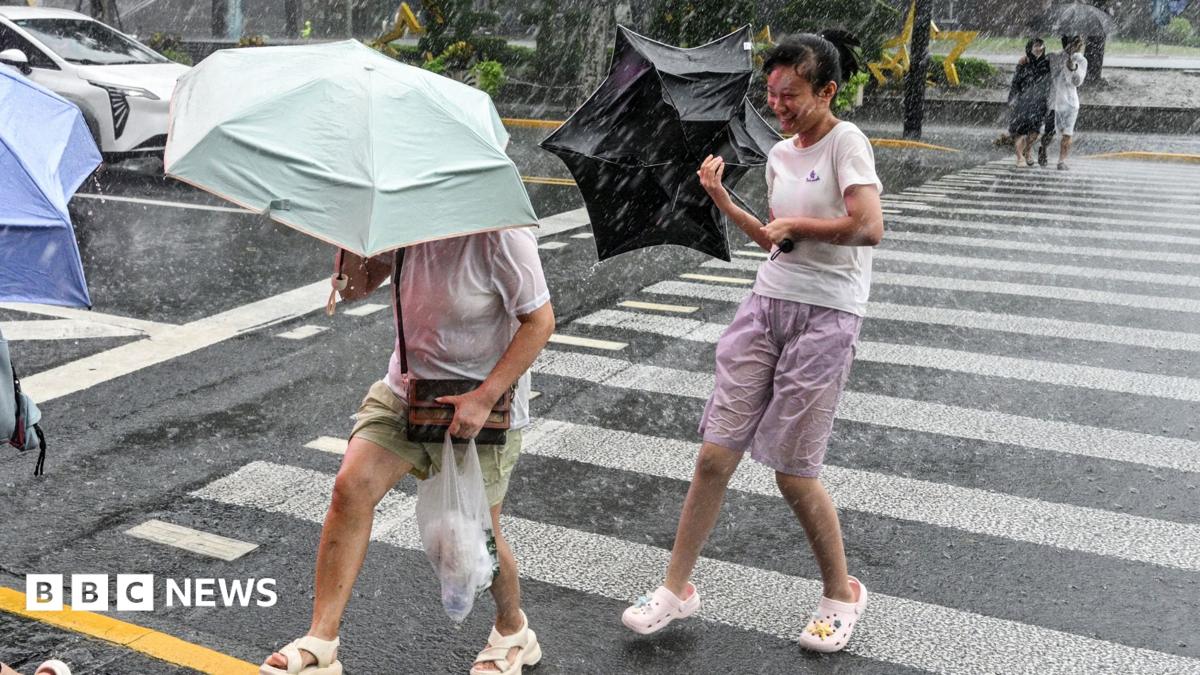
Typhoon Dolphin Makes Landfall in Eastern China, Triggering Mass Evacuations
Chinese authorities evacuated more than one million residents from their homes across eastern China, including the financial hub of Shanghai, as Typhoon Dolphin made landfall with maximum wind speeds reaching 150 kilometers per hour, according to meteorological authorities and regional reporting from August 10, 2026.
Landfall Timeline and Meteorological Impact Across Eastern Provinces
Typhoon Dolphin initially slammed into Yuhuan in Zhejiang province at 17:30 local time before making a second landfall in Wenzhou roughly an hour later. The storm traveled over an exceptional distance of 6,000 kilometers prior to hitting the coast, granting it a lifespan more than three times that of an average typhoon, as reported by China’s state broadcaster CCTV.
Meteorological data indicates the system packed a massive circulation size and intense rainfall capacity. While authorities initially issued their highest-level red alert, the system was downgraded to a tropical storm by Monday morning. However, regional forecasters continue to warn of torrential rains, severe flooding, and landslide risks stretching through Wednesday across Shandong, Henan, Hubei, Anhui, Jiangsu, and Zhejiang provinces.
Accumulated rainfall totals in parts of Zhejiang could reach between 250mm and 500mm. Local governments have strongly urged residents to avoid outdoor activities, while municipal authorities in Hangzhou waived parking fees in all public spaces to provide safe shelter for vehicles threatened by rising floodwaters.
Infrastructure Disruptions and Regional Evacuations
Transportation networks sustained severe disruptions as the storm swept ashore. In Shanghai alone, approximately 1,400 flights were cancelled. State media footage captured ground-floor businesses flooded in the former French Concession district, with pedestrians navigating ankle-deep waters.
Evacuation figures climbed rapidly across the hardest-hit municipalities. Wenzhou officials relocated approximately 900,000 residents while opening more than 1,000 emergency shelters. In Taizhou, roughly 390,000 individuals were removed from vulnerable dwellings. Further south in Fujian province, maritime authorities suspended numerous passenger ferry routes and halted more than 100 offshore construction projects. Major tourist venues, including sections of Disneyland, Legoland, and observation decks along Shanghai’s Bund, remain temporarily closed.
Wider Regional Footprint Across East Asia
Before bearing down on mainland China, Typhoon Dolphin impacted neighboring jurisdictions with severe weather conditions. In the Philippines, heavy monsoon rains driven by Dolphin and preceding storms resulted in eight fatalities, according to the Office of Civil Defence, leaving over 7,000 people sheltered in evacuation centers nationwide.

Japan’s Okinawa prefecture reported five elderly residents sustaining non-life-threatening injuries, primarily from falls induced by high winds. Meanwhile, Hong Kong experienced a record-high temperature of 36.9 degrees Celsius on Sunday as the massive storm drew warm air across the territory.
State media in China also reported that authorities detained two individuals over online misinformation regarding the storm. A 60-year-old man was detained for generating an artificial intelligence-fabricated video falsely claiming someone fell from a building in Shanghai, while a 32-year-old man was held for re-editing social media footage in a misleading manner.
Human Toll and Ongoing Emergency Response
Search and rescue operations remain active following reports of missing persons. State media outlets noted that a nine-year-old boy from Wenling, Zhejiang, is missing after being swept into the sea. Official casualty figures for mainland China have not yet been finalized by authorities.

With floodwaters slowly receding in certain urban districts but heavy rains persisting inland, emergency management personnel remain deployed across eastern provinces to monitor river levels and mitigate secondary hazards through the middle of the week.