
Two Teens Arrested Over London Synagogue Arson Attack; Iranian Links Probed
Two teenagers, aged 16 and 17, were arrested in connection with an arson attack on a synagogue in Kenton, north-west London, on April 18, 2026, as authorities investigate whether the incident is part of a broader pattern of antisemitic violence potentially linked to extremist networks. The fire, which caused significant damage to the Harrow United Synagogue’s community hall, occurred during Passover preparations and has intensified fears among Jewish communities across London about rising hate crimes amid global geopolitical tensions. This attack follows a series of similar incidents targeting Jewish institutions in the UK since October 2023, prompting renewed scrutiny of hate crime legislation, community safety protocols, and the effectiveness of counter-extremism strategies in multicultural urban centers.
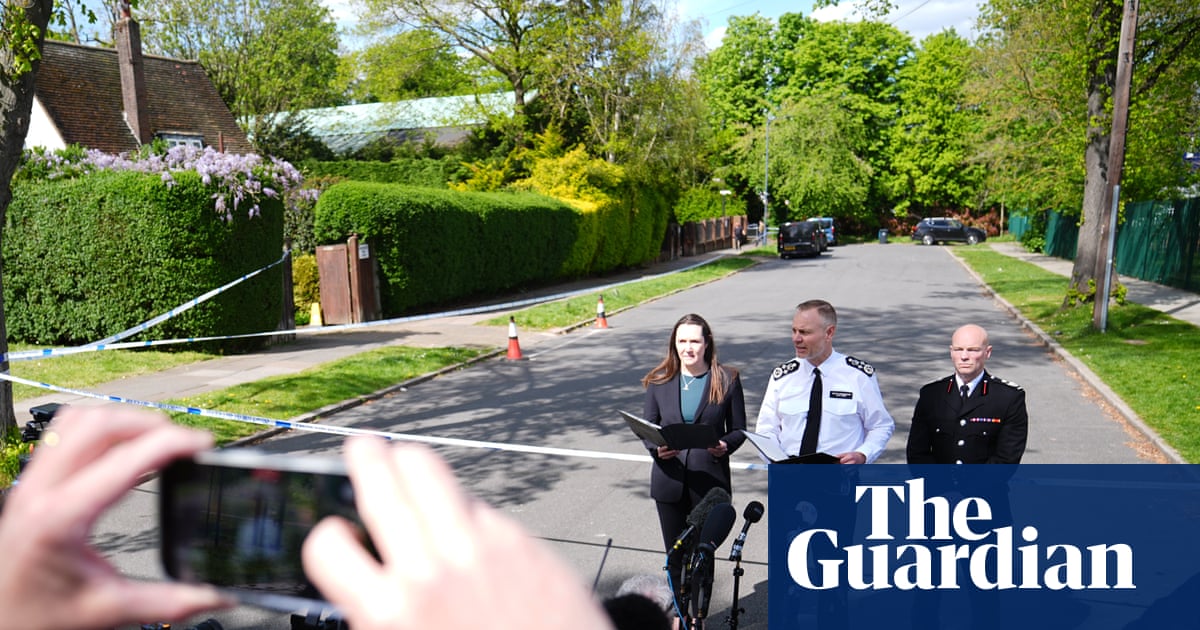
The incident unfolded just after 9:00 PM when witnesses reported seeing two individuals fleeing the scene near Kenton Lane as flames engulfed the rear of the synagogue building. Firefighters from the London Fire Brigade arrived within eight minutes and contained the blaze before it could spread to the main sanctuary, though smoke damage affected sacred texts and communal archives stored in the adjacent hall. Detective Chief Inspector Amara Khan of the Metropolitan Police’s Counter Terrorism Command confirmed that forensic teams recovered accelerant residues consistent with petrol and that CCTV footage from nearby businesses is being analyzed to establish a timeline of movements. “We are treating this as a suspected hate crime with possible links to extremist ideology,” Khan stated in a press briefing on April 19, “and we are working closely with the Community Security Trust and local faith leaders to ensure a thorough and sensitive investigation.”
Historical Context: Antisemitism in London and the Shadow of Global Conflict
London has witnessed a 340% increase in recorded antisemitic incidents since October 7, 2023, according to data from the Community Security Trust (CST), the UK’s primary Jewish safety organization. In the first quarter of 2026 alone, CST logged 412 antisemitic incidents across Greater London, including 18 cases of criminal damage to property and three arson attempts—double the number recorded during the same period in 2025. This surge mirrors trends seen across Europe, where the Institute for Jewish Policy Research reported a 210% average increase in hate crimes against Jews in France, Germany, and the UK since the escalation of the Israel-Hamas conflict. Experts warn that such violence often spikes during religious observances, with Passover and Holocaust Memorial Day historically serving as flashpoints for targeted attacks due to their heightened visibility in communal calendars.
The Harrow United Synagogue, founded in 1934, serves over 1,200 families in the borough and has long been a center for interfaith dialogue, hosting weekly joint events with the nearby Kenton Mosque and St. Mary’s Church. Its location in the Kenton ward—part of the London Borough of Harrow—places it in a demographically diverse area where over 68% of residents identify as belonging to ethnic minorities, according to the 2021 Census. Harrow Council leader Councillor Natasha Feroze emphasized the borough’s commitment to cohesion: “Harrow has always prided itself on being a model of multicultural harmony. Attacks like this don’t just damage buildings—they fracture trust. We are doubling funding for our Community Resilience Fund and fast-tracking security upgrades for all faith institutions through our municipal safety grants program.”
Legal Framework and the Challenge of Proving Extremist Motives
Under the UK’s Terrorism Act 2000 and the Public Order Act 1986, prosecutors can pursue enhanced charges if they prove an offence was motivated by religious hatred or linked to extremist ideology. However, establishing intent remains a legal hurdle, particularly when suspects are minors. Barrister Simeon Gould, a specialist in hate crime prosecution at 2 Bedford Row, noted that juvenile offenders often undergo different legal pathways: “While adults face potential terrorism charges, minors are more likely to be prosecuted under youth justice provisions, which prioritize rehabilitation—but only if there’s clear evidence of ideological grooming. Without digital footprints or confession, prosecutors may rely solely on Section 29 of the Crime and Disorder Act 1998, which carries lighter penalties.” He urged authorities to examine online activity: “We need to look beyond the matchstick and ask: who radicalized them? What networks supplied the accelerant? These are questions for digital forensics units and school safeguarding teams.”
The arrests have prompted calls from MPs across the aisle to review the Online Safety Act 2023’s effectiveness in curbing extremist content dissemination. Shadow Home Secretary Rachel Reeves urged the Home Secretary to “accelerate guidance for schools on identifying early signs of radicalization and to fund community-based intervention programs that divert youth from harmful ideologies.” In response, the Department for Education announced on April 19 a £4.2 million pilot scheme to expand the Prevent duty’s outreach in London boroughs with high faith-school density, including Harrow, Brent, and Ealing.
Community Response: Resilience Amid Fear
Despite the trauma, the synagogue’s leadership emphasized continuity. Rabbi David Rosenblatt, who has led Harrow United Synagogue since 2010, addressed congregants the morning after the attack: “They tried to burn our hall, but they cannot burn our commitment to each other, to study, to prayer. We will clean this space, we will repair it, and we will open its doors wider than before—not out of defiance, but because that is who we are.” His words were echoed by Imam Farooq Khan of Kenton Mosque, who stood beside him during a solidarity vigil attended by over 300 residents: “An attack on one house of God is an attack on all. We will guard your doors as you have guarded ours.”
Local businesses reported a surge in demand for security services following the incident. Patel’s Newsagents, located 200 yards from the synagogue, saw inquiries for CCTV installation triple within 48 hours. Owner Amina Patel noted: “Parents are asking if One can monitor the walking routes to Hebrew school. It’s sad that we have to think this way, but safety comes first.” This reflects a broader trend: the Metropolitan Police recorded a 22% year-on-year increase in private security consultations for faith-based institutions in Q1 2026, according to data obtained via Freedom of Information request.
The Directory Bridge: Connecting Crisis to Competent Response
In the aftermath of such events, communities require more than sympathy—they need coordinated, expert-driven action. Faith institutions seeking to upgrade physical security without compromising accessibility often turn to specialized licensed security integrators who design discreet, surveillance-ready systems tailored to heritage buildings. Simultaneously, leaders navigating the psychological toll on congregants—especially youth—benefit from culturally competent trauma-informed counselors experienced in interfaith and post-terrorism support. Finally, when legal questions arise regarding liability, insurance claims, or potential civil rights violations, affected organizations frequently consult civil rights attorneys with expertise in hate crime litigation and municipal accountability.
As London’s faith communities process this latest violation of sacred space, the imperative is clear: resilience must be built not just in brick and mortar, but in trust, vigilance, and the unwavering commitment to protect the pluralistic fabric that defines the city. The true measure of our response will not be in how quickly we repair the walls, but in how deeply we reinforce the bonds that make such attacks unthinkable in the first place.