
Discrepancies Emerge Between Official growth Figures and Sector Complaints in Turkey’s Q2 Economy
Istanbul, September 3, 2025 – Concerns are rising over the accuracy of Turkey’s reported 4.6% GDP growth for the second quarter, as data from key industrial and construction sectors appear to contradict official figures, according to analysis by economist Mahfi Eğilmez. While TURKSTAT reported a 6.1% growth in the industrial sector and a 10.9% expansion in construction, representatives from both industries have voiced complaints suggesting a far less robust reality.
Eğilmez’s analysis, published on his website, highlights a significant disconnect between the official statistics and on-the-ground conditions. Data from TURKSTAT’s Industrial Production Index (SUE), adjusted for seasonal and calendar effects, reveals a mere 1.4% growth in the first quarter, followed by a 0.2% decline in the second. This falls considerably short of the 6.1% industrial growth reflected in the GDP accounts.
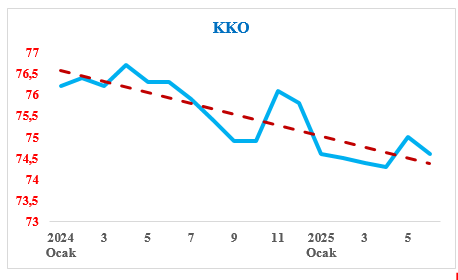
Further supporting industry concerns,capacity utilization rates (KKO) in the manufacturing sector – which comprises over 70% of the industrial sector – show a downward trend,as illustrated in data from the Central Bank of the Republic of Turkey (CBRT).
Similar discrepancies exist in the construction sector. While TURKSTAT reported 10.9% growth, the construction Production Index (IUE), also adjusted for seasonal and calendar effects, shows only a marginal increase in the first three months of the quarter and a slightly higher, but still modest, increase in the subsequent three months. Eğilmez argues this data doesn’t support the reported 10.9% growth contribution.
Adding to the complexity, foreign trade data reveals exports increased by only 1.7% during the period, while imports surged by 8.8%. While acknowledging exports’ complex impact on GDP, Eğilmez notes the significant import increase warrants scrutiny, particularly given Turkey’s reliance on imported production inputs.”Although it is not right to reach a definite judgment by just looking at these data, these data tell us that either these growth rates or the complaints of industrialists and construction sector representatives are not correct,” Eğilmez concludes.
The analysis raises questions about the methodology used in calculating the GDP figures and calls for a closer examination of the underlying data to reconcile the official numbers with the experiences of key economic actors.
