Tsinghua Researchers Certify Global Quantum Properties Via Local Measurements
Researchers at Tsinghua University have demonstrated a method to certify global quantum properties — including entanglement, circuit complexity and the “quantum magic” needed for fault-tolerant computing — using only local measurements on a small subsystem, with the number of experimental runs remaining constant regardless of how many qubits the full device contains.
The work, published 27 October in Physical Review X, introduces a framework the authors call “localizable quantumness”: after measuring most qubits in a many-body system, essential quantum features of the original state survive in the untouched remainder.
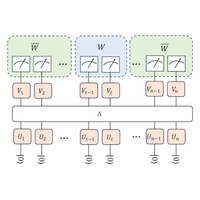
By splitting a device into a small part A and a large complement B, measuring B in the computational basis and then measuring A in randomly chosen single-qubit Pauli bases, the team combines the data into a “conditional fidelity” score. If the score passes a threshold, the global property is certified.
“If the original state has no entanglement, measuring part of it cannot create entanglement in the rest,” the authors explain in the Phys.org summary of the study.
The protocol requires no adaptive feedback, no post-selection on measurement outcomes and no quantum memory. For certifying the fidelity of an n-qubit state, the sample complexity is O(1) — a dramatic improvement over the O(n⁴) scaling of earlier fixed-setting local protocols, where doubling the qubit count raised the cost 16-fold.
The tolerated deviation from the target state also stays constant as the system grows, and the method remains valid for the mixed, noisy states that real experiments produce.

Beyond fidelity, the same framework certifies multipartite entanglement and circuit complexity using only local Pauli measurements. For fully inseparable entanglement, sample complexity improves from O(n) to O(log n). For quantum magic — the resource behind fault-tolerant quantum computing — the team demonstrated certification with a subsystem of just three qubits while the total system grew to 512 qubits.
Xiongfeng Ma, with co-authors from the Center for Quantum Information, the Institute for Interdisciplinary Information Sciences, Yenching Academy and the Yau Mathematical Sciences Center, all at Tsinghua. The paper is titled “Certifying Localizable Quantum Properties with Constant Sample Complexity” (DOI: 10.1103/rkl6-hfrn).
The paper, published 27 October 2026 in Physical Review X as volume 16, article 041027, was presented as part of Science X Dialog, where researchers report findings from their published articles.
Framework Builds on Prior Tomography Results
The study cites Yu’s sample-optimal tomography of quantum states from the 2016 ACM Symposium on Theory of Computing as a foundational reference for the O(1) sample complexity achieved in fidelity certification. That earlier work established the theoretical benchmark the new protocol meets for constant-cost verification.
The authors also reference the 2023 Nature experiment by Cao et al. that generated genuine entanglement across 51 superconducting qubits, illustrating the class of large-scale devices whose global properties the new localizable-quantumness framework aims to certify without full tomography.
Ma has held faculty positions at the Center for Quantum Information within the Institute for Interdisciplinary Information Sciences since 2012, advancing from Assistant Professor to Associate Professor (2018–2023), Professor (from 2023) and Changjiang Distinguished Professor (from 2019).
His research summary at the Institute for Interdisciplinary Information Sciences identifies quantum benchmarking, multipartite entanglement and quantum resource theory — including coherence and entanglement measures — as core areas of his work, directly aligning with the new framework’s certification of fidelity, entanglement and quantum magic.
A separate but related Tsinghua study, also published in Physical Review X, addresses the complementary challenge of learning how noise affects many-qubit processes. That work develops a scalable framework combining local tomography with a reconstruction procedure that stitches local data into a globally consistent description of a quantum process, extending characterization beyond strictly local observables.